
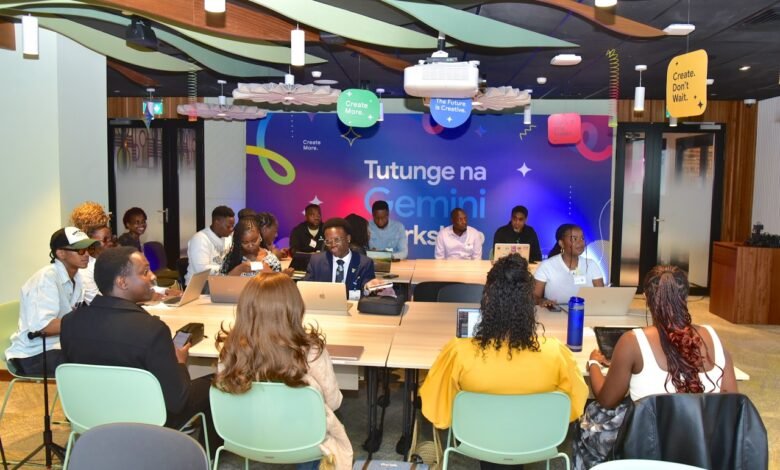
Google hosted Tutunge na Gemini at its Nairobi office for Gen Z creators, media professionals and university students. We attended the practical workshop, which covered research and brainstorming, alongside writing, editing and content planning.
Gemini is Google’s artificial intelligence assistant. The workshop focused on using it during the process of developing a story, from an initial idea through to producing and revising material. Participants worked through demonstrations and interactive exercises, including tools for creating images and video.
The session also promoted Google’s AI Plus student offer in Kenya. That subscription has separate eligibility conditions, so attending an AI workshop should not be read as automatic access to the paid tools.
What the creative tools do
The demonstrations included Nano Banana 2 and Gemini Omni. They handle different types of creative work.

In its 26 February announcement, Google identifies Nano Banana 2 as Gemini 3.1 Flash Image, an image generation and editing model. It can turn written instructions into pictures and revise existing images. Google describes uses such as marketing mockups and turning notes into diagrams.
Google’s introduction to Gemini Omni describes a model family whose first release focused on video. Users can generate clips from reference material and request changes through conversation. For a creator, that means describing an edit in words, such as a change to a scene or camera angle.
The workshop also included Gemini Live, which lets people talk through ideas with the assistant, and Gems. Google’s Gems help page, checked on 21 September, explains that Gems keep repeatable instructions for particular tasks. A creator could, for example, save instructions about a publication’s tone and intended audience instead of typing them into every new request.
The exercises connected these tools to everyday creative work, from developing an idea to revising material for publication. The session covered both the early planning stages and the production of visual material.
What Kenyan students can claim
The student subscription predates this workshop. In an announcement dated 20 August, Alex Okosi, Google’s managing director for Africa, said eligible college and university students across 27 African countries could receive 12 months of Google AI Plus at no cost.
The package includes Gemini Omni, twice the usage limits in Gemini and 400 GB of shared storage across Google Drive, Gmail and Google Photos. Eligible students in Kenya are among those targeted by the offer promoted at the workshop.
We covered Google’s earlier African student offer in October 2025. That programme gave eligible students 12 months of Google AI Pro. The offer promoted at Tutunge na Gemini is AI Plus, a different subscription tier.
Google’s student offer help page says applicants need to verify their student status through SheerID, a student verification service, using a valid institutional email address. They also need a personal Google Account and a qualifying payment method.
The same page says the subscription normally changes to a regular paid plan when the offer ends, with advance notification and an exception where local law requires consent. Google’s workshop release does not state the Kenyan renewal price. Students should check the amount and renewal date shown during sign-up before accepting the subscription.




Join the discussion