

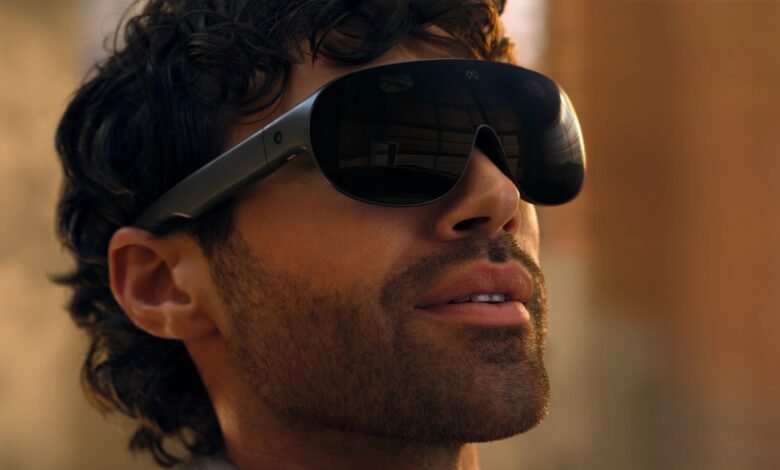
Meta has announced Meta VR Glasses, a virtual reality headset shaped like a pair of glasses. Mark Zuckerberg unveiled it at Meta Connect, the company’s annual product event, on 23 September 2026. It goes on sale in spring 2027 for $1,299.99, or about KES 168,000.
A virtual reality headset puts a screen in front of each eye, so films and games appear to float around you. Most are bulky and strapped to the head; Meta’s own Quest 3 weighs 515 grams. The VR Glasses weigh about 100 grams, which Meta compares to a deck of cards and says is five times lighter than the Quest 3.
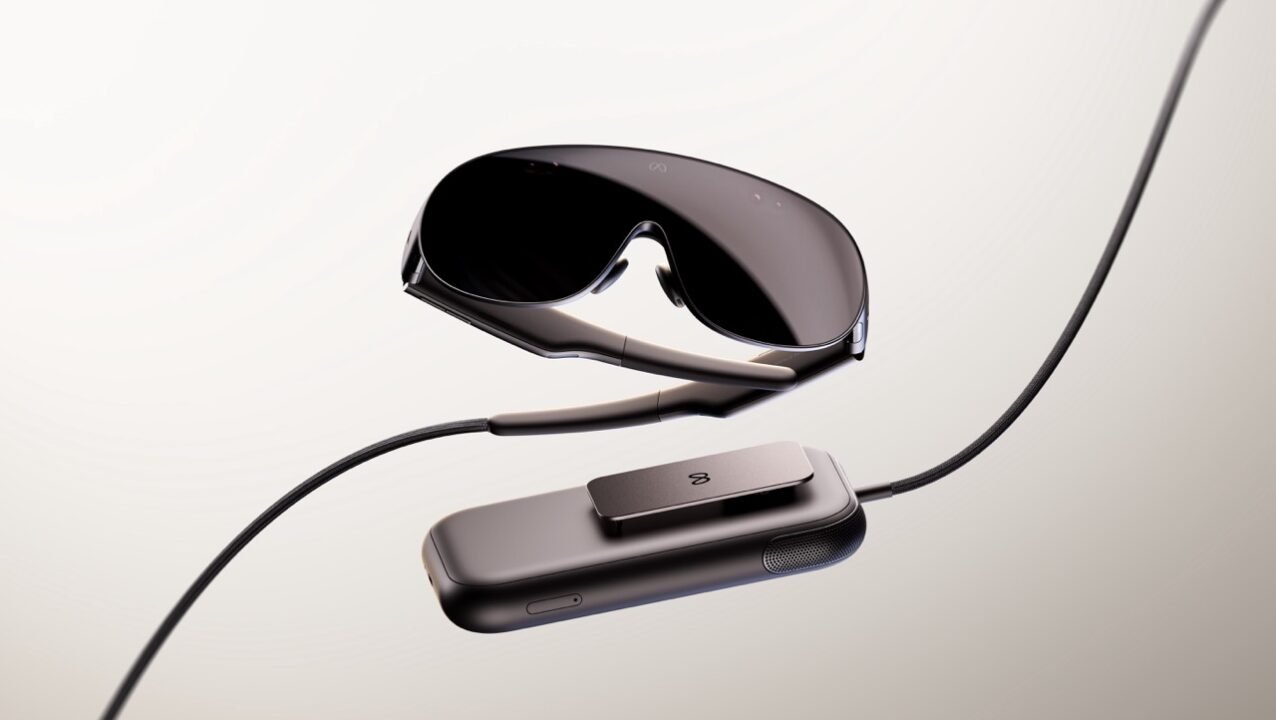
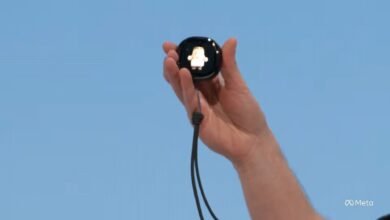
Meta got the weight down by splitting the device in two. The glasses hold the screens, lenses, cameras and sensors. A separate puck holds the processor, battery and storage, and clips to a pocket or bag. The puck weighs about 300 grams and connects to the glasses by a thin fibre optic cable. On the demo units at Connect, the puck ran warm enough to feel without touching it according to people on the ground.
There is no head strap. The glasses rest on your nose and ears like ordinary frames. The sides and bottom are open, so you can still see the room around you, and colour cameras on the front, called passthrough cameras, can show your surroundings inside the glasses. Optional light blockers close the gaps when you want to shut the room out.

What is inside
This is what Meta has confirmed so far.
- Screens: two micro-OLED panels, 2,412 x 2,288 pixels per eye, 120Hz, HDR. Meta calls this a “5K Infinite Display”.
- Sharpness: 37 pixels per degree
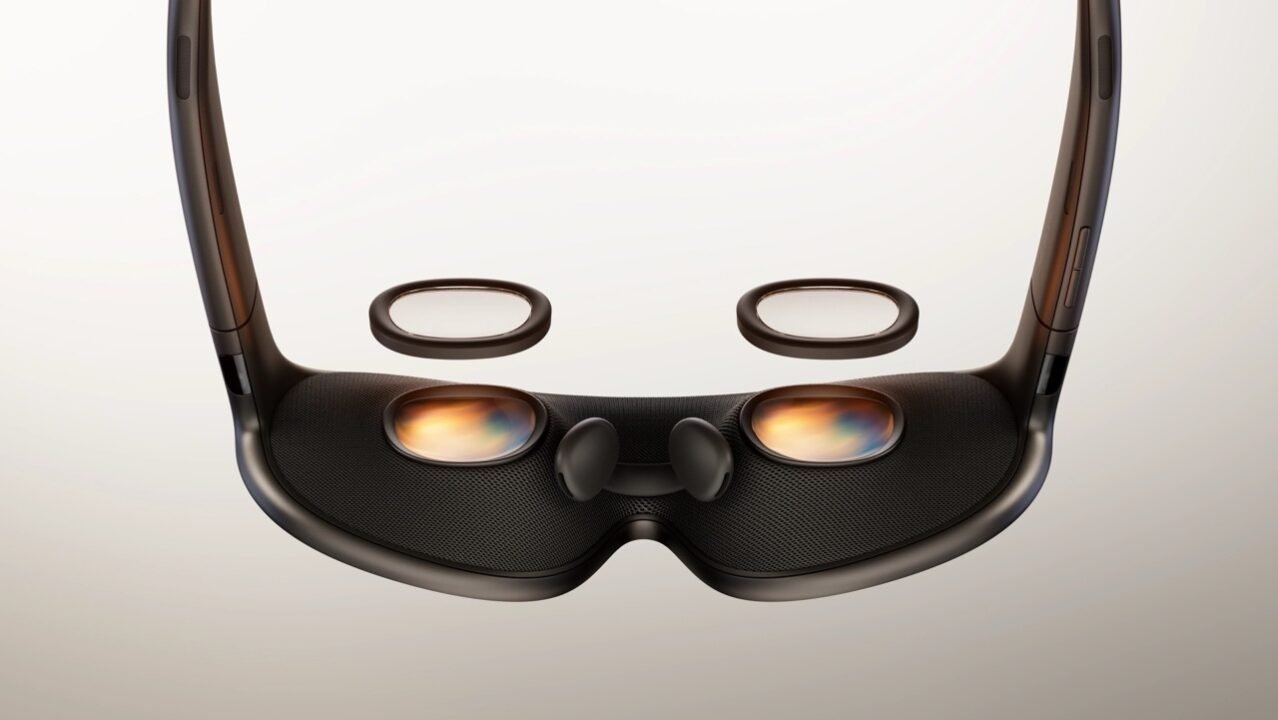
- Lenses: custom pancake lenses with built-in eye tracking, adjustable for eyes 56mm to 70mm apart
- Field of view: 70 degrees across and 66 degrees high
- Chip: Qualcomm Snapdragon Reality Elite, in the puck
- Memory and storage: 12GB RAM and 128GB storage, plus a microSD slot for cards up to 1TB
- Battery: up to three hours of continuous high-resolution video
- Charging: 45W, and the puck charges while in use
- Picture and sound: Dolby Vision and Dolby Atmos
- Sizes: Standard and Large, sold as separate models
- Prescription: Zenni Optical inserts, sold separately, price not announced
Micro-OLED screens light each pixel on its own, which gives deep blacks. The VR Glasses are Meta’s first headset without an LCD screen since the original Oculus Quest in 2019. Pixels per degree measures how many pixels fill each degree of your vision, and a higher number means sharper text. The Quest 3 manages 25. Pancake lenses fold the light between the screen and your eye, so the lens can sit close to the panel and the glasses stay thin. The trade-off is a narrower view: the Quest 3 covers roughly 110 degrees across. So if you mostly watch films and read text, the VR Glasses are the sharper device, and the Quest 3 still shows you more of a game world.
The Snapdragon Reality Elite is Qualcomm’s new flagship chip for headsets and glasses, announced in June.
How you use it
No controllers come in the box. You look at something to point at it and tap your thumb against your index finger to select it, while sliding your thumb along your finger scrolls. The taps register with your hands resting in your lap.
You can also speak to the glasses. Meta has built its AI agent into the operating system, so you can ask it to play a film, open an app or arrange your workspace.
The glasses run the same operating system and app store as Quest headsets, so the whole Quest catalogue works on them. More than 75 games at launch play with hand gestures alone, and Xbox Cloud Gaming streams hundreds more. For everything else, gamers can buy Meta’s Touch Plus controllers or pair the ones from a Quest 3 or Quest 3S.
Films, sport, work and calls
Meta is pitching the glasses first as a private cinema. It says they are the first VR device certified as IMAX Enhanced, so they can show select films in IMAX’s expanded aspect ratio, the taller picture IMAX uses for some scenes. In November, Disney+ starts streaming 3D films such as The Avengers and Black Panther on Meta’s headsets in select countries. Industrial Light & Magic, the effects studio behind Star Wars, is building a Disney Immersive Cinema app for the glasses’ launch, with versions of Avengers: Infinity War and Star Wars: A New Hope that extend the film into the room around the screen. ILM says it will share more details later. Peacock, HBO Max and Paramount+ are offering their 3D film libraries on Meta’s devices for the first time.
Meta’s other streaming partners include Prime Video, YouTube, DIRECTV, AMC+, Crunchyroll, Plex, ESPN and Tubi.
For sport, Meta and ESPN are building Immersive Sports, with front-row camera positions, 8K streams and a 180-degree picture. It starts with college football on Quest headsets this year. Meta says there will be more than 100 immersive live US sports events a year once the glasses launch, with MLB, NBC Sports, TNT Sports and UFC among the partners.
For work, the glasses can turn any table or desk into a keyboard and trackpad, and show several screens streamed from a Mac or Windows PC, wirelessly or over USB-C. You can also plug a phone, laptop or games handheld into the puck and watch its screen at cinema size.
The glasses also work with calling apps such as WhatsApp and Zoom. Meta calls the feature hologram: a photorealistic version of your face and expressions, which people on a phone or computer see on their screen. At launch, the hologram is a 3D video seen only from the front. Meta says a full 3D version will follow.
How it compares
Meta VR Glasses cost less than their two closest rivals. Apple’s Vision Pro with the M5 chip launched at $3,499, or about KES 453,000, in October 2025. Samsung’s Galaxy XR launched the same month at $1,799, or about KES 233,000. Both strap to the head. Meta says its glasses are sharper per degree than the Vision Pro, 37 pixels to 34.
The glasses arrive later than Meta first planned. In December 2025, an internal Meta memo pushed the device, then code-named Phoenix, from the second half of 2026 to the first half of 2027. Maher Saba, vice-president of Reality Labs Foundation, wrote in it that Reality Labs’ plans for 2026 focused on making the business sustainable and taking extra time to deliver higher quality. Meta has kept to that date.
What it means in Kenya
Meta’s launch list has 25 countries: the US, Canada, Mexico, the UK and 15 other European countries, Japan, Taiwan, South Korea, Singapore, Australia and New Zealand. No African country is on it. One app on the slate, ILM’s National Geographic: Beyond, is 180-degree 3D footage filmed in Africa.
That has not kept Meta’s earlier glasses out of Kenya. Local shops such as Avechi sell Ray-Ban Meta camera glasses, with the second-generation Wayfarer at about KES 54,000. In February, we reported on a Russian content creator facing charges in Kenya and Ghana, accused of secretly filming women with a pair.
Importing the VR Glasses would cost about KES 168,000 for the glasses, puck and charger, before shipping, import duty and any retailer’s margin. Because the two sizes are separate models, you’d also have to pick Standard or Large without trying them on. Meta has not given a launch date within spring 2027.





Join the discussion