

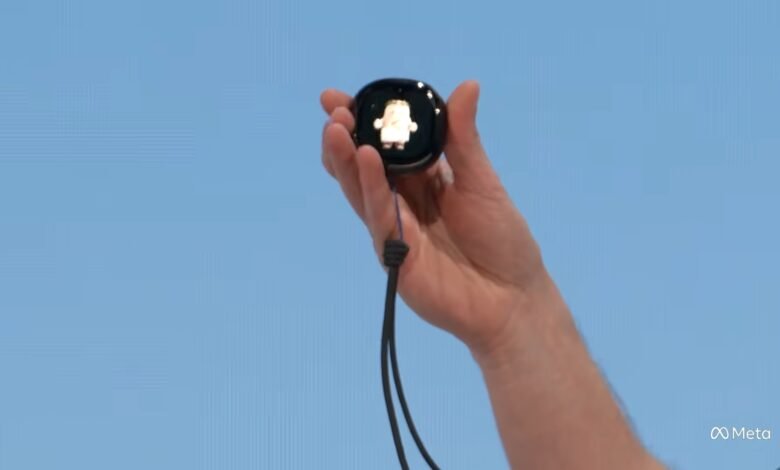
Meta has announced Muse Charm, a small handheld device you can hang on a keychain. It has one job: letting you talk to Muse, Meta’s AI agent, without taking out your phone. Mark Zuckerberg showed it as the final reveal of his keynote at Meta Connect, the company’s annual product event, in Menlo Park, California, on 23rd September. Meta plans to ship it in December. It hasn’t given a price.
Zuckerberg called it “a joyful little device for talking to your Muse” in a post on X that evening. It looks a lot like a Tamagotchi, the keychain digital pet Bandai first sold in Japan in 1996: small enough to carry everywhere, with a little animated character living on a screen. On the Charm, that character is your AI agent.
What Muse is
Muse is a personal AI agent that Meta launched on 8 September. An AI agent is an assistant that carries out tasks for you instead of only answering questions. Tell Muse what you need and it can send an email, book travel, fill in forms on websites or buy something, and it keeps working after you close the app. It asks for your approval before it sends an email or pays for anything.
Muse runs on Muse Spark, the AI model Meta released in April. Each person’s Muse lives in its own virtual machine, a private computer in Meta’s cloud that holds the agent plus the data and logins you give it. You can reach it through the Muse app on iPhone and Android, at muse.ai, inside WhatsApp and on a Mac. It’s free for most use, and there are paid plans for people who want more.

What the Charm does
Meta’s own Connect announcement gives the Charm two sentences. It puts Muse and Meta’s real-time voice model into a device that fits in your pocket, and Meta will share more later this year.
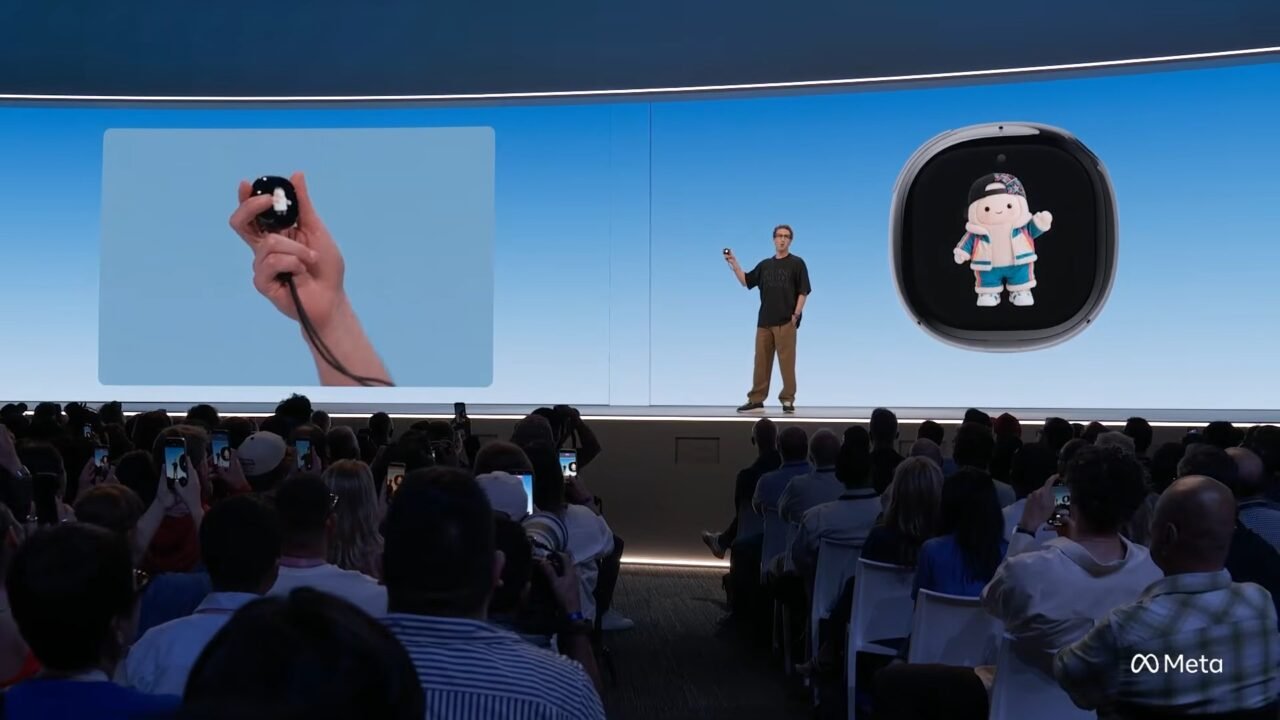
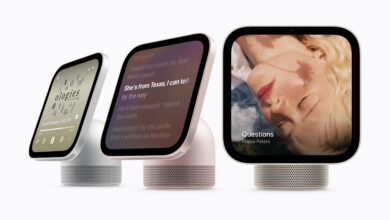
On stage, Zuckerberg tapped a fingerprint sensor in the corner of the Charm and started talking to his Muse. There was no phone to unlock and no app to open. The screen shows an animated avatar of your Muse, and you can change how it looks. Zuckerberg said Meta had packed the whole Muse experience, including the real-time voice and the avatar, into something that fits on a keychain and is always ready to talk.
He also pitched it at people who don’t wear smart glasses. “If you’re not wearing glasses, this is going to be by far the fastest way to talk to your Muse and to show it what’s going on around you,” he said on stage. So if you already use Muse, from December the Charm is a way to reach it without unlocking your phone.
Meta hasn’t published a spec sheet. The Charm is about the size of an AirPods case, with a touchscreen of roughly 2 inches and a 5G connection of its own, so it can reach Muse without your phone nearby. It also has cameras on the front and back, a USB-C port for charging and a see-through case. Meta hasn’t confirmed the cameras itself. Then again, showing Muse “what’s going on around you” is hard to do without one.
The Charm isn’t finished. Zuckerberg said Meta still needs to “finalize laying out the components”, and it has built only a few units so far. The plan, in his words, is “to have this ready to ship in time for the holidays in December.”
Price, privacy and where it works
Meta hasn’t given the Charm’s price, battery life or launch countries. The fine print on the Connect announcement says you need to sign up for Muse to use it, and Muse is rolling out in the US only. Meta hasn’t named the next countries.
So in Kenya, the Charm won’t do anything until Muse arrives. Going by Meta’s last assistant, that could take a while. Meta AI launched in the US in September 2023, and we reported its arrival on WhatsApp in Kenya in June 2025, more than a year after it reached Nigeria and South Africa.
Meta says Muse doesn’t pass your conversations, or the data in its virtual machine, to its ad systems, and you can opt out of having your chats used to train Meta’s AI. A pocket device with cameras makes that promise matter more. In March, we reported that data annotators in Nairobi, working for Meta contractor Sama, were reviewing intimate footage recorded by Ray-Ban Meta glasses.
Others have tried this
Two startups have already sold gadgets built only to reach an AI assistant. Humane’s AI Pin went on sale in November 2023 for $699, or about KES 91,000. In February 2025, HP bought Humane’s software, staff and patents for $116 million, about KES 15 billion, and the Pins stopped working on 28 February. The Rabbit R1, a $199 handheld with a screen, about KES 25,800, launched in 2024 and is still on sale. KES figures in this piece use USD 1 to KES 129.50, the rate on 24 September.
Humane and Rabbit had to sell people new software and new hardware at the same time. Meta is doing it the other way round. Muse came first, on phones, the web, WhatsApp and Macs, and the Charm is one more way to reach it. If the Charm flops, Muse keeps working.





Join the discussion