
Kenya signed a funding agreement on 1st October 2026 for a feasibility study into a proposed commercial spaceport at Kipini, a coastal launch site where rockets would carry satellites into orbit. Eng. Kefa Seda, who heads the National Treasury’s Public Private Partnerships (PPP) Directorate, the unit that brings private money into public projects, hosted the Kenya Space Agency’s director general, Major General Hillary Kipkosgey, for the signing.
Kenya is not building a spaceport yet. The agreement is for funding the study that decides whether to build one and how. The study is aimed at the Kipini area of Tana River County, on the coast between Malindi and Lamu. The Directorate expects the project to bring industrialisation, jobs and skills, and a new revenue stream for the government.
The Directorate’s announcement leaves out the amount, where the money comes from and who the study’s transaction advisor is. A transaction advisor is the firm, or group of firms, hired to test whether a project works and then design the deal to build it. The announcement says only that the advisor was appointed recently, and it gives no cost for the spaceport itself. The tender’s clarifications say the advisor’s fee is budgeted through the Project Facilitation Fund under the PPP Act, 2021, and decline to give an amount.
Why the coast
The Earth’s surface moves eastward fastest at the equator, so a rocket launched east from near it starts with extra speed and burns less fuel, an edge that matters most for orbits near the equator. The terms of reference for the advisor, issued on 16th December 2025, say launching near the equator saves fuel and money, and that an east-facing coast lets rocket parts be recovered downrange with no danger to homes. The same document says Africa’s two past launch sites, in Algeria and Kenya, no longer launch, so satellites built on the continent are shipped abroad at considerable cost. Kenya’s ClimCam camera, a payload shared with Egypt and Uganda that we covered in April, launched toward the International Space Station on a SpaceX rocket from Florida.

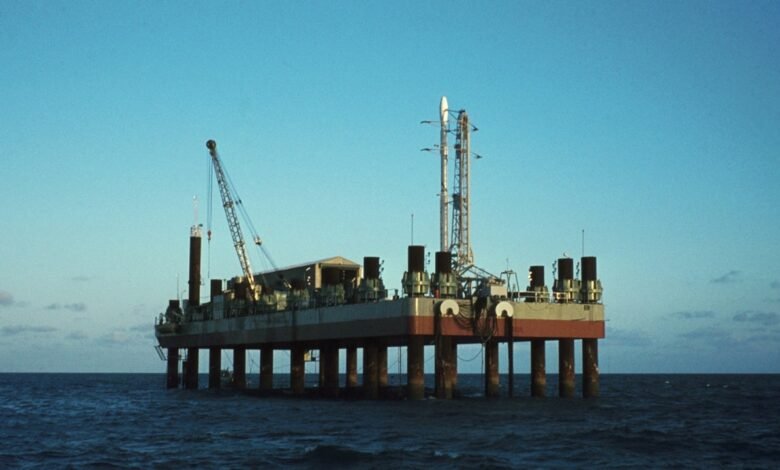
The coast has hosted launches before. The San Marco Equatorial Range near Malindi ran from 1964 to 1988 and launched 18 sounding rockets, small research rockets that don’t reach orbit, and nine satellites. Italy’s enterprise minister, Adolfo Urso, said in October 2024 that Italy would resume launches from the Luigi Broglio Space Centre near Malindi, home of the San Marco offshore platform, carrying small satellites into low orbit. Neither the Directorate’s announcement nor the terms of reference mentions that plan, so how Kipini would sit beside it is not stated.
What the study covers
The advisor has to test whether there is a business case, including which operators say they would launch from Kenya, and identify suitable sites for medium-size rockets after assessing weather, lightning, airspace and risk to people nearby. The tender puts the capacity envisaged so far at up to 3,000 kg. The work also covers a concept design, a lifetime cost estimate, a draft environmental assessment and, where land is needed, a resettlement plan with compensation for people who would have to move. The tender says any locations the agency prefers go to the winning advisor only after the contract is awarded, so the land involved has not been named. The advisor then recommends whether a PPP suits the project and, if so, which model. A PPP is a public-private partnership in which a firm chosen by competitive bidding puts up money and runs the facility, with the project expected to pay the government a revenue share.
The tender gave a target of about 24 months from the advisor’s contract to financial close, the point where the private partner’s funding is secured. A draft feasibility study is due five months in and the updated report at six. Only the first phase, 45% of the advisor’s fee, covers the study and its planning work. After it, the agency decides whether to move to the second phase, which runs the bidding. If it decides not to, the advisor’s contract ends, and the work also stops if the study finds the spaceport unsuitable for a PPP. So even on schedule, the private partner’s money would be lined up about two years after the advisor starts. The advisor’s contract hasn’t been published, so there is no public date for when the findings arrive. The tender’s 13th February 2026 closing date was pushed back, most recently to 18th March 2026 by a fifth addendum.
Three numbers are missing: what the study costs, what a spaceport would cost and how much interest satellite operators have in launching from Kenya. The study is meant to produce the last two. Two things will show whether this goes further. One is whether the feasibility report is published, which the tender doesn’t say it will be. The other is whether the agency moves to the second phase, because that is where Kenya would commit to a partner.









Join the discussion