

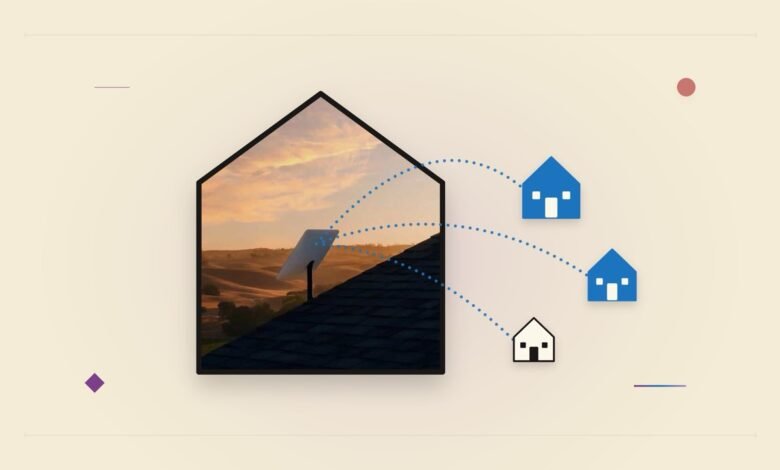
Starlink wants people to order a Starlink Kit, the dish and Wi-Fi router, and sell internet access to the people around them by the hour, day, week or month. A Starlink for communities page that surfaced this week invites property owners, business owners and local entrepreneurs to apply as hosts, and the application form lists Kenya among its 158 countries and territories. Before anyone in Kenya earns anything, though, Starlink’s Kenyan terms bar reselling without its approval. Also currently, Residential orders in Nairobi are still on a waitlist.
Starlink is satellite internet from SpaceX. Normally one household takes a Kit and pays a monthly subscription. Under the community scheme, a host orders one Kit, which Starlink says arrives ready for shared use, and sets it up where several homes or users are nearby. Those neighbours buy passes. Hour, day and week passes last an hour, 24 hours and seven days, each for one device, and a month pass lasts a month and covers up to four devices. Starlink handles the payments, the user access and the connection and, it says, the host earns from every connection. A host can add routers or more Kits to stretch coverage.
So a neighbour who needs internet for an afternoon pays for an afternoon, and one dish is shared by many people. That could suit people who won’t commit to a KES 6,500 monthly subscription, and it gives a café, a landlord or a shop owner something to sell.
The form is a waitlist for a “Community Host Beta Program”, so applying doesn’t mean getting in. It asks where you’d put the Kit (a café or shop, neighbouring households, an apartment block or a community centre), how many sites you want, how many users you expect each month and which pass would sell most. It also asks what price people would pay for that pass, in your local currency. The page itself lists no pass prices.

The form also asks applicants to confirm these minimum requirements:
- an active bank account in their own or their business’s name,
- a registration with their country’s tax authority and
- a tax ID (in Kenya, a KRA PIN, the Kenya Revenue Authority’s tax number), and
- a willingness to fill in a US tax form called a W-8. For individuals that is the W-8BEN, which people outside the US give a payer to declare their foreign status for tax withholding. Businesses use a W-8BEN-E. That probably means hosts will be paid by a US company.
What is still open in Kenya
Starlink’s terms of service for Kenya already forbid customers from reselling access to others, “whether acting as an agent, introducer or in any other capacity”, unless Starlink authorises it. The one exception is the Priority Plan, a business plan whose users get priority over other customers on the network. Its customers may resell access as community Wi-Fi or a hotspot, to hotel guests for example. A host in Starlink’s own scheme would be selling with Starlink’s blessing and with Starlink taking the payments. A Kenyan who sold Starlink access to neighbours outside the scheme would still be bound by those terms, and a breach can get the service terminated.
Kenyan law adds a second layer. The Communications Authority’s public communications access centre licence lets people and businesses that register with the Authority provide communication services to the public through cyber cafés and similar outlets, with internet connectivity bought from licensed internet providers. It forbids reselling bandwidth without the right licence. The licence doesn’t say whether a host selling Starlink passes falls under it.
Then there is the Kit itself. As we covered in July, Starlink stopped taking new customers in Nairobi, Kiambu, Mombasa, Machakos, Murang’a, Kirinyaga and Kwale. As of 4th October 2026 its order page for an address in Westlands still said service was at capacity and offered a KES 6,500 deposit to join a waitlist. Those counties include Kenya’s two biggest cities, where a shared dish would have the most neighbours to serve. Outside them, the Residential order page showed no such notice for Kisumu, Nakuru, Eldoret, Nyeri, Kitale or Kakamega, and in Westlands the business order page showed none either.
That business page sells the Local Priority plans, the ones the terms already let customers resell on. The page doesn’t say which plan a host would buy. It prices the Standard Kit at KES 49,900 and service from KES 4,200 a month for 50 GB, rising to KES 34,600 for 2 TB. Residential is KES 6,500 a month. If hosts pay those prices, the cheapest first year costs KES 100,300 before a single pass sells: KES 49,900 for the Kit and 12 months at KES 4,200. Starlink hasn’t said how a host’s earnings are worked out, so how many passes that takes can’t be worked out yet.
The page also gives no figure for host earnings, no launch date and no list of countries where the beta will start. It doesn’t say what currency hosts are paid in, how Kenyan tax applies to their earnings, whether passes carry data limits, how a Kit’s speed is split between users, or whether the people buying passes will have to register with ID, which Starlink’s Kenyan order page asks of every customer “as required by local authorities”. Its only word on speed is that speeds are maximums, are not guaranteed and will be slower during congestion.





Join the discussion