

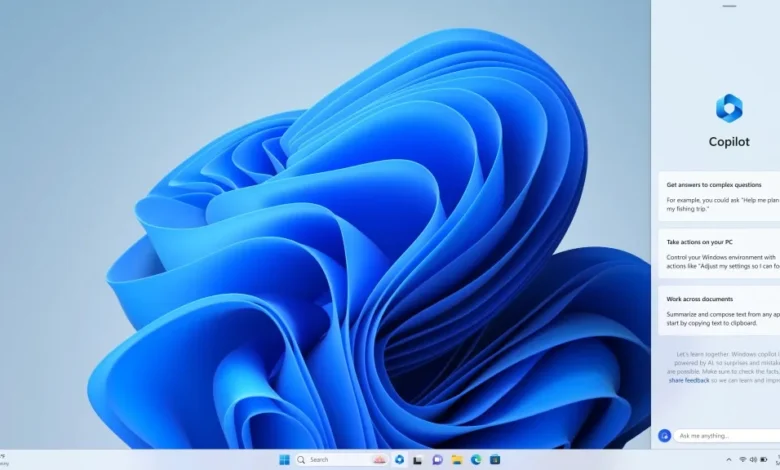
Microsoft wants you to describe a piece of software you need and have Copilot build it on your Windows PC. On sufficiently powerful computers, the AI doing some of that work would run on the machine itself, reducing the amount of processing you buy from cloud services.
That is the practical idea behind the Windows announcements on 7th October 2026. Microsoft is combining AI that runs locally with tools that let it act on your computer, plus security controls that limit what those tools can access.
Last month, we covered the plans for this Windows and Surface event. The announcement answers what Microsoft wants these PCs to do. The rollout will happen in stages, and the largest AI models need hardware well beyond many existing laptops.
What you would actually use it for
Think of a small business keeping sales in a spreadsheet. Its owner might ask Copilot to build a dashboard that reads those figures and shows how sales change each month. That is an illustration of the kind of tool Microsoft is targeting with Code in Copilot, a feature for creating apps and dashboards from written instructions.

Microsoft introduced Code in September. The Windows announcement adds plans to use local AI models for suitable work and create apps that run directly on Windows. Someone who needs a small custom tool could ask for it without first finding an existing app that does the job. The result would still need checking before being trusted with important work.
Copilot would also gain permission to use relevant files and recent PC activity, and carry out tasks such as organising files or troubleshooting problems. Writing software and acting on existing files are different capabilities, although Microsoft is bringing both into Copilot.
For developers, GitHub Copilot is the coding assistant they use to work on software projects. It will gain a system that chooses whether to send a task to a local AI model or a cloud model. Developers can also choose a local model themselves.
What running AI locally changes
With a cloud AI service, your computer sends the request to a server elsewhere, which runs the model and returns the result. With a local model, your own computer performs that processing. Microsoft calls the combination “hybrid intelligence”: some work happens on the PC, while cloud models remain available for other tasks.
The cost benefit depends on how much work stays local. Repeated coding tasks can consume paid cloud processing; using your own hardware for suitable tasks can reduce that consumption. It also gives users a way to process sensitive material on their devices, although configuring a local model does not guarantee that every part of a workflow stays offline.
GitHub explicitly warns that choosing a local model does not enable offline mode or disable telemetry. Microsoft’s September announcement also puts Code among features using usage based billing. Nadella’s promise of “unmetered intelligence” therefore needs to be read alongside the product’s billing and network settings.
The hardware requirement is substantial. Microsoft has adapted its coding model, MAI Code 1.1 Flash, to run locally, but its own tests put the model at 53GB. Peak memory use reaches 75.5GB when it works with the maximum amount of text it supports. Windows and your other applications need memory too.
That explains the new Surface Laptop Ultra, powered by NVIDIA RTX Spark and available with up to 128GB of shared processor and graphics memory. It starts shipping on 16th October from USD 2,599.99, or about KES 337,000 before shipping and Kenyan import charges.
That entry model has 24GB of memory. Buying the new laptop at its starting price will not give you enough memory for this particular coding model.
How Windows would control what the AI can do
An AI tool that can change files needs limits on its access. Microsoft Execution Containers, or MXC, lets developers define those limits. For example, a coding tool could be allowed to edit its project folder while being blocked from unrelated files or network destinations.
Local sandboxing is already generally available in GitHub Copilot. Further Windows integration with Agent 365, Microsoft’s service for managing agents, AI software that carries out tasks on your behalf, is coming soon.
GitHub Copilot’s automatic choice between local and cloud models enters experimental preview later in October. Copilot’s new Windows capabilities are expected on Copilot+ PCs over the coming months, with timing varying by device and market. Microsoft’s hardware announcement gives no Kenya sale date.
Owners of existing PCs will need to check which features their devices get as the rollout begins. Buyers considering a new machine for local coding should compare the cost of a suitable memory configuration with the cloud spending they expect it to replace.






Join the discussion