

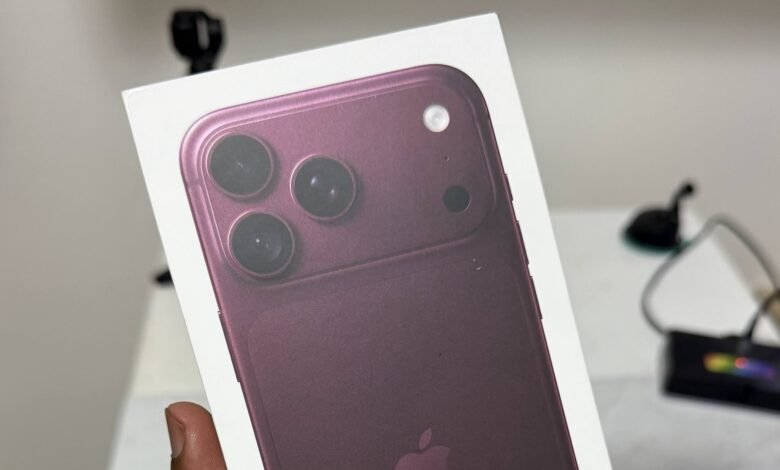
Apple has started giving its retail stores a machine that checks a returned iPhone while it’s still sealed in its box. Staff scan the boxed phone and the machine runs diagnostics on it to confirm it’s intact. If it passes, the box stays sealed and goes straight back into stock. The rollout began earlier this month and the machines are now coming into use, though Apple hasn’t announced any of it. That makes returning a carefully resealed box with the accessories, parts or the phone taken out a lot harder.
The trick it’s built to catch
Someone buys an iPhone and opens the box carefully. Then they take the accessories, open the phone itself to pull out components, or take the phone out altogether. They close the box up and return it, hoping the employee at the counter won’t look too closely. Some of them resell the parts they kept.
To catch that, Apple’s staff have usually been told to open a returned iPhone’s box and check what’s inside. It works, but it costs Apple on honest returns too. Once a box has been opened, the phone can’t go back on the shelf as new. It goes to a warehouse to be processed instead, even if the buyer never touched it.
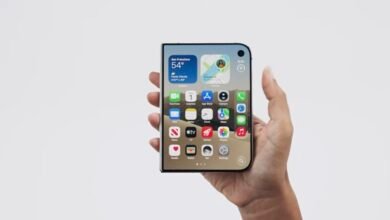
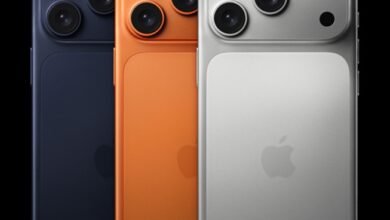
The checker reached stores just ahead of the iPhone Duo, Apple’s first foldable, which went on sale on 23rd October from USD 1,999, or about KES 260,000. Apple’s US return policy gives buyers 14 calendar days, so launch-day buyers there have until 6th November to change their mind. At least one Duo has already gone back for another reason. Over the weekend, owners in several countries posted photos of Duo screens cracking along the hinge within hours of unboxing, and one had theirs replaced on the spot at an Apple Store.

How a machine can check a phone it can’t see
The checker uses the same technology as Presto, a system Apple’s stores already use to update iPhones without taking them out of the box. Staff place a sealed box in it, and it wirelessly switches the phone on, installs the latest version of iOS and switches it off again. Apple built it so new iPhones don’t leave its stores on outdated software. This month the same machines picked up a party trick for the iPhone Duo: US Apple Stores can set a new Duo to say “Hello, Mark”, or whatever the buyer’s name is, the first time it’s switched on.
A machine that can wake a phone through the cardboard can also ask it about itself, and that’s probably what its diagnostics do. If the phone isn’t in the box, there’s nothing to answer. An iPhone also keeps a record of its main parts. Since iOS 15.2, the Parts and Service History section in Settings shows whether a battery, display, logic board, camera or Touch ID sensor that has been replaced is genuine, an unknown part, or one taken from another iPhone. Apple hasn’t said what the checker reads, but we think records like these are how a machine can spot a swapped part without a screwdriver. So if you return an iPhone you never touched to a store that has the checker, it can now go back on sale as new.
Apple hasn’t said which countries or stores have the checker, what exactly its diagnostics test, whether it can tell when only the cable is missing from the box, or whether it checks other products such as iPads and AirPods.
What it means in Kenya
Apple doesn’t run an Apple Store in Kenya, or anywhere in Africa. Kenyans buy iPhones from resellers instead, and earlier this month we told you that you could pre-order the Duo from one of them, Abufulan Store. The checker sits in Apple’s own stores, so it isn’t checking the boxes on local shelves, and a seal on its own doesn’t tell you what’s inside.
So check the phone itself before you pay. Ask the shop to open it and set it up in front of you, then go to Settings, General, About. Apple says the Parts and Service History section appears once an iPhone has been repaired, so on a new phone it shouldn’t be there at all. If it is, a part has been replaced, and you should hand that one back.




Join the discussion