

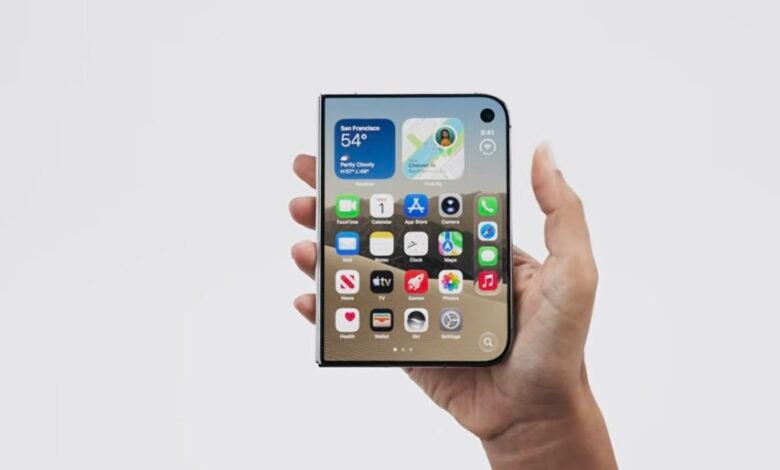
The iPhone Duo’s two batteries came out cleanly in repair firm iFixit’s teardown, and its outer screen survived removal. The folding inner screen and hinge are much harder to repair, leaving the phone with a provisional 5/10 for repairability.
For anyone deciding whether to buy Apple’s first foldable phone, that score describes the practicalities of fixing it. It gives no estimate of how likely the screen is to break.
Earlier this week, we examined the reports of iPhone Duo screens cracking within hours of purchase, sometimes during setup. iFixit proposes a possible explanation in its teardown. That explanation still needs confirmation.
Why the score is provisional
iFixit was still waiting for replacement parts when it assigned the score. Owners need those parts as well as published instructions before they can make use of the repair procedures.

Removing the batteries is one of the design’s strengths. The adhesive holding one battery releases when electricity is applied, and the other battery uses the same method. This reduces the need to bend or pry the cells out. Metal battery shells also help protect against accidental punctures. Smaller components were fairly accessible.

Where stress could build up beneath the screen
Apple’s hinge has more than 100 components and supports the centre of the display when the phone is open. The screen’s layers and adhesives allow movement as it folds. Like the pages in a bent stack of paper, the layers need to travel different distances without being stretched or squeezed too much.
A flexible cable runs through a gap in the hinge to connect the phone’s two halves. In iFixit’s model, the reported breaks cluster near the transition between that gap and the central hinge support. One simulation shows the central support bar failing to lower far enough as the phone closes. The curved screen then presses against it, which could concentrate stress near the reported break location.
This remains a hypothesis: the simulation does not establish that this movement caused the failures in owners’ phones or show how many devices might be affected.
The screen panel and hinge assembly are different repairs
Apple’s parts list includes both an inner display and a larger inner display assembly. Even replacing the panel alone takes considerable work: the inner-screen procedure requires heat and cutting to release it, followed by fresh adhesive and glue, alignment equipment and time for the repair to set.
The polymer cover layer can be replaced separately, but this also needs specialist equipment. Owners should not treat it as an ordinary screen protector to peel off.
For an unresolved hinge fault, Apple’s troubleshooting instructions direct technicians to replace the inner display assembly. The assembly replacement procedure involves transferring components from both halves of the phone. A screen-only replacement and a hinge repair are different jobs.
In the US, replacing the inner display outside warranty costs USD 999, or about KES 130,000. With AppleCare+, Apple’s paid damage-cover plan, the inner-display damage fee is USD 99, or about KES 12,900.
The easier battery removal is useful, but screen and hinge work remain complex, with expensive inner-display repairs. Buyers still have no reliable estimate of their own screen’s risk while the cause and frequency of the reported cracks remain unresolved.




Join the discussion