

LOOP, a Kenyan digital banking app regulated by the Central Bank of Kenya, launched LOOP BIZ+ today. LOOP BIZ+ is a bundle for small and medium businesses: payments, stock management, a listing in the LOOP app and business loans, all behind one sign-up.
LOOP says merchants who collect payments through it can borrow without filling a loan form or putting up collateral, because LOOP reads their sales instead. After 90 days of activity a merchant is assessed automatically, and the limit grows as more money comes through. So the payments side is how LOOP gets to know a business well enough to lend to it.
What’s in the bundle
A small shop in Kenya can easily end up with a card machine from one bank, an M-Pesa till, a paper stock book and a loan from somewhere else, each with its own records. LOOP BIZ+ puts all of that in one account, and there are six parts to it.
- LOOP Till. A QR code customers scan to pay with LOOP, M-Pesa or Airtel Money. It needs no hardware and goes live in minutes.
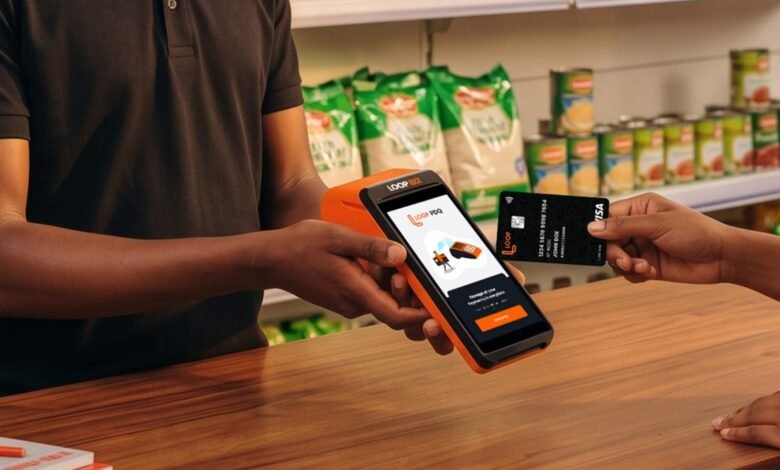
- LOOP BIZ PDQ. PDQ is the banking term for a card machine. This one takes Visa and Mastercard cards, contactless taps and mobile money, and LOOP says it pays out to any bank account in Kenya, so a merchant can keep the bank they already use. It takes 24 to 48 hours to set up, and the same checkout works in the LOOP BIZ app and on the web.
- Stock tool. LOOP calls it AI-powered inventory. It tracks stock, forecasts demand, suggests what to reorder and flags slow-moving items every morning. LOOP says it’s live for merchants on the web platform today and comes to the app in 2027, though LOOP’s own Till page still marks it “Coming Soon”.
- Sales dashboard. It shows revenue by product, branch or channel.
- Working capital. An overdraft, a quick loan and a term loan, all assessed from the merchant’s sales through LOOP. We explain how they work, and what they cost, below.
- LOOP Discover. It lists a merchant’s deals in the LOOP consumer app, which LOOP says has more than 500,000 shoppers. Listing is free.
How the loans work
LOOP has three business loans, and every one is subject to approval.

- Overdraft. KES 1,000 to KES 500,000, renewed monthly. LOOP pitches it for day-to-day float, paying suppliers and covering gaps in cash flow.
- Quick loan. KES 1,000 to KES 500,000, for 1, 5, 10, 20 or 30 days. LOOP pitches it for emergency restocking and short trading cycles.
- Term loan. Up to KES 3 million over 3 to 36 months, for bigger jobs like refurbishing a shop, buying stock in bulk or expanding. A merchant can top it up partway through without applying again.
LOOP’s launch statement also mentions supplier credit, paid straight to a named supplier, but the website doesn’t list it yet.
The LOOP BIZ app also has what LOOP calls credit gamification. A merchant sets a target limit and watches their progress towards it. It’s only in the app for now, and LOOP says web merchants get it soon.
LOOP’s tariff guide for September 2026 puts a facility fee of 6% to 8% on a quick loan, depending on how risky LOOP judges the borrower. So a KES 10,000 quick loan costs KES 600 to KES 800 in fees. The fee isn’t tied to the loan’s length, which means, as far as the guide shows, a 5-day loan pays the same as a 30-day one. Rolling the loan over costs another 6% to 8%. The overdraft costs less up front: a 2% fee on the amount drawn, plus interest from a base rate of 15.9% a year, rising with risk. VAT and excise duty go on top where they apply.
Merchants also pay KES 300 in ledger fees on a LOOP BIZ account, and the guide doesn’t say whether that’s monthly or yearly. Mobile money collected on the PDQ by STK push, the prompt that pops up on the customer’s phone asking for their PIN, costs the merchant 0.5% of the payment.
What LOOP hasn’t said
LOOP hasn’t published the price or rental cost of the PDQ, or the fee merchants pay on card payments. It hasn’t said how many merchants use LOOP BIZ. The tariff guide lists a 4% facility fee and 0.7% insurance for “Term Loan, LOOP FLEX”, the buy now, pay later plan for devices that we covered when LOOP and bolttech announced it in September 2025. It doesn’t say whether the merchant term loan pays the same.
Safaricom already lends against tills
Lending against a till isn’t new in Kenya. Safaricom’s Taasi Till Loan, funded by Asante, already sets limits from a business’s Lipa na M-Pesa till activity. It lends up to KES 200,000 for 1, 7 or 21 days. LOOP is offering bigger loans and longer terms, with card payments in the same account.
Who it suits
For a shop that already takes M-Pesa and wants card payments too, a Till with no hardware to buy and a card machine that pays into any bank are easy to try. The loans need more thought, because a new merchant waits 90 days for a limit and the quick loan gets expensive if it becomes a habit. A 6% fee taken every month comes to 72% over a year. Before signing, get the PDQ price, the card fee and how often the KES 300 ledger fee is charged from LOOP in writing.






Join the discussion