

Airtel Kenya has acquired 100MHz of spectrum in the 3500MHz band for USD 65 million, or about KES 8.45 billion, adding radio resources it can use to expand network capacity. For customers using Airtel on their phones or through a home broadband router, the potential benefit is a connection that holds up better when more people are online.
The acquisition appears in parent company Airtel Africa’s half-year results published on 30th October 2026. It has a 25-year term and follows approval from the Communications Authority of Kenya, the telecoms regulator, subject to standard conditions.
Customers still need Airtel to deploy the frequencies where they use the service, with equipment that can connect to them. A spectrum purchase on its own doesn’t change the speed of an existing home internet plan.
What the additional spectrum can do
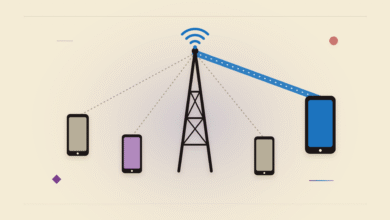
Spectrum is the range of radio frequencies a network uses to communicate with phones and cellular routers. In this acquisition, 3500MHz, also written as 3.5GHz, identifies the frequency band, while 100MHz describes how much spectrum Airtel has acquired within it. Those figures don’t describe download speeds, which are measured in megabits per second, or Mbps.

The 3.5GHz range is mid-band spectrum, with a balance of coverage and capacity. Wider usable bandwidth gives a deployed network more room to carry traffic. That capacity is shared among customers connected to the relevant part of the network, so additional spectrum can help Airtel accommodate more users or improve service where congestion is holding speeds down.
For a household whose internet slows when neighbouring homes are also streaming, more capacity could help the connection stay closer to its purchased speed during busy periods. How much it helps depends on what Airtel deploys and the load on that site.
The investment builds on earlier spectrum purchases. Airtel’s July 2022 results disclosed 60MHz in the 2600MHz band, with a 15-year licence term. Airtel connected that purchase to mobile data expansion, fixed wireless home broadband and a future 5G rollout. The new acquisition is a separate assignment in a different band.
Home broadband still has its own limits
Fixed wireless home broadband uses the mobile network to reach a router at your premises, which then shares the connection over Wi-Fi or Ethernet. Your laptop can use that Wi-Fi connection without having its own 5G modem. The operator doesn’t need to run a fibre cable all the way into your home to connect you this way.
When we examined Airtel’s home broadband expansion in May, the group was already investing in household connectivity across its markets. The Kenyan plans show how customers could benefit from additional capacity, even while their purchased speeds stay the same.
Airtel’s Smart Connect home plans, checked on 1st November 2026, include a 15Mbps package at KES 1,999 for 30 days and a 30Mbps package at KES 2,999. The device is listed as free, with a KES 1,000 connection fee. That puts the initial total at KES 2,999 or KES 3,999 respectively.
Both 30-day plans have a 1,000GB fair usage allowance. Once that is exhausted, the listed speed falls to 2Mbps. Airtel also lists a 300GB booster for KES 1,000, which expires with the main plan.
If congestion prevents your 30Mbps plan from reaching that speed, additional deployed spectrum could help. If your connection already reaches 30Mbps, the purchase doesn’t automatically move you to a higher tier. The fair usage limit also remains part of the plan. Nothing in the acquisition announcement changes those retail terms.
Coverage and compatible equipment still matter
More radio capacity also needs sufficient backhaul, the connection between a radio site and the rest of the network. If that connection is constrained, adding spectrum alone won’t resolve it. Reception at the customer’s end matters too: walls, windows and other building materials can weaken signals, so outdoor coverage doesn’t guarantee the same experience inside a house.
For mobile customers, Airtel’s current guidance says its 4G physical SIMs and eSIMs, the digital alternative to a removable SIM card, automatically upgrade for 5G, while the device must be compatible. Existing mobile data bundles remain usable. The home unlimited plans are restricted to the Smart Connect router, and Airtel warns that not every portable hotspot or router supports 5G.
The filing gives no deployment timetable or guaranteed speed improvement. It also leaves out the exact frequency boundaries and details of the standard conditions. Neither the acquisition disclosure nor the customer page identifies which existing router models can use the newly acquired spectrum, so current owners cannot tell from those pages whether their equipment will benefit.
We’d judge this investment by how well a compatible connection holds up at a customer’s address during busy periods. Airtel has acquired a resource that can help it serve more traffic, while households still need usable local coverage and a plan that meets their needs. Existing owners should confirm their router’s compatibility before spending money on replacement equipment.




Join the discussion