
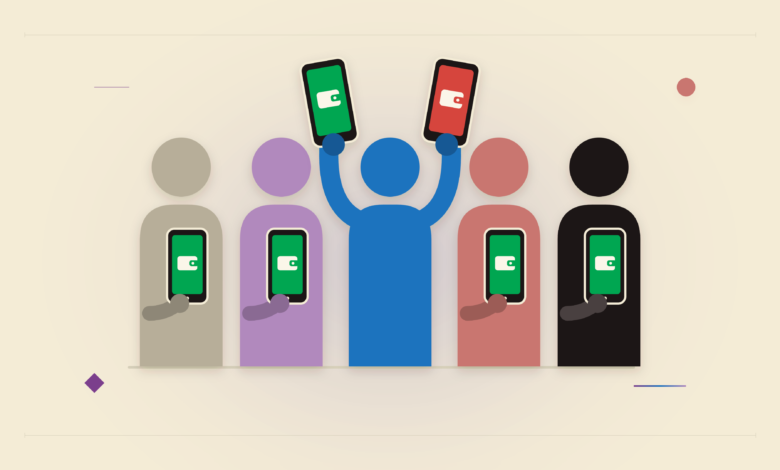
Safaricom added 11,513,403 active SIM cards in the year to 30th June 2026. Kenya’s whole mobile market added 11,309,280.
One company grew by more than the market because the others shrank. Airtel ended the year with 58,801 fewer lines, Telkom with 323,023 fewer and Equitel with 31,711 fewer. Only Jamii Telecommunications, which sells as Faiba, grew alongside Safaricom. Add it all up and the market’s net gain comes in just below Safaricom’s on its own.
The figures are in the Communications Authority of Kenya’s sector statistics report for April to June 2026. Kenya now has 87,999,998 active SIM cards, up 14.75% in a year. Of that, 3.9 million came in the last three months alone, which is the 4.6% quarterly rise the report leads with.
| Operator | June 2025 | June 2026 | Change | Share |
|---|---|---|---|---|
| Safaricom | 49,933,605 | 61,447,008 | +11,513,403 (+23.1%) | 69.8% |
| Airtel | 23,659,770 | 23,600,969 | -58,801 (-0.2%) | 26.8% |
| Equitel | 1,500,327 | 1,468,616 | -31,711 (-2.1%) | 1.7% |
| Jamii (Faiba) | 728,228 | 937,640 | +209,412 (+28.8%) | 1.1% |
| Telkom | 868,788 | 545,765 | -323,023 (-37.2%) | 0.6% |
| Total | 76,690,718 | 87,999,998 | +11,309,280 (+14.75%) |
Safaricom’s share went from 65.1% to 69.8% in a year. Airtel’s went from 30.9% to 26.8%. Seven in ten active SIM cards in Kenya are now Safaricom’s.

What’s being counted
These are SIM cards, not people. Many Kenyans carry two lines, and a phone with two SIM cards in it counts as two. There are 8,316,577 more active SIM cards in Kenya than there are phones connected to networks.
“Active” has a specific meaning too. The Communications Authority (CA), Kenya’s telecoms regulator, counts every postpaid line, and a prepaid SIM if it was used at least once in the past three months. We covered the March numbers in June, when the count was 84 million.
Two years ago, Airtel was the one winning
| Year to June | Market | Safaricom | Airtel |
|---|---|---|---|
| 2024 | +2,453,617 | +1,149,092 | +2,219,067 |
| 2025 | +7,797,941 | +4,856,114 | +3,366,127 |
| 2026 | +11,309,280 | +11,513,403 | -58,801 |
In the year to June 2024, Airtel added almost twice as many lines as Safaricom. Its share rose from 27.2% in June 2023 to a peak of 32.2% in March 2025, when it had 24.5 million lines. It has fallen in every quarter since, and at 26.8% it’s now below where it was three years ago.
Airtel’s year turned on one quarter. It lost 1,130,231 lines between October and December 2025. In the other three quarters it added 1,071,430.
Airtel’s customers are still heavy users, though. Airtel carried 34.93% of all voice minutes on Kenyan mobile networks between April and June, well above its 26.8% share of lines.
Where Safaricom’s 11.5 million came from
Most of Safaricom’s year happened in six months. It added 5,547,829 lines between January and March and 3,517,397 between April and June, 9,065,226 in total.
The CA credits the growth to “customer win-back campaigns run by mobile network operators”. A win-back campaign is a push to get people to switch an old, unused line back on, usually with bonus airtime or cheap bundles.
Safaricom’s own figures show what that means. It counts customers two ways in its annual report for the year to March 2026. Customers who used Safaricom at least once in three months rose by 9.69 million, to 57.93 million. That’s the same measure the CA uses: its figure for Safaricom in March was 57,929,611. Customers who used Safaricom in the last month rose by 2.81 million, to 39.92 million.
So of the 9.69 million customers Safaricom added on the three-month count, only 2.81 million showed up on the monthly one. The difference, 6.88 million, is lines used at least once in three months but not in the most recent month.
Safaricom also needed room for more numbers. In August it opened nine new number prefixes, including 0140 to 0143 and 0180 to 0182, the first 014 and 018 mobile numbers in Kenya.
The smaller networks
Jamii Telecommunications grew 28.8% to 937,640 lines. It only sells data. Equitel slipped 2.1% to 1,468,616.
Telkom Kenya is down to 545,765 lines, 0.6% of the market. Three years ago it had 2,522,887.
What to watch
The CA’s next report covers July to September 2026 and is due around December. It will show whether Safaricom keeps adding lines at this pace, and whether Airtel’s growth in the last two quarters holds. Safaricom is also Kenya’s biggest home internet provider and runs 88.8% of active mobile money accounts.





Join the discussion