

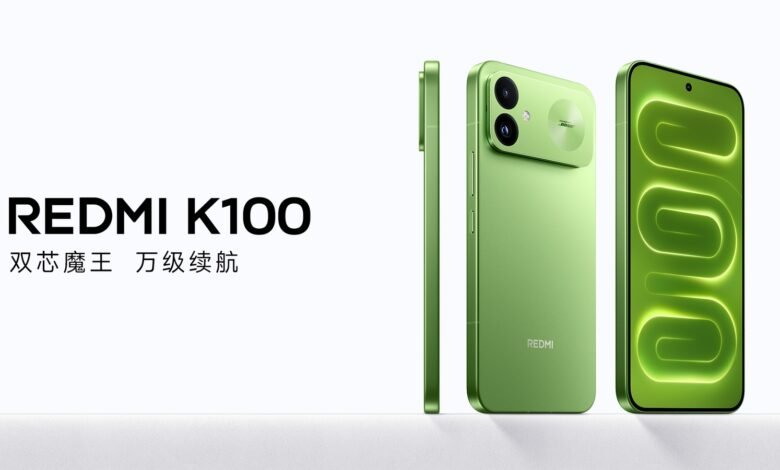
The cheapest phone in Xiaomi’s Redmi K100 range has the biggest battery. When we covered the standard Redmi K100 earlier this month, its main draw was a 10,000mAh battery and a 165Hz screen from about USD 523 or KES 68,000 in China. On the Redmi K100 Pro, from about USD 598 or KES 78,000, the battery drops to 8,580mAh. The Redmi K100 Pro Max starts at about USD 673 or KES 88,000 with a 9,070mAh battery.
It’s the same upside-down split we saw when we compared Honor’s WIN2, RT2 and Turbo2 on 2nd November. If you’re weighing the three K100 phones or their Poco twins in Nairobi shops, the question is what took the battery’s space and whether the extra hardware is worth losing up to 1,420mAh.
Why the Pro and Pro Max carry smaller batteries
Part of the answer is timing. Redmi is Xiaomi’s phone brand, and Xiaomi launched the K100 Pro and Pro Max in China on 11th August 2026, before the K100 arrived on 27th October. All three use silicon-carbon batteries, which mix silicon into the anode (the part holding lithium when charged) to pack more charge into the same space. The August phones use a 945Wh/L (watt-hours per litre) cell and HyperOS 3 on Android 16; the October K100 gets a denser 957Wh/L cell and HyperOS 4 on Android 17. Xiaomi’s Pro and Pro Max pages list only typical (average) capacity and omit the rated minimum (9,800mAh on the K100).
Size and extra parts explain the rest. The K100 Pro is the smallest and lightest at 6.59 inches and 218g, against 6.83 inches and 234.5g on the K100 and 6.9 inches and 238g on the Pro Max. Both Pro models also add 50W wireless and 22.5W reverse wireless charging alongside 100W wired and 27W reverse wired charging; the K100 skips wireless charging.

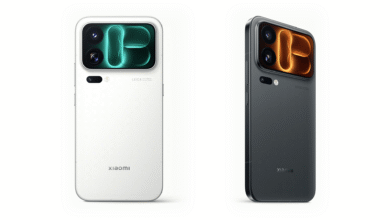
Above the battery, both Pro models carry a 200MP main camera with optical image stabilisation (OIS) to counter hand shake. That 1/1.56-inch sensor matches the K100’s 1/1.55-inch 50MP sensor in size, so the real upgrade is optical zoom. The Pro adds a 50MP 2.5x telephoto lens and an 8MP ultrawide. The Pro Max uses a 50MP periscope lens with an angled mirror for 5x optical zoom, a 50MP ultrawide, and a Bose-tuned subwoofer in the camera island for 2.1 audio. The K100 has a 50MP main camera and an 8MP ultrawide with no zoom lens, which leaves room for its 10,000mAh cell.
185Hz screens, three chips and Kenyan Poco prices
Both Pro models step up to 4,500-nit, 185Hz screens, matching the OnePlus 16 we covered in October. That 185Hz rate only runs in supported games, and all three use Xiaomi’s D2 chip to insert extra frames and upscale graphics. The K100 runs Qualcomm’s 2024 Snapdragon 8 Elite, the Pro Max runs the newer Snapdragon 8 Elite Gen 5, and the Pro uses the Snapdragon 8 Elite Gen 5 V Series. Both Gen 5 chips share 4.6GHz processor cores, but the V Series cuts the Adreno graphics unit from 12 compute units to 8 and graphics memory from 18MB to 12MB, so heavy 3D games hold steadier frame rates on the Pro Max.
| Spec | Redmi K100 | Redmi K100 Pro | Redmi K100 Pro Max |
|---|---|---|---|
| Screen | 6.83″ OLED, 165Hz, 3,500nits | 6.59″ OLED, 185Hz, 4,500nits | 6.9″ OLED, 185Hz, 4,500nits |
| Chip | SD 8 Elite + D2 | SD 8 Elite Gen 5 V + D2 | SD 8 Elite Gen 5 + D2 |
| Battery (China/Poco) | 10,000mAh (China only) | 8,580mAh / 6,330mAh | 9,070mAh / 8,050mAh |
| Rear cameras | 50MP OIS + 8MP | 200MP OIS + 50MP 2.5x + 8MP | 200MP OIS + 50MP 5x + 50MP |
| China regular (12/256GB) | CNY 3,499 (USD 523 / KES 68,000) | CNY 3,999 (USD 598 / KES 78,000) | CNY 4,499 (USD 673 / KES 88,000) |
| China promo (12/256GB) | CNY 2,999 (USD 449 / KES 58,000) | CNY 3,699 (USD 553 / KES 72,000) | CNY 4,199 (USD 628 / KES 82,000) |
Xiaomi hasn’t announced a global K100, and its Chinese pages don’t state update years for the K100 series. The Poco F9 Pro and F9 Ultra launched globally on 1st September as rebadged K100 Pro and Pro Max units with four Android upgrades and six years of security patches. Both are now in Nairobi: Avechi lists the Poco F9 Pro from KES 79,999 (12/256GB) and the Poco F9 Ultra from KES 106,499, while Xiaomi Store Kenya lists the 16/512GB F9 Ultra at KES 114,999. As we noted in our Poco F9 Ultra breakdown, Xiaomi cuts the battery again on export without saying why, to 8,050mAh on the F9 Ultra and 6,330mAh on the F9 Pro.
We think the standard K100 is the sensible pick if you’re importing from China for battery life. The K100 Pro only makes sense for its 6.59-inch size, and its 6,330mAh Poco F9 Pro twin loses too much battery at KES 80,000. For the 185Hz screen, wireless charging and optical zoom, the K100 Pro Max in China, or the 8,050mAh Poco F9 Ultra in Nairobi, is the better buy.






Join the discussion