

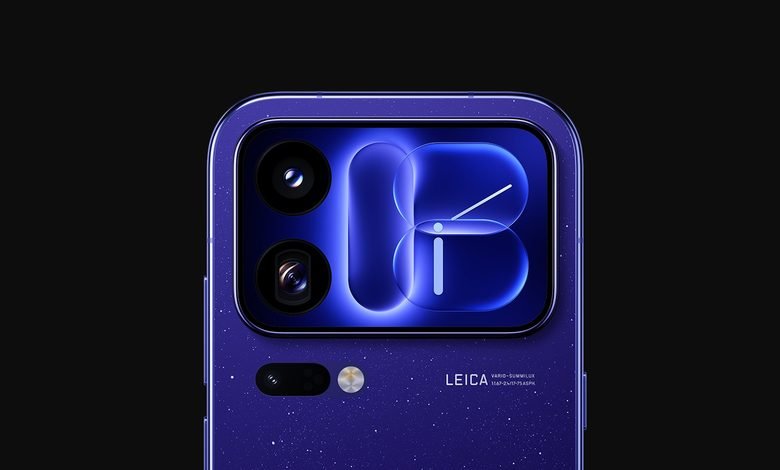
Xiaomi brought the 18 Pro and 18 Pro Max to Paris on Tuesday 17th November 2026, two months after launching them in China. From the outside, little changed apart from the colours. They have the same Snapdragon chips, the same screens on the front and back, and the same Leica cameras. Inside, the battery shrank. The global 18 Pro Max has 7,050mAh, down from 8,500mAh, and the global 18 Pro has 6,000mAh, down from 7,000mAh.
That’s the version most of the world will buy, and it isn’t the one most people have read about. These are the first Xiaomi Pro phones sold outside China since the Xiaomi 13 Pro in 2023. Last year’s Xiaomi 17 Pro and 17 Pro Max never officially left China. So almost everything written about the 18 Pro series since September, our own China launch coverage included, described the China phones.
On Monday, we wrote that pre-launch listings pointed to the smaller battery. Xiaomi’s own spec sheets now confirm it, and they show more. The smaller Xiaomi 18 Pro charges slower. Only 12GB models are on sale. Google’s Gemini comes in, while the iPhone features and the car keys aren’t included. Also, depending on where you buy, you’ll pay 35% to 78% more than the China price.
So what exactly do you give up, and what do you get, when you buy one outside China?

The battery is smaller, and it’s a different kind of battery
A battery’s mAh figure is how much charge it holds, so a bigger number should mean longer between charges. These phones use silicon-carbon batteries. Inside a lithium battery, the negative side has long been made mostly of graphite. Silicon holds far more lithium than graphite does, so mixing silicon in lets a battery store more charge in the same space. That’s why phone makers now quote the silicon share. Xiaomi’s China cells are 32% silicon. The global ones are reduced to 28%.
Xiaomi also gives each battery’s energy density, which is how much energy it packs into a litre of space. In China, the Xiaomi 18 Pro is 936Wh/L and the Xiaomi 18 Pro Max 946Wh/L. The global phones are 840Wh/L and 845Wh/L, about 10% lower. So the global phones carry a less dense cell as well as a smaller one. The Pro loses 1,000mAh, a 14% cut, and the Pro Max loses 1,450mAh, a 17% cut.
Put simply, the global 18 Pro Max holds about what the China 18 Pro does, 7,050mAh against 7,000mAh, and the global 18 Pro holds less than both. Battery life depends on more than capacity, but on paper a global phone should last less on a charge than the same model bought in China.
The smaller cells also take 5g off the Pro and 6g off the Pro Max. Xiaomi hasn’t said why it cut the batteries, but it has done this before. In September, the Poco F9 Ultra launched with 1,020mAh less than the Redmi K100 Pro Max it’s built from.
The 18 Pro charges a little slower, and the charger isn’t in the box
In China, both phones charge at up to 100W with a cable and 50W wirelessly. The global 18 Pro Max keeps both. The global Xiaomi 18 Pro drops to 90W wired and keeps 50W wireless.
The China box has a power adapter, a case and a screen protector already fitted. Xiaomi’s UK spec sheets list a USB-C cable, a case and the SIM tool, with no adapter. Early buyers in the UK get a free 90W adapter and a 6A cable until 31st December 2026. Japan is the exception: both phones there ship with a 100W adapter, a soft case and a fitted screen protector. So check your country’s listing before you assume there’s a charger.
Only 12GB models are on sale
In China, you can pick 12GB of RAM with 256GB or 512GB of storage, or 16GB with 512GB or 1TB. There’s also a Transparent Special Edition with a see-through red back, sold only as 16GB/1TB.
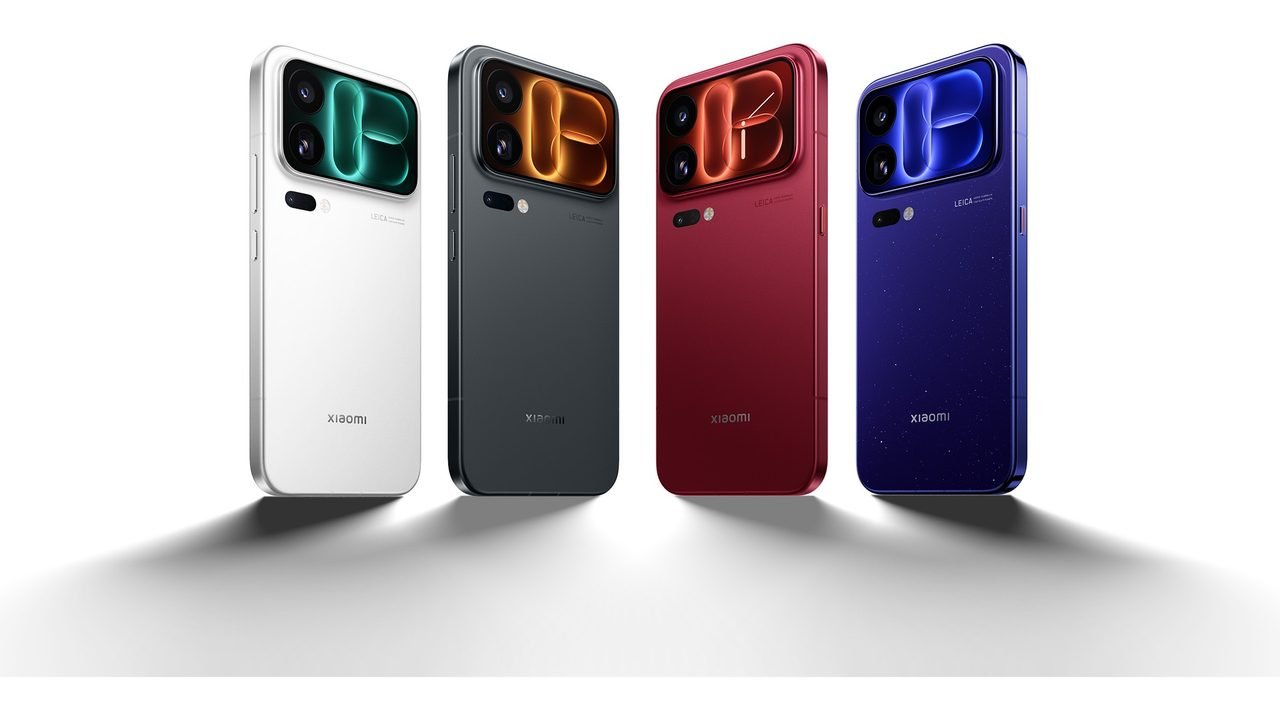
The colours changed too. China gets black, white, pink and blue, plus the Transparent edition. The global phones come in White, Black, Cosmic Blue and Velvet Red, so pink and the Transparent edition stay in China, and Velvet Red is new.
China features not included
Phones sold in China don’t come with Google’s apps. The global ones do, so you get the Play Store, Gemini, Gemini Live (which can see through your camera or your screen while you talk to it) and Circle to Search.
They also get Xiaomi Offline Communication, which isn’t on the China pages. It lets two supported Xiaomi phones call each other with no mobile network, directly, over Bluetooth and a protocol Xiaomi built itself. Xiaomi says the 18 Pro Max reaches up to 1.5km in open areas with nothing in the way. For the Xiaomi 18 Pro, it only says “a limited range”. You need a SIM card, a signed-in Xiaomi account and Bluetooth switched on. So it’s for a hike or a big event with no signal, between people who both carry a supported Xiaomi. Xiaomi says it isn’t meant for emergency calls, and it’s paused in Vietnam, the Philippines and Taiwan for now. The feature isn’t new: the Xiaomi 15T and 15T Pro got it first last year, then the Poco F8 Pro and F8 Ultra.
Features that’ve been removed:
- The China phones have UWB, or ultra-wideband, a short-range radio that works out precisely how far away another device is and in which direction. Xiaomi’s China pages pair it with a digital car key for some Xiaomi, XPeng and Audi cars. The global spec sheets don’t list UWB. Both versions have NFC for tap-to-pay.
- The China phones also work with Apple devices. They share files with an iPhone when you tap the two together, sync notifications with an iPhone and pair with an Apple Watch. Xiaomi’s global pages don’t list any of that.
What stays the same
The Xiaomi 18 Pro runs Qualcomm’s Snapdragon 8 Elite Gen 6 and the 18 Pro Max the Snapdragon 8 Elite Extreme Gen 6, which we explained in September. The main screens are 6.4 and 6.9 inches, with up to 4,000 nits of brightness and a privacy mode that makes them hard to read from the side. The screens on the back are 2.7 and 2.9 inches.
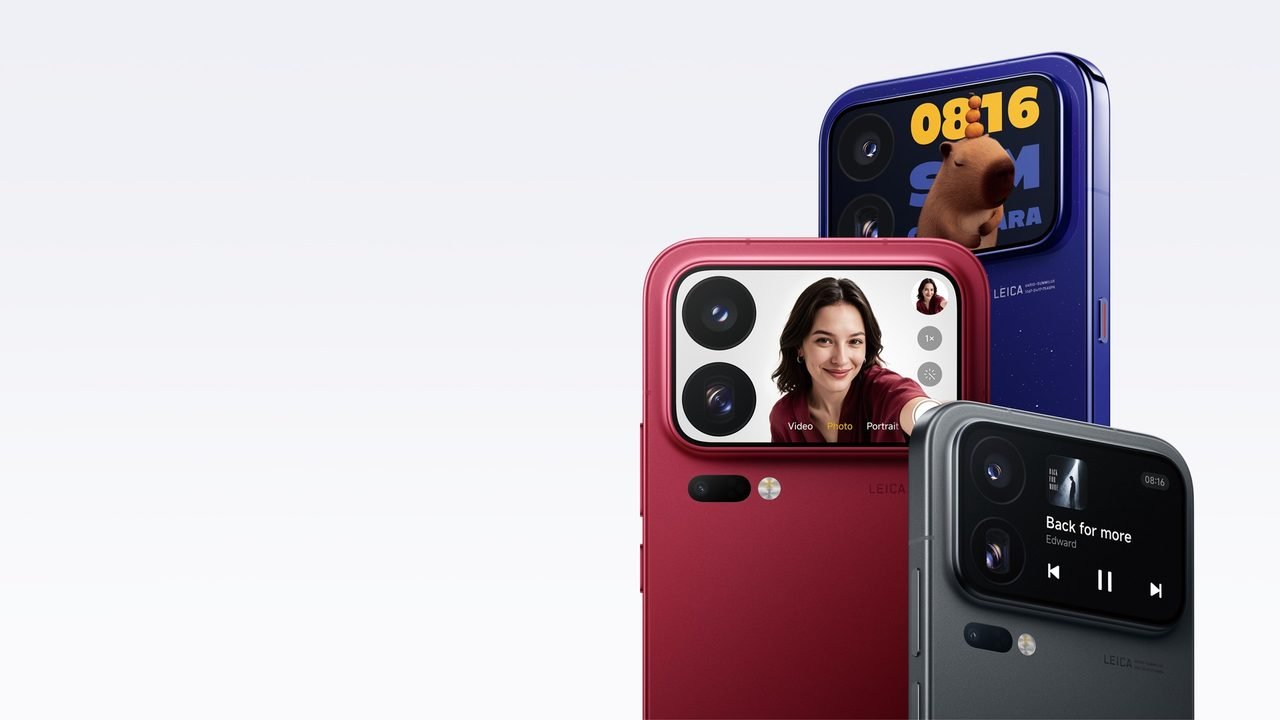
On the back, both phones have a 200MP main camera on a 1/1.28-inch sensor, a 200MP telephoto at 75mm (about 3.2x zoom) and a 50MP ultrawide. Both are rated IP68, which means dust-tight and able to survive a dunk in fresh water. Xiaomi tests the Pro at 1.5 metres and the Pro Max at 6 metres for 30 minutes, the same as in China. The Pro has two speakers, the Pro Max three, and both run HyperOS 4. Xiaomi hasn’t published how many years of Android and security updates either phone gets.
| China version | Global version | |
|---|---|---|
| 18 Pro battery | 7,000mAh | 6,000mAh |
| 18 Pro Max battery | 8,500mAh | 7,050mAh |
| Silicon content | 32% | 28% |
| Energy density (Pro / Pro Max) | 936Wh/L / 946Wh/L | 840Wh/L / 845Wh/L |
| Wired charging (Pro / Pro Max) | 100W / 100W | 90W / 100W |
| Wireless charging | 50W | 50W |
| RAM and storage on sale | 12GB/256GB, 12GB/512GB, 16GB/512GB, 16GB/1TB | 12GB/256GB, 12GB/512GB |
| Weight, 18 Pro | 203g (208g blue and Transparent) | 198g (203g Cosmic Blue) |
| Weight, 18 Pro Max | 235g (240g some finishes) | 229g (234g Cosmic Blue) |
| Colours | Black, white, pink, blue, Transparent edition | White, Black, Cosmic Blue, Velvet Red |
| Google apps and Gemini | No | Yes |
| Xiaomi Offline Communication | Not listed | Yes |
| UWB (car keys) | Yes | Not listed |
| iPhone and Apple Watch features | Yes | Not listed |
| Charger in the box | Yes | No (Japan: yes) |
| Chips, screens, rear cameras, IP68 rating | Same | Same |
Prices: 35% to 78% more than in China
The Xiaomi 18 Pro starts at about USD 898 or KES 117,000 in China. In Germany, it starts at €1,399.90, about USD 1,540 or KES 200,000, which is 71% more. The Xiaomi 18 Pro Max goes from about USD 1,048 or KES 136,000 in China to €1,599.90 in Germany, about USD 1,760 or KES 229,000, which is 68% more.
Part of that gap is tax. Every price here includes it, but China charges 13% VAT and Germany 19%. Take the tax out of both and the German 18 Pro still costs about 63% more.


Join the discussion