

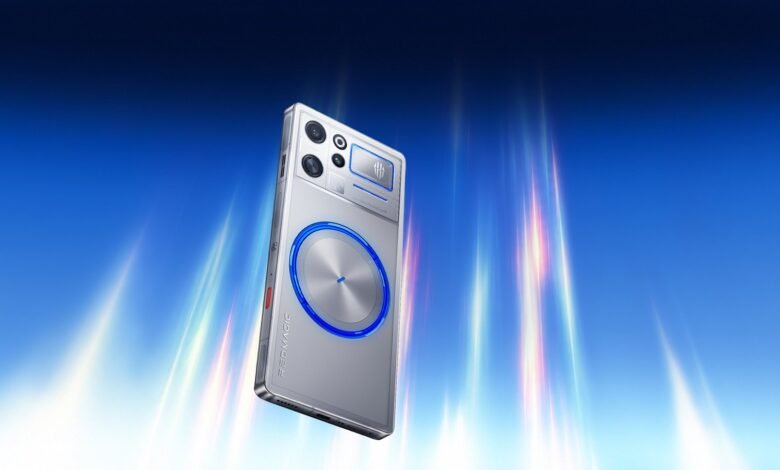
The REDMAGIC 12 Pro went on open sale on Wednesday 18th November 2026. REDMAGIC, the gaming phone brand under Chinese phone maker nubia, announced it for global markets on 3rd November. On its global store, it starts at USD 899, or about KES 117,000, for the 12GB and 256GB version.
For gamers, there’s two main reasons to buy one: the 185Hz screen and liquid cooling with a built-in fan. So what do they actually get you once you buy the device?
The 185Hz screen
The REDMAGIC 12 Pro’s screen goes up to 185, up from 144 on last year’s 11S Pro. But a screen only shows the frames a game draws, so a game running at 60 frames a second looks like 60 anywhere. REDMAGIC’s own small print says 185Hz performance “may vary depending on game optimization progress”.
Few games go that high. In GSMArena’s lab testing, the phone mostly stayed capped at 144Hz, even with 185Hz switched on. 185Hz showed up in eight titles: Genshin Impact, PUBG Mobile, Call of Duty: Warzone Mobile, Fortnite, Honkai: Star Rail, Wuthering Waves, League of Legends: Wild Rift and Nikki. Even then, it mostly got there through frame interpolation: the phone’s RedCore R5 gaming chip makes up extra frames and slots them between the real ones. Motion looks smoother, but the game isn’t running any faster.

So if you play those eight, you’ll notice. For everything else, the 12 Pro is a 144Hz phone like the 11S Pro.
REDMAGIC calls the screen an industry first, but the ROG Phone 9 Pro and Honor’s Win series already had 185Hz. What’s new is the selfie camera hidden under it, so nothing cuts into your game.
The cooling system
When a processor gets too hot, the phone slows it down to protect it. That’s why many phones start a game smoothly and stutter later, as we explained when Qualcomm announced the Snapdragon 8 Elite Extreme Gen 6, the chip inside the 12 Pro.
REDMAGIC’s fix pumps coolant through two sealed loops, over the processor and the battery, and a 25,500rpm fan pushes the hot air out through its own duct. The fan is the hard part, because an opening for air is also an opening for water and dust. The 11S Pro was only rated IPX8, for water. The 12 Pro is rated IP68 and IP69, so it’s dust-tight and rated against submersion and hot high-pressure water jets, though the fan duct is still only IPX8.
In real games, the cooling barely has to work. In this reviewer’s tests, the phone stayed under 35°C in Call of Duty: Mobile and in Genshin Impact at maximum graphics, and the fan didn’t need to switch on. That was a cool UK autumn; the tester says a warmer climate could change it. Another reviewer played Wuthering Waves at maximum settings for close to an hour and found the phone only slightly warm.
Stress tests, which run the chip flat out, are different. The first tester saw the phone pass 58°C inside and out, and in separate stress tests, switching the cooling on or off made no meaningful difference to how much the chip slowed down. At full speed, the fan is also about as loud as a handheld games console.
So for now, the cooling mostly buys comfort. Current Android games don’t push the chip near its limit, and the first tester found last year’s Snapdragon chip already ran them at the same frame rates.
Battery, software
The bigger upgrade may be the battery: 8,400mAh, up from 7,500mAh. In the same gaming tests, three and a half hours of play used about a quarter of it. There’s no charger in the box, though, and REDMAGIC’s 80W one costs USD 29.90, about KES 3,900.
Software is the weak spot. REDMAGIC’s update policy promises two Android updates and three years of security fixes, so a phone that ships with Android 17 stops at Android 19.
In Kenya, there’s no easy way to get one. REDMAGIC’s global store doesn’t ship here. You’d have to go through an importer, with shipping and import charges on top.
So what does the 12 Pro buy a gamer? If you spend hours in Genshin Impact, PUBG Mobile or Call of Duty: Warzone Mobile, you get smoother motion in those games, a phone that stays cool and a battery that outlasts a long evening of play. If you mostly play other games, you’re paying USD 100, about KES 13,000, above the 11S Pro’s price for a screen that will mostly run at 144Hz. Then the battery is the upgrade you’ll actually notice.





Join the discussion