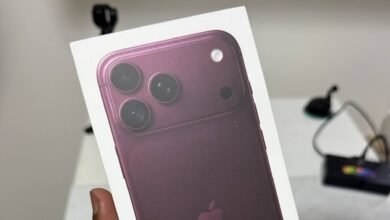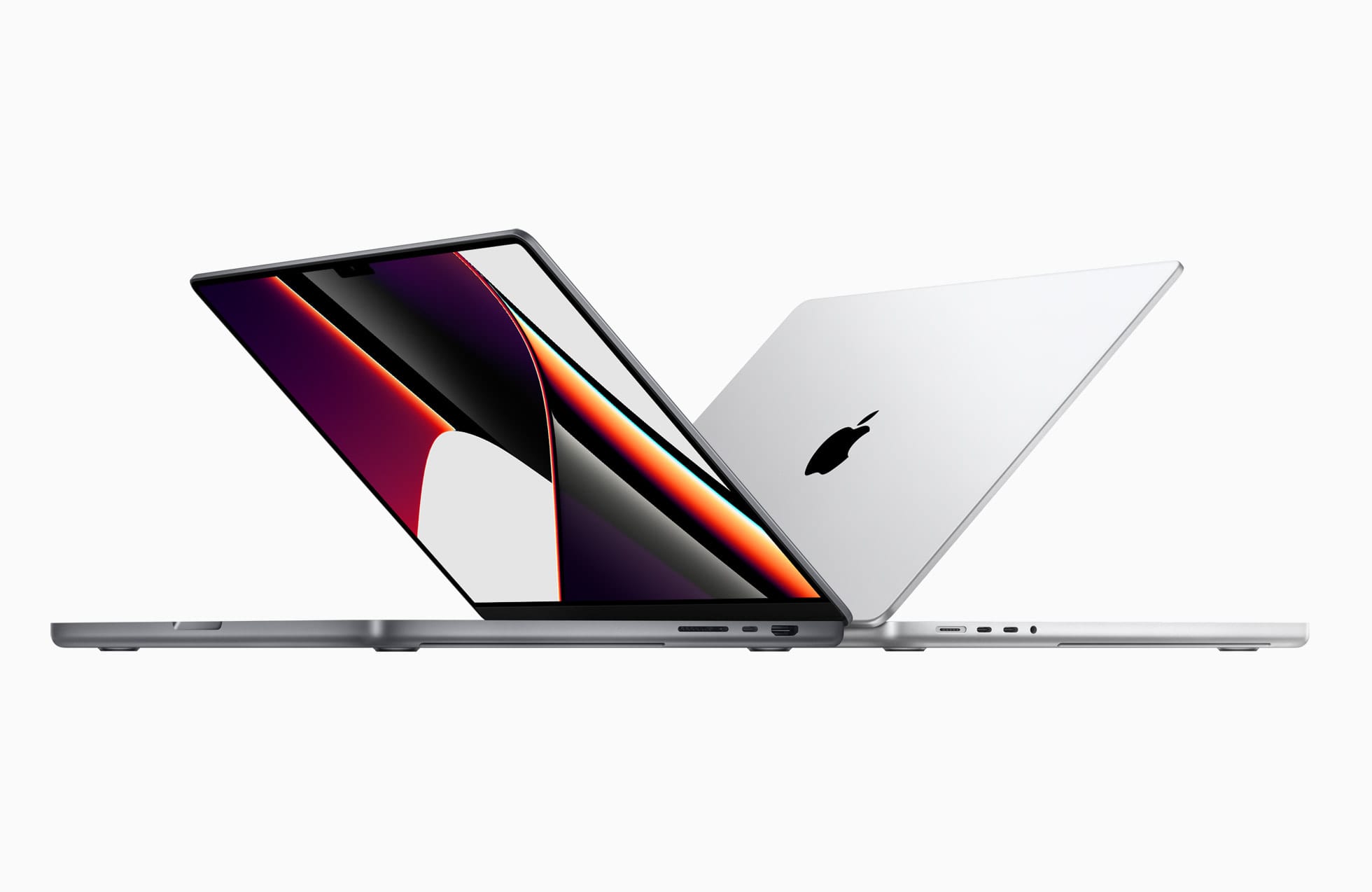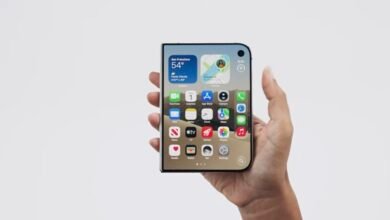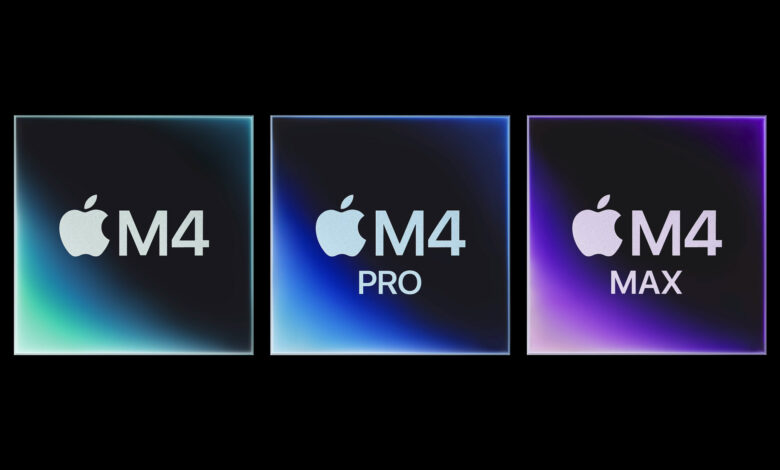
This week, Apple unveiled its refreshed lineup of Mac devices, including updates to the iMac, Mac Mini, and MacBook Pro, all now powered by Apple’s new M4 chip. Here’s a breakdown of everything announced:
iMac
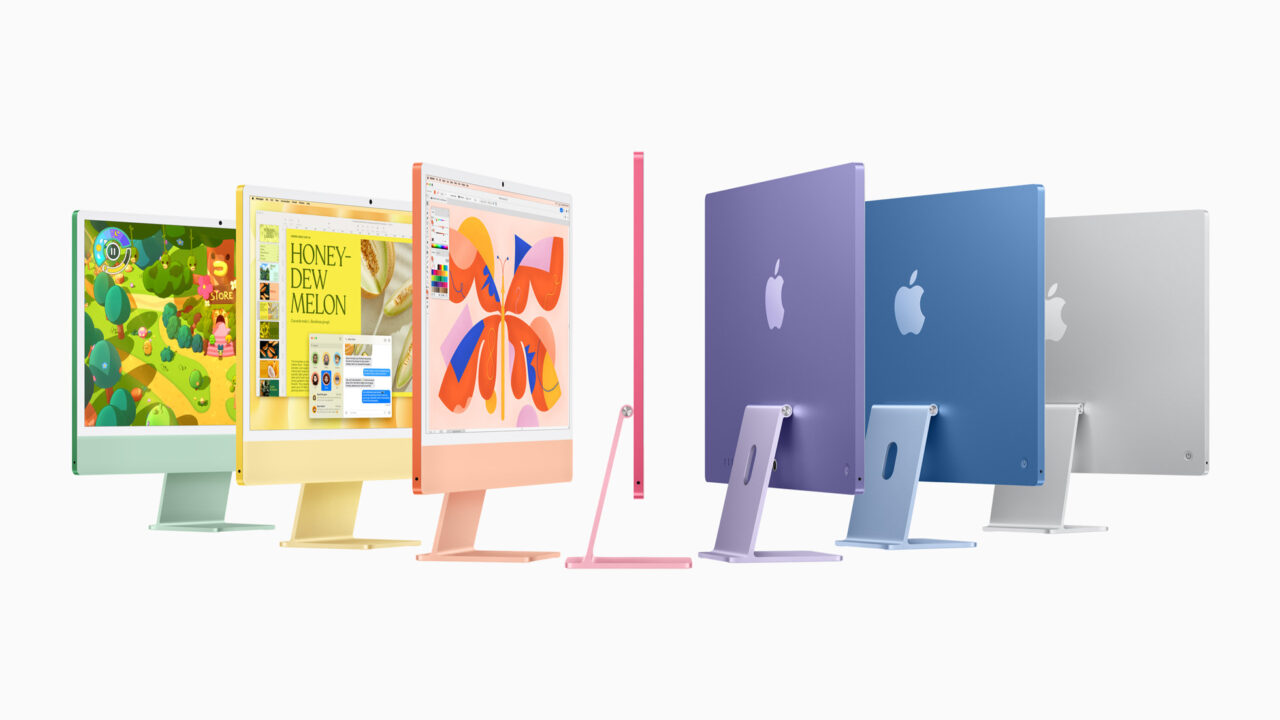
The iMac, Apple’s all-in-one PC, received its annual update, now featuring the M4 chipset. Last year’s color options are back—blue, purple, red, orange, yellow, green, and gray—now with stronger, more vibrant tones.
The iMac retains its 24-inch 4.5K Retina display, and buyers can opt for the Nano Texture Glass, which debuted on the M4 iPad Pro models.
Significant improvements include an upgraded 12MP Center Stage camera, a welcome step up from the previous 1080p HD webcam, along with enhanced speakers and studio-quality mics. The Magic Mouse and Keyboard that come with the iMac have also been updated to use USB-C, moving away from the old Lightning connectors.

The base M4 iMac is equipped with four USB-C ports, including Thunderbolt 4 for faster data transfer, making it easier to connect external storage devices, docks, and up to two 6K displays.
Make tech-ish your favourite source
Star us on Google — you'll see more tech-ish in Top Stories and AI results.
Under the hood, the M4 chip features a 10-core CPU, providing performance boosts of 1.7x and 1.3x compared to the M1 and M3 iMac models, respectively. With a faster GPU, enhanced Neural Engine, and 16GB of base RAM for Apple Intelligence, the iMac supports all Apple Intelligence features on macOS Sequoia 18.1. The base price remains at $1,299 for the 16GB/256GB configuration. As part of Apple’s carbon-neutral goal by 2030, the packaging is now made from fiberglass.
Mac Mini
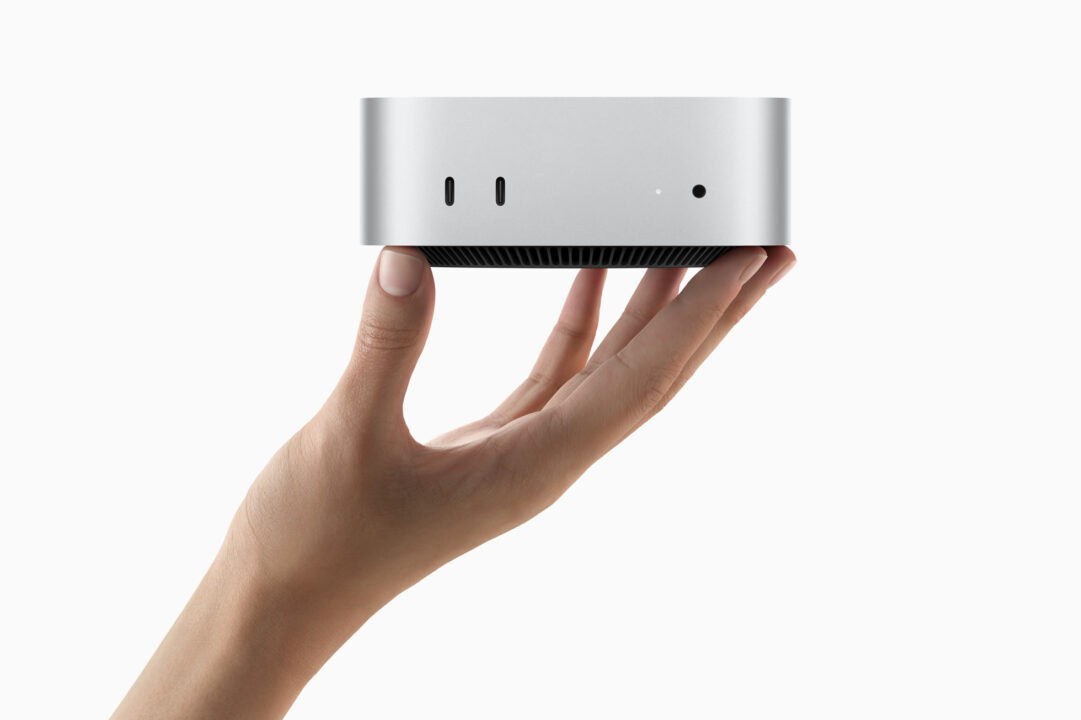
Apple’s Mac Mini, known for its compact size and powerful performance, has received a long-awaited update since its last iteration with the M2 chip in 2022. The new M4 Mac Mini is even smaller, with a reduced footprint of 5×5 inches, compared to the previous 7×7 inches. This redesign brings an improved thermal cooling architecture to maximize performance within its compact form factor. The Mac Mini now comes in two configurations: M4 and M4 Pro.
The M4 version features a 10-core CPU, 10-core GPU, and starts with 16GB of unified memory, ensuring smooth performance for tasks like software development and video editing. Notably, the Mac Mini now has front-facing ports for the first time, including two USB-C ports supporting USB 3 and a headphone jack for high-quality audio. At the back, users will find three Thunderbolt 4 ports (Thunderbolt 5 on the M4 Pro variant) for fast data transfers. It also includes a Gigabit Ethernet port, upgradeable to 10 Gigabit, along with an HDMI port for monitor or TV connectivity. The M4 model can support up to two 5K displays, while the M4 Pro can handle up to two 6K displays.
The M4 Mac Mini starts at $599, with the M4 Pro model priced at $1,399.
MacBook Pro

Apple also introduced the new MacBook Pro models with M4, M4 Pro, and M4 Max chips. The 14-inch MacBook Pro starts at $1,599, featuring three Thunderbolt 4 ports, 16GB of memory, and the robust performance of the M4 chip. The 14- and 16-inch models equipped with M4 Pro and M4 Max offer Thunderbolt 5 for faster data transfers and advanced connectivity.
All MacBook Pro models come with Apple’s Liquid Retina XDR display, which now includes an optional Nano Texture Glass for reduced glare. With brightness up to 1,000 nits for SDR content, an advanced 12MP Center Stage camera, and up to 24 hours of battery life—the highest ever seen on a MacBook—these devices offer a complete package for power users. The new M4 models also see a significant upgrade in unified memory, with the base now starting at 16GB while keeping the same price as before.
Why No New MacBook Air and Mac Studio?
Apple decided not to refresh the MacBook Air with the M4 chip. Instead, the base memory configuration for the M2 and M3 MacBook Air models has been upgraded to 16GB, while prices remain the same at $1,099 and $999, respectively.
As for the Mac Studio, which was rumored to get an M4 Ultra update, Apple has yet to make an announcement.
Final Verdict
Is it worth upgrading from previous Mac models? For users of Intel-based Macs, this lineup is an excellent opportunity to transition to Apple Silicon for significantly better performance and productivity. However, if you already own a Mac with an M-series chip, the new M4 models may be more of a “want” than a “need.”
Among the new lineup, the Mac Mini with M4 stands out as the best value for money. Paired with a quality 4K monitor, it offers an exceptional desktop experience at a competitive price.



. The Mac mini is Apple's small desktop, an aluminium box roughly 5 inches square that ships without a screen, keyboard or mouse. You supply those, which is why it has been the cheapest way into a Mac for two decades. The design is unchanged this generation. ## Where the $899 comes from The previous Mac mini launched in October 2024 at $599 with the same 16GB of memory and 256GB of storage. We [covered that launch](https://tech-ish.com/2024/11/04/m4-mac-line-up-apple-refresh/) at the time, when the M4 Pro cost $1,399. In May 2026 Apple dropped the $599 version, brought it back in late June at $799, and pushed the M4 Pro to $1,599, [changes tracked by MacRumors](https://www.macrumors.com/roundup/mac-mini/). So the same specification has gone from $599 to $799 to $899 in under two years, a 50 percent rise on a machine whose whole pitch is being the affordable Mac. [AppleInsider calls $899](https://appleinsider.com/articles/26/08/25/m6-mac-mini-arrives-in-ram-and-ssd-constrained-environment) the highest starting price it has ever had. The original 2005 model was $499. ## Why the price went up On its earnings call on 30 July 2026, chief executive Tim Cook told analysts: "we reluctantly raised prices, I would say. We did it because we're in what I would characterize as a 100-year flood on the memory pricing." The [full transcript is public](https://www.fool.com/earnings/call-transcripts/2026/08/07/apple-aapl-q3-2026-earnings-call-transcript/). Three companies make almost all the world's memory chips: Samsung, SK hynix and Micron. Since late 2025 they have moved factory capacity towards the specialist memory AI data centres buy, where margins are higher, leaving ordinary memory scarce. [TrendForce reported in July](https://www.trendforce.com/presscenter/news/20260703-13134.html) that contract prices would rise another 13 to 18 percent in the third quarter of 2026, after jumps of roughly 60 percent in the quarter before. Apple's finance chief Kevan Parekh told the same call that memory costs explained more than 100 percent of the company's sequential fall in profit margin. The same pressure is expected to hit the iPhone 18, covered in our [piece on iPhone pricing in Kenya](https://tech-ish.com/2026/08/02/iphone-18-split-launch-kenya-prices/). ## What you get The M6 has a 12-core processor and 12-core graphics, with a dedicated AI accelerator in every graphics core. Apple claims up to 4 times faster AI work and 2 times faster graphics than the M4 Mac mini, on its own July 2026 tests. It is also the only M6 tier Apple plans to make, since it is skipping the M6 Pro and Max to bring the M7 forward, as our [piece on both chips explains](https://tech-ish.com/2026/08/25/apple-m6-m5-ultra-chips-explained/). Base memory stays at 16GB and base storage at 256GB, so the extra $300 buys speed rather than capacity. The M5 Pro model gets Thunderbolt 5, the fast port standard used for external drives and displays, and can be linked to other Mac minis to run large AI models locally. The M6 keeps the slower Thunderbolt 4. Both gain Wi-Fi 7 and 2.5Gb ethernet, and both run macOS 27, which brings the rebuilt Siri that Apple [showed at WWDC in June](https://tech-ish.com/2026/06/02/wwdc-2026-siri-ios-27-cook-last-keynote/) as an English-only beta later this year. Apple said in February that Mac mini production would come to the United States for the first time, at a Houston plant, and Cook confirmed in July that assembly starts there this year. Apple [opened a training centre at the site on 13 August](https://www.apple.com/newsroom/2026/08/apple-opens-advanced-manufacturing-center-in-houston/). ## What this means in Kenya Apple has no store here, so the machines arrive through authorised resellers and importers on their own timelines. At about KES 129.45 to the dollar on 24 August 2026, $899 converts to roughly KES 116,000. Nobody will pay that. Computers enter Kenya at zero import duty, but a 2.5 percent import declaration fee, a 2 percent railway development levy and 16 percent VAT all apply, and VAT is charged on top of the other two. With air freight, our working estimate puts the landed cost near KES 150,000 before any shop takes a margin. The outgoing M4 Mac mini sells locally from about KES 89,000 at [iTey Store](https://iteystore.co.ke/category/mac-mini-m4-m5-in-kenya-apple-desktop-computers) to KES 137,000 at [Price in Kenya](https://www.priceinkenya.com/product/113317-apple-mac-mini-m4). Early Kenyan pricing on new Apple hardware runs high and then falls. The MacBook Neo landed at KES 130,000 against a $599 list price [in March](https://tech-ish.com/2026/03/25/macbook-neo-price-in-kenya-alternatives/), and iPhone 17 prices [dropped sharply three months after launch](https://tech-ish.com/2025/12/30/iphone-17-iphone-air-prices-in-kenya-go-down-crashing-just-3-months-later/). So wait for stock to settle rather than paying the first asking price. If your current Mac still does your work, nothing in the memory forecasts suggests a cheaper Mac mini next year. The thing to watch is whether Kenyan resellers list the M6 before the 22 September shipping date.](/wp-content/uploads/2026/08/Apple-M6-and-M5-Ultra-hero-260825_big.jpg.large_2x-390x220.jpg)


Join the discussion