
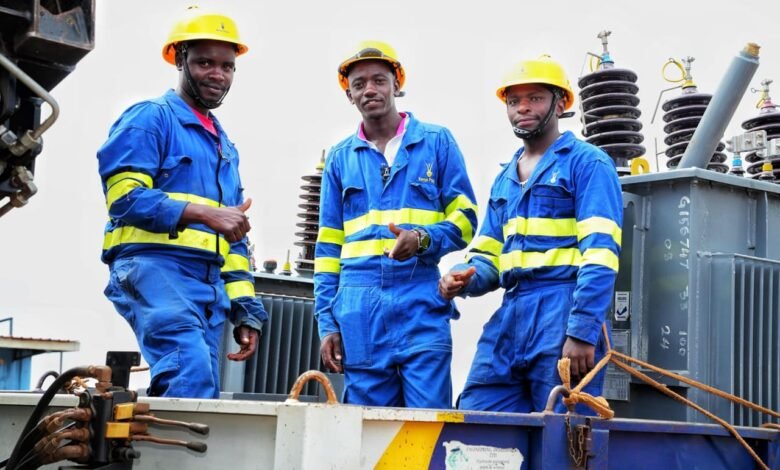
If you’ve ever lived in Kenya — or moved around the country like I have over the past decade — chances are, you’ve had your fair share of blackouts. Some are momentary blips. Others? They drag on for hours, days… even weeks. And when it goes on that long, every Kenyan’s mind jumps to one likely culprit: “Transformer imeungua.”
It’s almost a national catchphrase at this point. A broken transformer. And when it’s down, the entire neighborhood feels it — no lights, no fridge, no internet, and for some of us, no work. I’ve been in that position multiple times — working remotely from small towns and upcountry hideouts. And while most outages get fixed within minutes or hours, the really bad ones always seem to trace back to the transformer. Eventually, I had to invest in a portable power station — the EcoFlow River 2 — just so I could keep working whenever the blackout stretched into days. I’d often charge it overnight at a local bar or a friend’s place, then use it to power my laptop and phone the next day. The upside? It takes just one hour to charge from 0 to 100%. This thing has saved deadlines more than once.
That’s why I was genuinely glad — and, yes, a bit surprised — to see Kenya Power take a deep dive into this issue with a three-part series on what it takes to fix a broken transformer. In the first part, they break down why transformers fail in the first place. And to their credit, it’s not just corporate PR fluff — it’s actual, helpful information.
Here’s what I took away from Part 1:

Reason 1: Overload – Too Many People, Too Many Gadgets
Transformers have a limit. And when entire communities tap in illegally or everyone plugs in power-hungry appliances all at once, it’s like forcing a bodaboda to carry a lorry’s load. Eventually, it just can’t cope.
These overloads push the transformer beyond capacity, creating voltage imbalances, heat, and strain. The result? Overheating, failure, and darkness. And yes — Kenya Power is pointing fingers at unauthorized connections and reckless consumption here, but they’re not wrong.
Reason 2: Vandalism – Theft That Hurts Everyone
Turns out, transformers are rich targets for thieves. Why? Because they contain copper windings and cooling oil — both of which are worth a pretty penny on the black market. But when these components are stolen, the transformer loses its ability to cool. Bring the power back without fixing that, and it’ll burn out again in no time.
The irony? Vandals take a few minutes to wreck the thing, but it can take weeks to fix or replace. And the rest of us suffer in the meantime.
Reason 3: Environmental Damage – Nature Isn’t Always on Our Side
Lightning. Floods. Falling trees. Sweltering heat. These aren’t just weather headlines — they’re transformer-killers. Kenya Power highlights how climate change is increasing the frequency and intensity of such events, putting more strain on infrastructure that’s already stretched thin.
I’ve lived in places where storms knocked out power for three straight days, yet I know some of you have had worse. But at least now we know why.
Reason 4: Aging Infrastructure – Time Catches Up with Everything
Let’s face it — some transformers are just too old. They’ve outlived their life expectancy, and even small loads can push them over the edge. Insulation wears out. Metal fatigues. It becomes a game of roulette every time someone switches on a microwave.
Kenya Power calls this a “silent threat” — and in many cases, it’s one of the hardest to detect until it’s too late.
Reason 5: Manufacturing Defects – Some Transformers Are Doomed from Day One
Not every transformer dies of old age or vandalism. Some were born broken. Kenya Power admits that substandard materials or design flaws can lie dormant until a high load exposes the weakness. Boom. Outage.
It’s a reminder that infrastructure isn’t just about wires and poles — it’s also about quality control behind the scenes.
So Why Am I Applauding This?
Because for once, instead of hiding behind vague explanations or blaming third parties, Kenya Power is choosing to educate. They’re showing us what’s under the hood. And in a country where we often feel left in the dark both literally and figuratively, that transparency matters.
As someone who’s worked remotely for years across Kenya, I’ve dealt with outages in rural areas, in the city, and everywhere in between. I’ve cursed the darkness, reset Wi-Fi routers a hundred times, and even invested in power backups to stay productive. But I’ve also come to realize that some of these problems are bigger than just flipping a switch.
Understanding the “why” helps. It puts things into perspective. And it gives room for dialogue — not just blame.
Kenya Power says the next part of their series will walk us through the painstaking transformer repair process. If you’ve ever wondered why your candles are still melting down two weeks after an outage began, that one’s for you.






Join the discussion