
Insights At a Glance:
- Kenya’s stock market rewards stability, which is why banks dominate—while innovative startups like M-KOPA, Wasoko, and Lori remain privately funded and unlisted.
- Tech and manufacturing are underrepresented due to structural barriers, investor conservatism, and lack of support for high-growth companies on the NSE.
- To compete globally, Kenya must reform its capital markets to attract and support local innovators—not just established financial institutions.
In Kenya, a quick look at the country’s most valuable publicly traded companies paints a very clear picture: banks rule the Nairobi Securities Exchange.
From Equity Bank, KCB, Co-op Bank, to ABSA and Stanbic—financial institutions dominate the top spots. In contrast, tech is almost absent, with Safaricom being the only major exception. Compare that to the U.S., where the likes of Nvidia, Apple, Microsoft, and Amazon command the most value. Or even to China, where there’s a blend of powerful banks, tech firms like Tencent, Alibaba and Xiaomi, and telecom giants like China Mobile.

Safaricom—Sh1 trillion
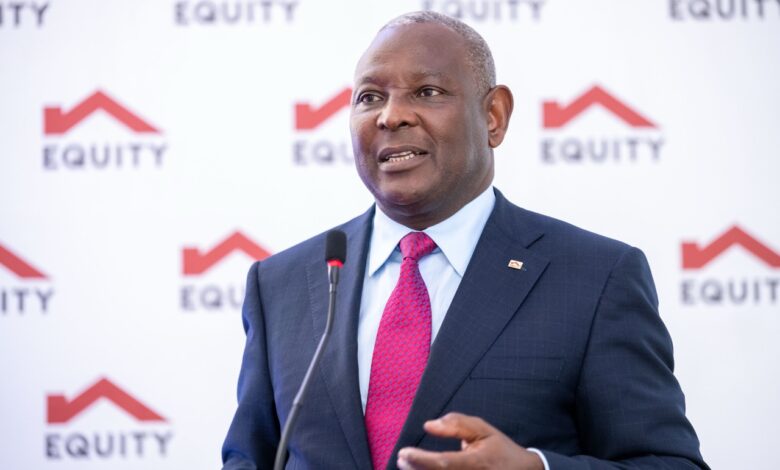
Equity Bank—Sh188 billion
KCB Bank—Sh148 billion
EABL—Sh147 billion
StanChart—Sh114 billion
ABSA—Sh107 billion
Co-op Bank—Sh103 billion
NCBA— Sh100 billion
So, what gives? Why is Kenya’s corporate scene so banking-heavy, and what does that mean for the country’s innovation prospects?
Why Banks Are So Dominant in Kenya
1. A Cash-Oriented, Loan-Driven Economy
Despite the rise of mobile money, Kenya’s economy is still very cash-heavy and largely informal. Much of the country’s economy still runs on cash transactions, and when people or businesses need to save, invest, or borrow, they turn to banks. As such, banks drive a huge portion of formal economic activity, and this positions financial institutions as central pillars—earning them consistent revenue and investor trust.

2. Tech Exists—But Not on the Stock Market
Kenya’s startup ecosystem is vibrant. Wasoko (e-commerce logistics), Twiga Foods (agri-supply chain), Lori Systems (freight logistics), M-KOPA (asset financing), and BasiGo (electric mobility) are all making global headlines. But there’s a catch: none of them are listed on the NSE. They raise funding privately—mostly from foreign venture capital—because the local exchange isn’t yet friendly to high-growth, tech-first companies.
3. Investor Preference for Stability
Banks provide steady dividends and are heavily regulated by the Central Bank. For many Kenyan investors—especially pension funds and institutions—that’s more attractive than the volatility of newer, unproven sectors. Tech companies, especially loss-making, growth-focused ones, don’t.
What Does This Say About Kenya’s Economic Priorities?
This trend shows that Kenya’s capital markets reward stability over innovation. Banking, insurance, and telco (mainly Safaricom) get all the attention and capital, while tech and manufacturing are sidelined. Furthermore, the Nairobi Securities Exchange is structured for mature, capital-intensive companies, not for startups trying to scale. That means innovation isn’t just underfunded—it’s invisible in public markets.
Kenya’s startup ecosystem may be buzzing in private circles, but the public markets don’t reflect it yet. And without significant reforms to make the NSE more welcoming to growth-stage businesses, that gap will persist.
Meanwhile, in the U.S., the stock market has embraced innovation:
- Nvidia is riding the AI wave.
- Apple turned a premium ecosystem into global dominance.
- Microsoft is redefining productivity through AI and cloud.
- Amazon has its hands in everything from logistics to cloud infrastructure.
These companies reflect an economy built on research, intellectual property, and global scalability—backed by a deep ecosystem of investors willing to take big bets.
On the other hand, China’s list includes giant state-owned banks like ICBC and Agricultural Bank, tech firms like Tencent, Alibaba and Xiaomi, and infrastructure and manufacturing titans. It’s a hybrid model where the state directs capital but doesn’t ignore innovation. Local firms can scale rapidly due to the size of the domestic market and government support.
What This Means for Kenya’s Innovation Future
Kenya is Africa’s “Silicon Savannah” in name, but unless there’s a structural shift, the stock market will remain a mirror of the past, not a window into the future.
If Kenya wants a future where local tech companies stand beside Equity and KCB, here’s what needs to happen:
- Make the NSE startup-friendly with reforms that reduce listing barriers.
- Invest in R&D and digital infrastructure to support scale and competitiveness.
- Offer tax breaks and incentives for firms in innovation-heavy sectors.
- Attract diaspora and foreign capital toward high-growth Kenyan companies—not just real estate or treasury bonds.
While Kenya’s banking sector dominance isn’t a failure, it’s a reflection of where the country is. But the absence of publicly scaled innovators points to where the country isn’t yet.
We need to build an environment where the next M-KOPA, Wasoko, or Lori Systems can thrive and list locally. Because when innovation is missing from the stock market, we risk building a future with no room for the companies that will shape it.








Join the discussion