
Artificial General Intelligence (AGI). The holy grail of AI. The thing Sam Altman (OpenAI’s CEO) says is “just around the corner,” and the dream investors are throwing billions at. But while tech bros in Silicon Valley talk about machines “thinking like humans,” actual humans, many right here in Kenya and Africa at large, are the ones quietly propping up this dream.
Your LinkedIn feed is probably flooded with them right now: endless postings for “AI Tutors” and “AI Trainers” from companies like Mindrift. They promise remote work, good pay, and a chance to be part of the future. For us here in Kenya, where a wild 42.1% of internet users are on ChatGPT, it sounds like the ultimate digital hustle.
Earlier this week, Africa Uncensored dropped a bombshell investigation titled Fuelling the AGI hype: The Recruitment Playbook to land Big Tech contracts. Supported by the Pulitzer Center’s Artificial Intelligence Accountability Network, the report shows how companies flood the internet with thousands of “AI Tutor” job ads, not necessarily to give people work, but to build huge talent pools they can wave in front of investors and Big Tech clients. In short: hype the intelligence, hide the humans.
And yes, Kenya is right at the center of it.

The Bait: “Help Shape the Future of AI”
The report follows a South African worker named Tasneem, who describes a bizarre scramble for the few tasks available. For one project, the company made an announcement and “everyone had to leave elephant emojis on the post to show their interest,” she says. “There were so many elephant emojis, but if you’re not fast enough you don’t land the project.”
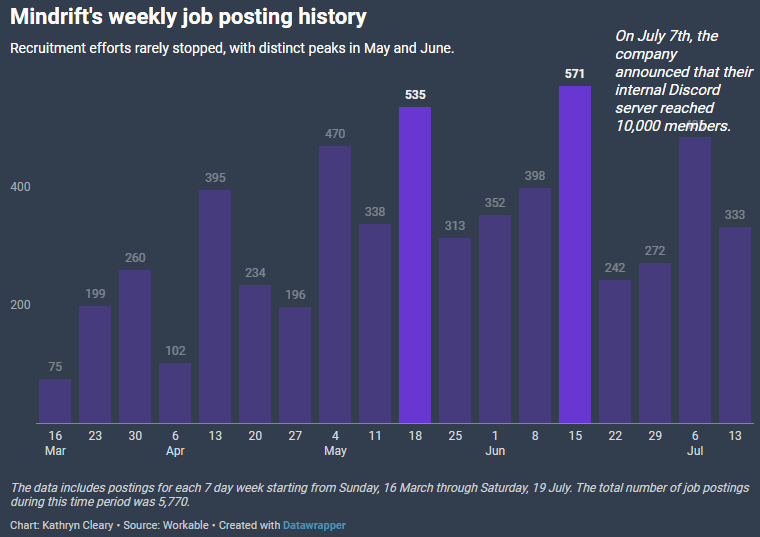
While workers were spamming emojis for scraps, Mindrift was celebrating a milestone on its Discord server: “10,000 MINDS!”
For Tasneem, this was a clear signal. “There is definitely not enough work for 10,000 people,” she told investigators. The job ads are slick. “Help shape the future of AI,” they say. “Get paid for your expertise” or “Take part in a part-time, remote, freelance project.” But for many who sign up, the reality is a waiting game.
Why all this mass recruitment?
Here’s where it gets interesting. The jobs often aren’t jobs at all. They’re part of what experts call “labour hedging.” Companies like Mindrift flood LinkedIn and other platforms with thousands of job ads, then build a massive pool of vetted, qualified workers. When a Big Tech firm like Google, Anthropic, or OpenAI says, “We need 50 cybersecurity experts tomorrow,” Mindrift can proudly say: “No problem—we already have thousands waiting.”
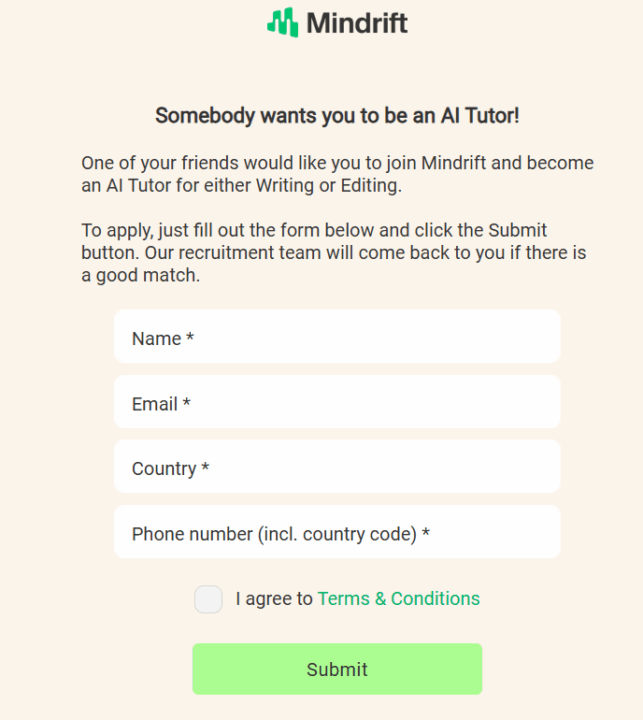
It’s less about giving people work and more about looking scalable. To investors, this screams growth potential. To Big Tech, it screams reliability. To workers? It often just screams… silence. Empty dashboards, no tasks, no pay.
Or, as Antonio Casilli, a professor at The Polytechnic Institute of Paris, told Africa Uncensored, “Hype the intelligence, hide the humans.”
Kenyan digital worker Ephantus Kanyugi, who has trained recruits for multiple platforms, breaks down the numbers from the inside.
“Just in Kenya, we had over 100 trainers, and each person was required to have 100 people in their boot camps every week. That’s 10,000 people every week,” he reveals in the report. You, the skilled professional, become a number in their talent pool. An unpaid collateral used to signal their massive scale. According to Ephantus, it’s a cynical strategy: they “invest in recruiting, because it’s cheaper to do recruitment than it is to pay people for actual work.”
The Real Prize: Chasing the AGI Dragon
This entire scheme is fueled by the tech world’s obsession with creating Artificial General Intelligence (AGI), a mythical, human-level super AI. Investors are throwing billions at this dream, and the hype is off the charts.
Professor Casilli says these mass job postings are less about hiring and more about marketing. “Investors are on LinkedIn too, they see this, it is a signal for them,” he states in the report. “This looks more like a communications operation.”
It’s about creating an illusion to attract money and deals in a market that Professor Edemilson Paraná calls a series of speculative bubbles. “It’s an illusion game,” Paraná says. “You see Sam Altman on TV all the time saying, you know, AGI will be there in one… two years… and then you keep mobilising people, and then you keep getting money.”
The playbook is simple but devious. As Casilli puts it: “AI companies tend to follow a predictable playbook: hype the intelligence, hide the humans.”
The Human Cost of Hype
While companies chase valuations, the workers pay the price. Despite the need for skilled workers to handle more complex tasks, the conditions remain poor. “You can have a PhD, but you’re doing annotation, so you get paid like everybody else,” says Joan Kinyua, a Kenyan digital worker with over eight years of experience.
The system makes highly qualified people feel disposable. A worker told researchers they were once admonished with, “We employ the unemployable so be grateful you have a job.”
Ephantus agrees, saying the message from platforms is clear: “It’s like, hey, we have a lot of people that are waiting in the pool. So if you cannot play along… just leave.” This has led to what Professor Casilli calls “the biggest waste of social capital in human history,” as the brightest minds are trapped in a precarious gig economy.
Kenyans are Taking a Stand
But this story doesn’t end in exploitation. Here in Kenya, the workers are organizing.
Joan Kinyua, who has worked for over 20 micro-tasking companies, grew tired of the instability and fear. “You’re forever in fear,” she says. “You’re forever mentally prepared to get fired.” After years of hoping things would change, she decided to make change happen herself.
In early 2025, alongside Ephantus and other colleagues, Joan co-founded the Data Labelers Association (DLA). Their mission is to fight for the rights and dignity of the people building AI.
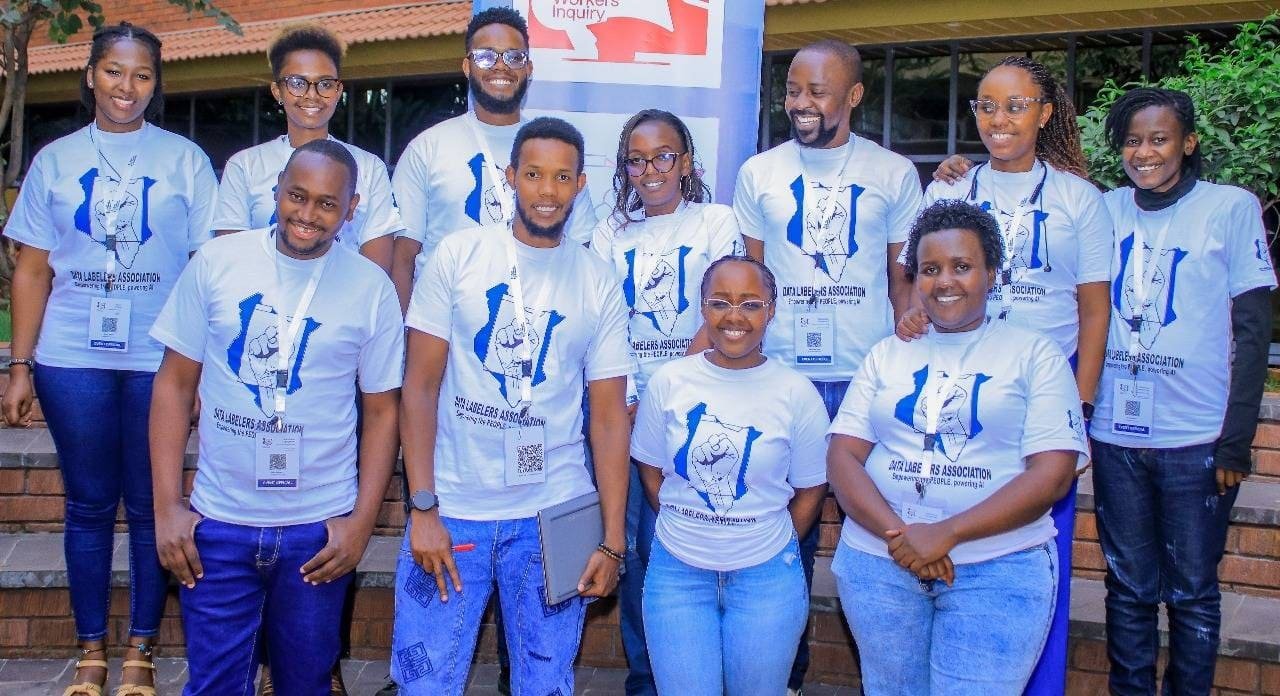
“We know what our rights are,” Joan says with determination, “and we are starting to fight for what we feel we deserve.” They are demanding clear contracts, fair pay that reflects the complexity of their work, and a seat at the table. While the hype around AGI is that machines will one day think like us, these machines are still embarrassingly dependent on human labour. AI doesn’t “learn” in the way we do. It gets better because real people are correcting, refining, and training it step by step.
Kenyan worker Joan put it perfectly: “We don’t fear obsolescence. What we fear is being discarded while the system we sustain grows wealthier.”
This is the new frontline of the AI revolution. It’s not happening in a lab in San Francisco; it’s happening right here, with Kenyan workers refusing to be invisible. As Joan powerfully concludes in the report:
“The conversation should not be about whether AI will replace us, it should be about whether we will finally be recognised as co-creators of the AI future.”
Let’s not forget, Kenya was named as the top country in the world for ChatGPT use (42.1% of internet users here had tried it in just one month). We’re not just consumers of AI; we’re also shaping it. But the danger is that while AGI hype balloons Big Tech valuations (OpenAI is chasing a $500 billion valuation), African workers remain stuck with unstable gigs and crumbs of compensation.
It’s the same old story of tech capitalism, just dressed up in futuristic AGI clothing.
Sure, AGI may or may not ever arrive. But what’s certain is that it’s already here in another form, the army of human workers training, feeding, and sustaining the dream. And until companies like OpenAI or Google acknowledge these people not as “unemployables” or disposable gig workers, but as partners in creation, the future of AI will always rest on shaky ethical ground.
So the next time ChatGPT spits out a perfectly worded answer, just remember: somewhere in Nairobi, Johannesburg, or Lagos, a real human helped it learn how to do that.









Join the discussion