

Building a modern 5G network is expensive, but powering it is the real headache. 5G towers are notoriously energy-hungry, often consuming twice the power of their 4G predecessors. For a company like Safaricom, which has base stations scattered across off-grid locations running on diesel generators, that energy bill, and carbon footprint, is a massive liability.
To fix this, Safaricom went to the market looking for billions to fund a transition to solar and cleaner tech. But instead of just courting the usual high-net-worth suits and pension funds, they opened the door to anyone with a phone.
The result was a KES 41.4 billion offer from investors – an oversubscription of 175 percent. Safaricom is taking the KES 20 billion it initially wanted and leaving the rest, but the message was sent: the retail market is liquid, and it lives on USSD.
The “UBER-ization” of the Bond Market
The most significant stat from Monday’s listing at the Nairobi Securities Exchange (NSE) isn’t the money; it’s the method.
According to the official figures, 2,453 individual investors bought into the bond. That’s 96 percent of the total applicants. More importantly, 59 percent of those applications came in via USSD and were paid for directly through M-PESA.
Safaricom effectively turned a complex financial instrument – a “Domestic Medium-Term Note” – into an impulse buy. By removing the friction of brokers and paperwork, they tapped into a user base that has likely never traded on the NSE before but understands the utility of mobile money.
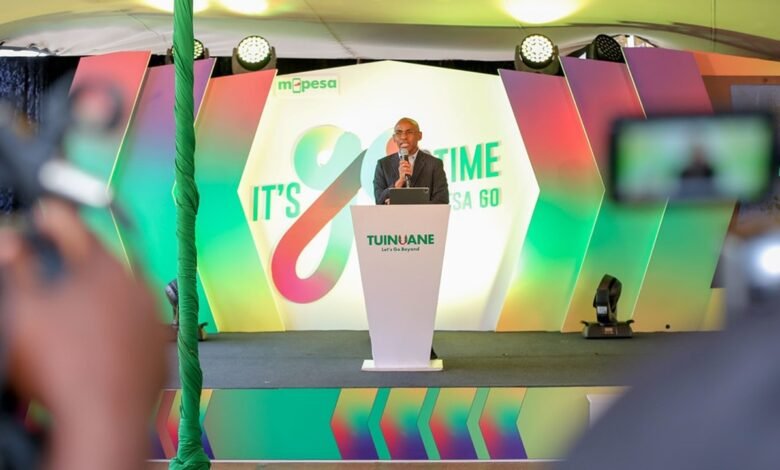
Dilip Pal, Safaricom’s CFO, called the move a “deliberate” engagement of local capital markets. “It is a clear vote of confidence in our fundamentals, strategy, and long-term outlook,” Pal said during the bell-ringing ceremony in Nairobi.
Why Safaricom needs the cash
The bond is labeled “Green,” which often sounds like marketing fluff, but in the telecom world, it’s an operational necessity.
The proceeds are earmarked for three specific things:
- 5G Deployment: Expanding the 5G grid requires denser infrastructure.
- Solarization: Converting network sites from diesel/grid reliance to solar power.
- Legacy Transition: Phasing out older, inefficient tech.
This is the unglamorous backend of the “digital future” Safaricom likes to talk about. You can’t have high-speed, low-latency connectivity if your base stations are burning expensive diesel or relying on an unstable national grid. This bond effectively lets Safaricom users finance the infrastructure that will eventually deliver their data.
Stability amidst the shake-up
The timing of this oversubscription is also a massive signal to the market regarding Safaricom’s ownership future.
As we recently detailed, the company is in the middle of a complex ownership restructure. The Kenyan government is selling a 15 percent stake to Vodacom (via Vodafone Kenya), which will give the Vodacom group majority control (55 percent) while the State steps back to a 20 percent strategic stake.
Usually, when a government dilutes its shareholding in a strategic national asset, investors get nervous. They worry about regulatory cover, future dividends, or strategy shifts.
The fact that Safaricom raised KES 41.4 billion in offers during this transition suggests the market, both institutional and retail—isn’t worried. They seem to be betting that a Vodacom-controlled Safaricom, with its books consolidated into the wider group, is a safer bet than ever.
What happens next?
The Green Bond is now live and trading on the NSE. For Safaricom, the KES 20 billion provides the war chest needed to upgrade the network without dipping into operational cash flow.
For the NSE, however, this is a proof-of-concept. The exchange has struggled with low liquidity and a lack of retail participation for years. Safaricom just proved that if you make buying shares or bonds as easy as buying airtime, Kenyans will actually show up.