
Last week, TECNO descended on Rabat, Morocco, to host its Glory Night Awards—a glitzy affair co-hosted with TikTok Live and the Confederation of African Football (CAF). Designed to celebrate the intersection of African football culture and digital creativity during AFCON, the event leaned heavily into TECNO’s recent push for AI integration.
However, while the event touted a “pan-African” celebration of influencers, the winners’ list painted a stark picture of the continent’s current content creation hierarchy. Nigeria, Senegal, and Morocco swept multiple categories, while Kenya and several others managed to secure just a single accolade.
The lone Kenyan star
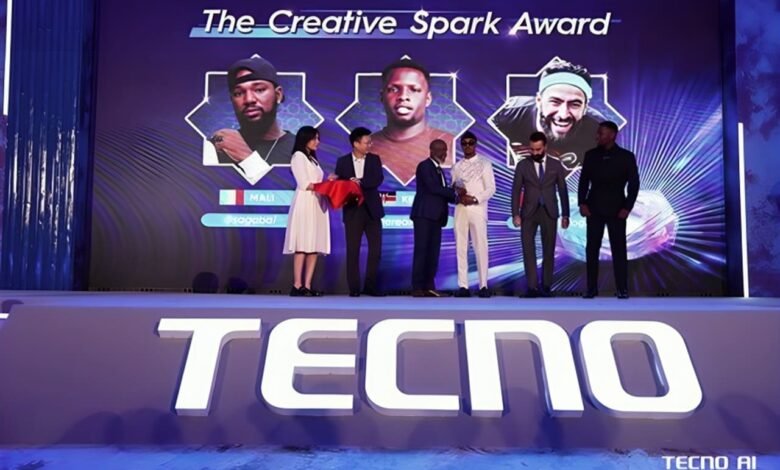
Amidst a sea of winners from West and North Africa, Emmanuel Chiche, who goes by the handle @therealchiche on TikTok and other platforms, stood as Kenya’s sole representative on the podium. He took home the Creative Spark Award, a category recognizing influencers who “push the boundaries of creativity” and find novelty in the ordinary.
Commenting on his win, @therealchiche noted, “Winning the Creative Spark Award pushes me to keep innovating… I’m honored that my vision connected with audiences across the continent.”
While his win is a testament to the quality of Kenyan content, the lack of other Kenyan winners is conspicuous for a market that prides itself as a digital hub in East Africa.
Nigeria and West Africa dominate
The disparity in the awards distribution was impossible to ignore. Nigeria, a titan in the African entertainment space, flexed its muscle with four winners across different categories:
- @ultimatekombo2 (Moment Excellence Award)
- @liquorose_ (Moment King/Queen Award)
- @jennifrank29 (Visual Master Award)
- @izziboye (TECNO Partner Award)
This dominance wasn’t limited to Nigeria. Host nation Morocco and Senegal also outperformed Kenya, securing two winners each.
- Senegal: @fallu_etsesvideos and @cheikhetaltesse
- Morocco: @hajar_arssalanee and @brahimlogia
For a brand like TECNO, which holds a massive market share in Kenya, Uganda (Solomon Kimera of the handle @solo.md won the TECNO Partner Award) and Tanzania (Eng Makelele of the handle @eng_makelele won the Moment Excellence Award), the solitary win for each country raises questions about the visibility of East African creators on the continental stage compared to their West African counterparts who seem to be leveraging platform algorithms and brand partnerships more effectively.
Here’s how the awards broke down by category:
- Moment Excellence Award: Nigeria, Tanzania, Morocco
- Moment King/Queen Award: Nigeria, Ivory Coast, Senegal
- Creative Spark Award: Mali, Kenya, Morocco
- Visual Master Award: Egypt, Nigeria, Cameroon
- TECNO Partner Award: Uganda, Senegal, Nigeria
AI and the “Power Your Moment” ecosystem
Beyond the influencer stats, the event served as a showcase for TECNO’s evolving AI ecosystem. The awards were the culmination of the “Power Your Moment” campaign, which encouraged users to generate content using TECNO’s AI tools.
The company used the event to demo its latest hardware to attendees, including Afrobeats star Joeboy. The demos focused on:
- AI-driven photography: Real-time editing and portrait optimization in low light.
- The MEGAPAD: Showcasing AI translation and summarization tools.
- VR Integration: A nod to TECNO’s broader smart ecosystem ambitions.
It is encouraging to see TECNO investing in the creator economy rather than just standard billboard marketing. The collaboration with TikTok Live and CAF makes sense given the massive crossover between football fans and short-form video consumers.
However, the awards list should serve as a wake-up call for the East African creative scene. Kenya, Uganda, and Tanzania produced a combined three winners compared to Nigeria’s four. While Chiche and co.’s wins are well-deserved, the sheer volume of recognition going to West Africa suggests that the “center of gravity” for influencer marketing—at least in TECNO’s data—is tilting heavily toward Lagos and Dakar. If Kenya wants to retain its status as a “Silicon Savannah” of digital content, we might need to see higher output and engagement numbers to compete with the West African giants.