
This week at the Mobile World Congress (MWC) 2026 in Barcelona, the GSMA Handset Affordability Coalition unveiled a major initiative: a pilot program aimed at bringing entry-level 4G smartphones to millions of Africans for just $40 (roughly KES 5,800). The coalition, which includes the G6 group of leading operators, namely Airtel, Axian Telecom, Ethio Telecom, MTN, Orange, and Vodacom, identified six initial markets for the rollout: the Democratic Republic of Congo (DRC), Ethiopia, Nigeria, Rwanda, Tanzania, and Uganda.
Notice a glaring omission? Kenya isn’t on the list.
The staggering usage gap
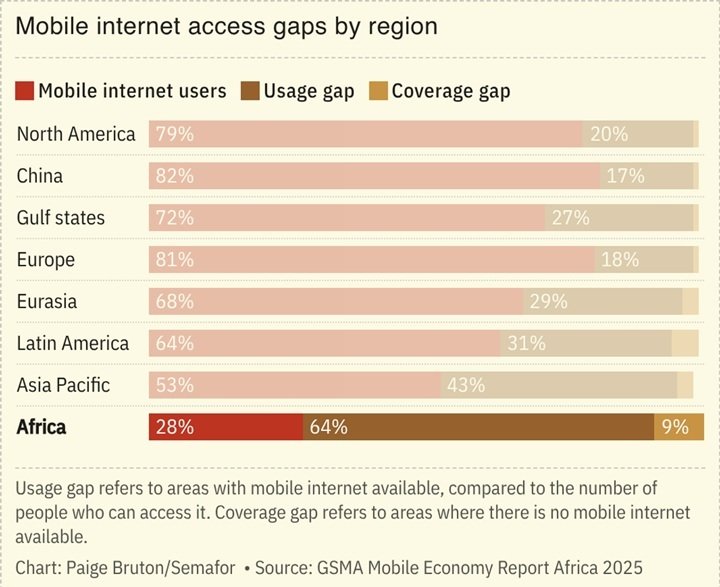
To understand why this $40 price point is the Holy Grail of connectivity, you just need to look at the numbers. Data from the GSMA shows Africa has the largest usage gap globally, with only 28% of the population actively using mobile internet. Meanwhile, 64% live in areas where mobile internet is available but remain offline, largely due to device affordability. This means that while the signal is there, millions of people simply cannot afford the hardware to connect to it.
The GSMA’s solution, proposed in Kigali late last year and formalized in Barcelona this week, involves strict minimum specifications for memory, battery, and display to ensure a decent 4G experience. They are also heavily lobbying governments to drop taxes on entry-level devices. South Africa’s recent move in March 2025 to remove luxury taxes on smartphones priced under R2,500 (approx. KES 20,000) is the blueprint to follow.
Why Kenya might have been sidelined
Kenya’s absence from the pilot likely boils down to the fact that we’ve already tried this, and the results have been mixed at best.
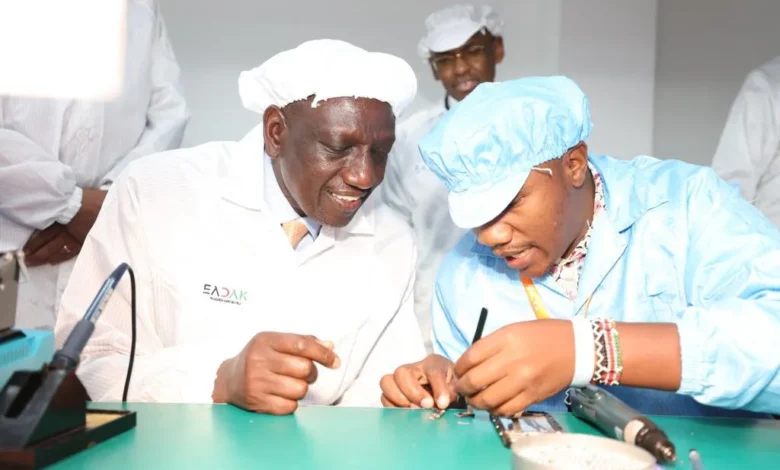
Back at MWC Kigali in October 2023, there was immense hype around Kenya producing $40 smartphones through the EADAK plant. However, when the locally assembled Neon smartphones launched, they missed the price mark. The Neon Smarta hit the shelves at KES 7,499 while the Ultra variant launched between KES 8,999 and KES 11,500.
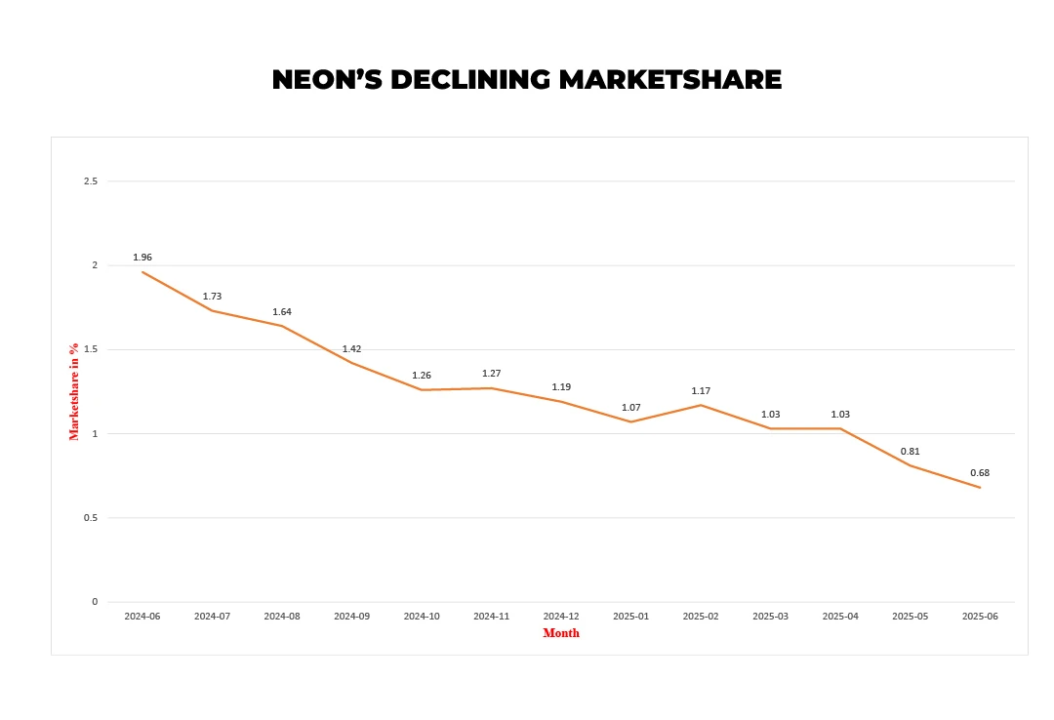
As a result, the market spoke. Consumers quickly realized they could get arguably better-performing devices for KES 10,000 and below from brands like Infinix, iTel, Redmi, and Vivo at similar price points. The data paints a grim picture for the local assembly dream. In late 2023, Neon held a 2.09% market share at launch. By June 2024, market share dipped to 1.96%, and as of June 2025, the market share plummeted to a mere 0.68%.
A late redemption?
Ironically, Safaricom’s Masoko currently lists the newer Neon Smarta 2 at a heavily discounted KES 2,999, which is well below the $20 mark that GSMA’s Angela Wamola mentioned as the ultimate, long-term goal for the coalition. The Ultra 2 is currently retailing at KES 8,999.
Speaking to TechCentral at the MWC, Wamola expressed concerns regarding the global memory shortage and the impact it could have on their ambitious plan to lower the price from $40 to $20.
“With the memory shortage, the $40 price point could slip away. Prices are really escalating, even though vendors have committed to doing their best to bring the devices at that price point. We need this to get started because the momentum will bring us scale and that scale will help us get to that $20 price point.”
While Kenya has technically achieved the sub-$40 hardware goal internally, the loss of market trust shows that price alone isn’t enough; the specs must justify the purchase. Furthermore, with the current global surge in memory costs threatening the viability of cheap 4G phones across the board, the GSMA’s new pilot in our neighboring countries will be the ultimate stress test to see if a true, high-quality $40 smartphone is actually sustainable.