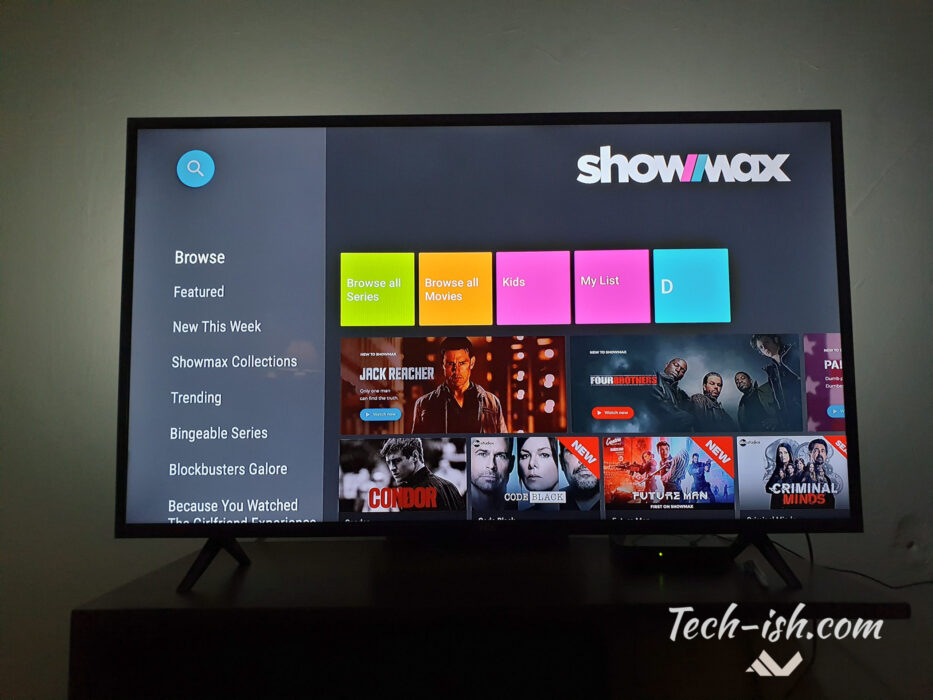
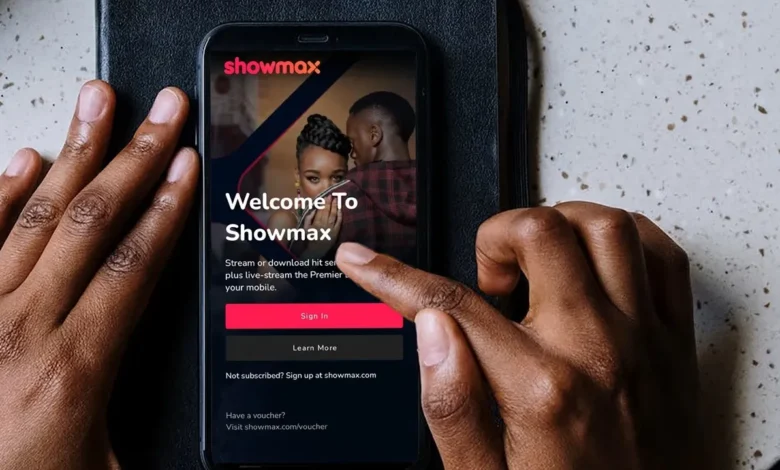

After nearly a decade of trying to build Africa’s answer to global streaming giants, MultiChoice has confirmed it will shut down Showmax, a move that brings an abrupt end to what was once positioned as the company’s biggest growth bet on the continent.
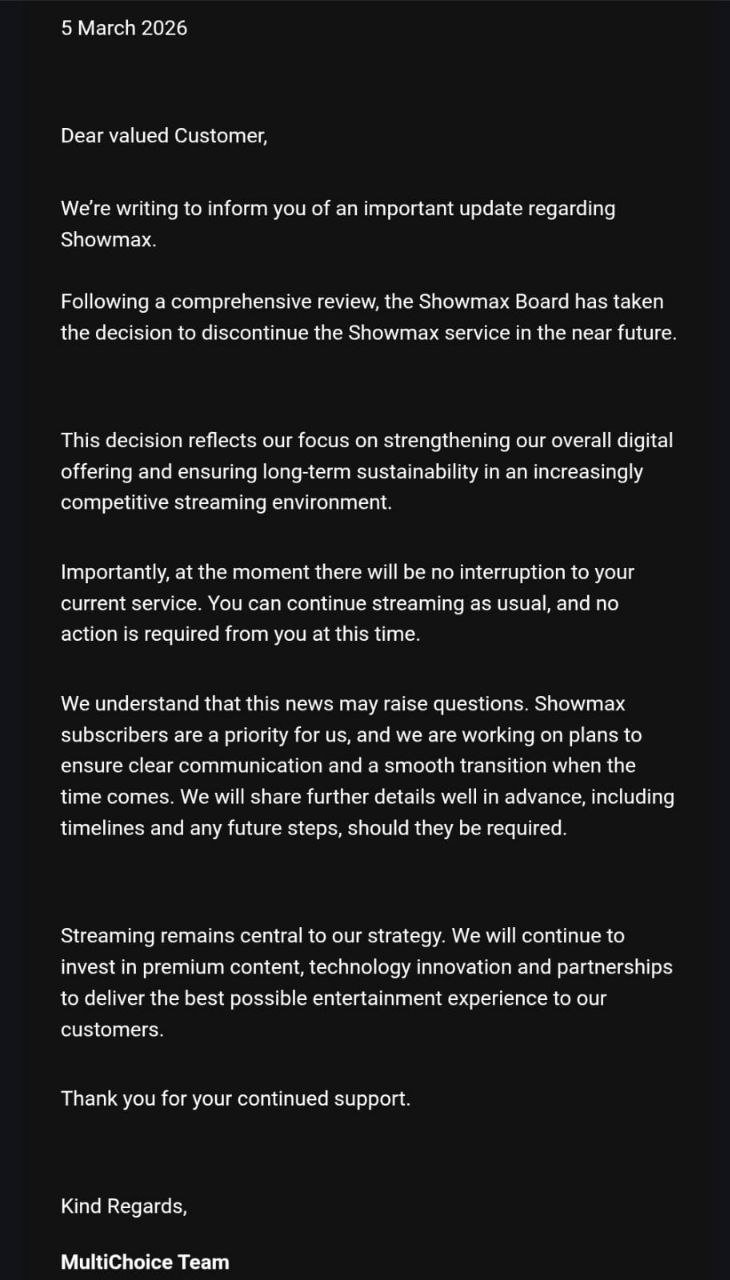
The decision follows a strategic review by MultiChoice’s new parent company, Canal+, which completed its takeover of the broadcaster in 2025. In a statement to subscribers, the company said Showmax will be phased out due to substantial annual losses that have proven unsustainable in the increasingly expensive global streaming market.
For now, the service will continue operating. MultiChoice says there will be no immediate interruption and that further details, including timelines and transition plans, will be communicated to subscribers well in advance.
A costly streaming gamble
Showmax first launched in 2015 as one of Africa’s earliest subscription video-on-demand platforms. As traditional pay-TV began losing subscribers, MultiChoice repositioned it as the centerpiece of its digital strategy.
That ambition reached its peak with the Showmax 2.0 relaunch in early 2024, built on technology licensed from Comcast NBCUniversal and Sky. The deal also saw NBCUniversal acquire a 30% stake in the new Showmax entity, with MultiChoice retaining 70%.
Billions were poured into the platform. MultiChoice spent around R1.7 billion customizing the Peacock streaming platform and significantly expanded its catalogue with African originals. But the economics never worked out.
According to MultiChoice’s financial disclosures, Showmax losses surged 88% year-on-year to R4.9 billion, while revenue reached only about R750 million, far short of the roughly $1 billion annual revenue target previously outlined by executives.
Even though paying subscribers grew 44% during the 2025 financial year, the growth simply couldn’t keep up with the platform’s high content, marketing, and infrastructure costs.
Canal+ pulls the plug
Since taking control of MultiChoice in September 2025, Canal+ leadership has been increasingly blunt about Showmax’s prospects.
Canal+ CEO Maxime Saada said earlier this year that the service had not been a commercial success. Maintaining multiple streaming platforms across the same markets also made little financial sense, particularly since Canal+ already operates its own streaming app in more than 30 countries.
The Showmax shutdown, therefore, fits into a broader restructuring effort that has already seen cost-cutting moves across MultiChoice’s operations and changes to its content strategy.
A major loss for Kenya’s streaming ecosystem
While Showmax struggled financially, its impact on the local entertainment industry was significant.
Kenya was one of the platform’s key markets. Over the years, Showmax integrated mobile-first payments like M-Pesa and partnered with telcos, including Safaricom and Airtel, to keep subscriptions accessible. The service also invested heavily in local storytelling. That local focus often distinguished Showmax from global rivals like Netflix and Amazon Prime Video, which have commissioned far fewer Kenyan originals.
In many ways, Showmax’s downfall was less about content and more about scale. Building a streaming service across 40+ African markets requires enormous capital, and competing with global platforms in regions where data costs remain high proved far tougher than anticipated.
What replaces Showmax remains unclear. Canal+ is widely expected to expand Apple TV+ and HBO Max streaming platforms into MultiChoice territories, but whether it will maintain the same level of investment in Kenyan originals is still an open question.
If it doesn’t, the biggest casualty may not be the platform itself, but the creative ecosystem that grew around it.