
I’ve been closely watching Starlink’s aggressive pricing maneuvers in Kenya, and honestly, the company is so close to getting it right, yet still missing the mark. When they introduced the monthly installment plans for the Starlink Mini kit in January, it felt like a masterstroke. For a price-sensitive market like ours, lowering the hardware barrier to entry was exactly what the doctor ordered.
But there is a glaring anomaly in their pricing strategy that I simply cannot wrap my head around. Why on earth does the Starlink Standard kit command a modest one-time activation fee of KES 3,250, while the Mini, the supposedly budget-friendly option, hits you with a whopping KES 16,250 activation fee?
It defies logic. If Starlink actually wants to take on Safaricom and Airtel in the fierce battle for rural and peri-urban Kenya, this ridiculous fee has to go.
Let’s break down the numbers. Under the current installment plan, securing a Starlink Mini requires an initial payment of KES 26,010. Granted, that’s nearly half the KES 46,260 you’d pay without installments, and it’s certainly a relief for buyers who can’t stomach the KES 56,160 upfront cost of the Standard kit. Starlink clearly thought they nailed it with this model.
But imagine if Starlink dropped the Mini’s activation fee to match the Standard kit’s KES 3,250. Keep everything else the same, and the initial cost to get a Starlink Mini connection plunges to just KES 13,010.
For an initial KES 13,010, you would get the hardware, the activation, the shipping, and your first month of high-speed satellite internet. Now that would be a killer deal. Spending just over 13K to get up and running isn’t bad at all for the average Kenyan household. I am absolutely convinced that at that price point, adoption across the country would skyrocket.
The terrestrial threat is evolving
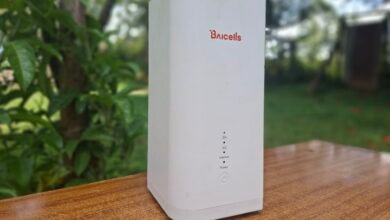
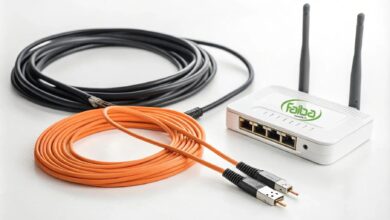
Why is this price drop so crucial right now? Because our local telcos aren’t sleeping. Safaricom and Airtel have found potent solutions in their 5G Home Wi-Fi routers. For around KES 3,000 a month, these routers are rapidly penetrating areas outside the major cities where fiber hasn’t reached. These are the exact off-grid, underserved markets Starlink originally targeted.
Furthermore, the local giants are beating Starlink at its own space game. Just look at the shifting landscape: Safaricom, via its parent company Vodafone, recently tapped into Amazon’s Project Kuiper LEO network for satellite backhaul. This means Safaricom is actively strengthening its rural 4G and 5G networks, eliminating dead zones without the need to lay down expensive terrestrial fiber.
Meanwhile, the race to put satellite connectivity directly into our smartphones is already here. Just weeks ago, MTN Zambia became the first African operator to successfully test Starlink Direct-to-Cell connectivity, allowing standard smartphones to access data and mobile money offline. With Airtel Kenya also heavily invested in a similar Direct-to-Cell partnership with SpaceX slated for rollout soon, the era of zero dead zones is arriving on our standard devices.
In short, local telcos are using orbital tech to supercharge their terrestrial networks. If you no longer need a dedicated dish to get coverage in the village, Starlink’s hardware loses its unique selling proposition.
The end of the rebel era
If Starlink’s hardware pricing isn’t tempting enough, its newfound bureaucracy won’t help its case either.
Last month, Starlink made it clear that Kenyan users must upload government-issued IDs to activate or keep their service, aligning strictly with Communications Authority (CA) regulations. As I noted then, Starlink is no longer the disruptive, unregulated outsider; it is now firmly caught in the local telecom regulatory net, acting just like any other traditional ISP enforcing strict KYC rules.
If you are going to demand the same bureaucratic headaches as Safaricom and Airtel, your pricing better be undeniably competitive.
Starlink’s installment plan was a necessary pivot, but in a market where terrestrial 5G routers are getting cheaper and local operators are beaming 4G from space, a KES 16,250 activation fee for the Mini kit is an unforced error.
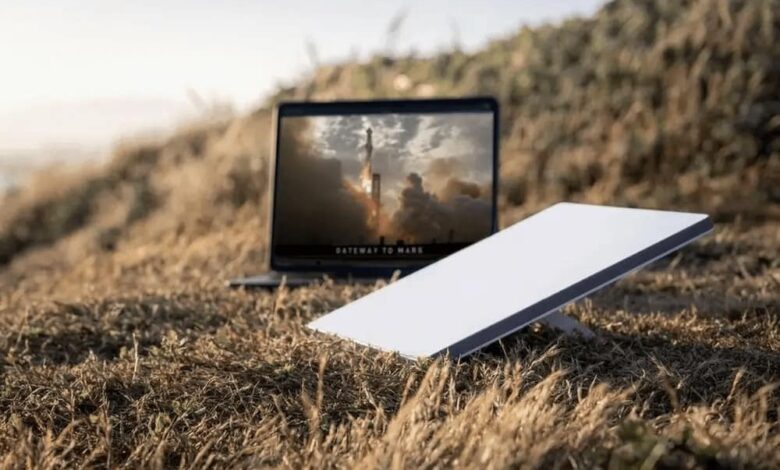
Starlink needs to drop this one-time fee to KES 3,250 immediately. Bring that initial setup cost down to KES 13,010 and let the product speak for itself. If they make this simple tweak, I guarantee we’ll see those sleek white dishes pop up on roofs from Turkana to Homa Bay faster than the competition can react. But until then, the steep activation fee remains a massive, self-inflicted barrier to entry.