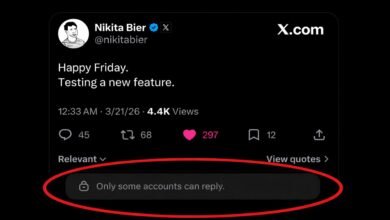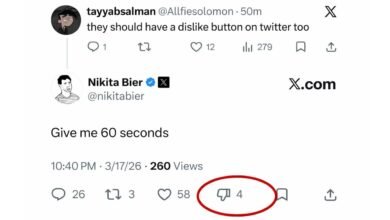


If you spend as much time on the platform as I do, you’ve probably noticed the bizarre new product development cycle over at X. Ever since Elon Musk took the helm, a casual chat on the timeline can morph into a massive corporate policy shift in the blink of an eye. Executives casually drop into random threads, absorb user feedback, and suddenly, a major feature is shipped.
This hyper-reactive approach has only accelerated since Nikita Bier joined the fray. We’ve already seen fast-tracked features like the dislike button for spam comments born from timeline grievances. Now, Bier has dropped into another random conversation to share some alarming, raw data about a growing nightmare on the platform: the revenue share program is destroying the reply section.
It all started organically enough. A user shared a “happy tweeting” tip, recommending muting a barrage of common bot phrases like “vibe-code” and “is dead.” This prompted a wave of users showing off their block and mute lists. One user flexed a staggering stat: 3,047 blocked accounts, 17,665 muted accounts, and 200 muted words.
Their caption painted a grim picture: “99% bots. So I blocked about 2.5% of my follower count and didn’t even get close to stop AI replies either.”
That’s when Nikita Bier chimed in, peeling back the curtain on X’s internal metrics regarding the highly debated creator payout model.
“Rev share has been eviscerating the reply section,” Bier stated bluntly. According to the data he shared, users who are paid by X are 2x more likely to be flagged as spam compared to users who post for free. Even wilder? That spam flag rate jumps to 100x higher if the user is replying to a post originating from a country that isn’t their own.
Nigeria, South Africa, and India lead the pack
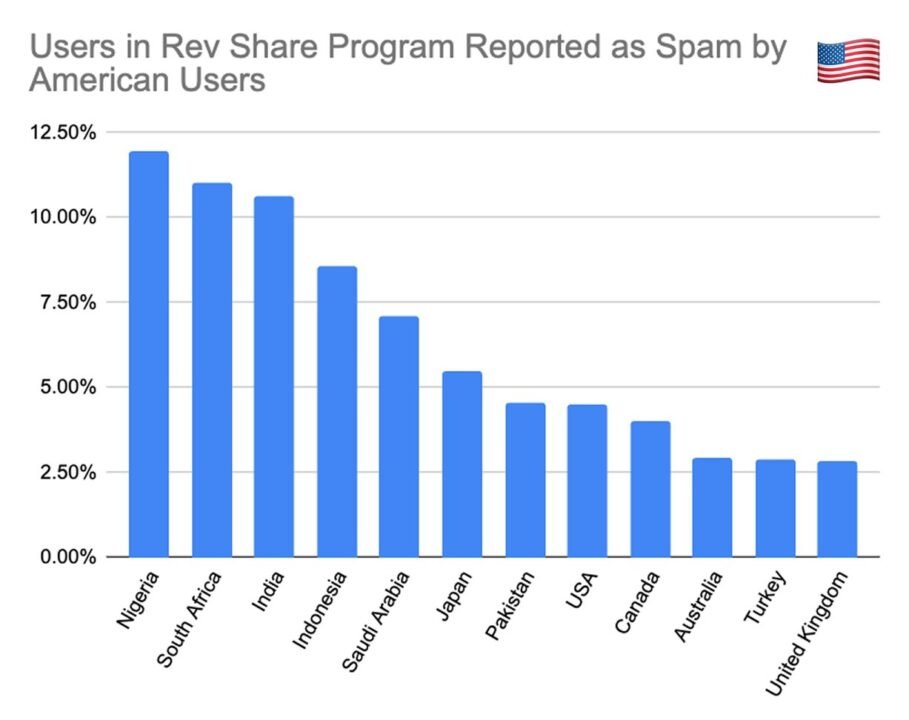
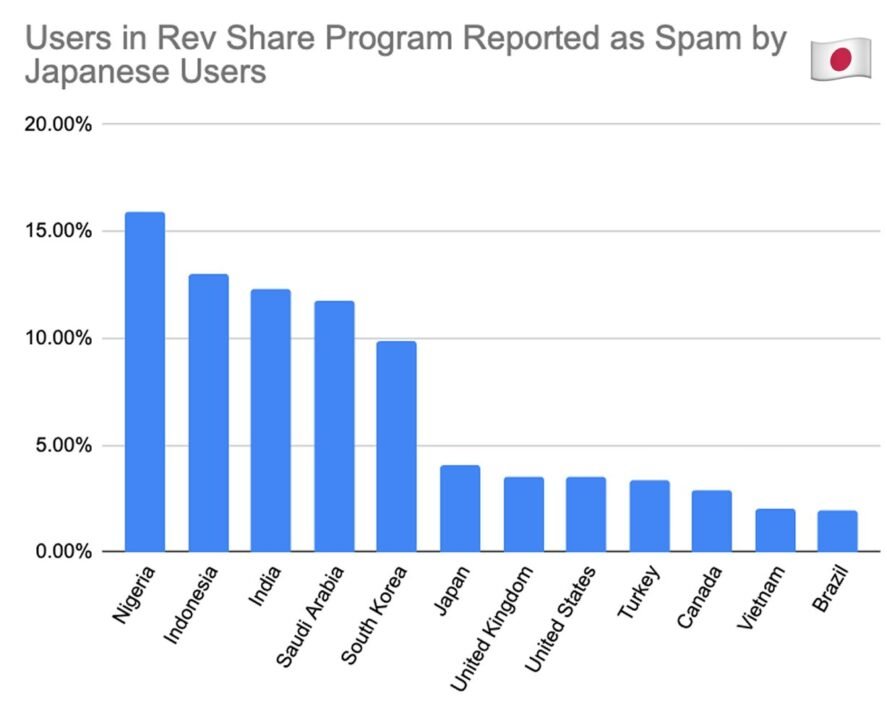
Bier didn’t just drop text; he brought receipts. He shared two internal charts detailing the home countries of revenue-share users most frequently reported as spam by American and Japanese users.
When American users hit the “report spam” button on a verified reply, the data shows exactly who is on the receiving end. Nigeria tops the list by a significant margin, with roughly 12% of the spam reports. South Africa follows closely at around 11%, with India trailing just behind at 10.5%.
The trend is even more aggressive in Japan. When Japanese users report spam in their replies, nearly 16% of those accounts are based in Nigeria. Indonesia (13%) and India (12.2%) take the second and third spots, respectively.
If you are a heavy X user, this data validates what your eyes have been seeing for months. Accounts from these regions have mastered the dark art of engagement farming. By spamming the replies of viral tweets in high-tier ad markets (like the US and Japan), they artificially inflate their impressions to secure a larger slice of the revenue share pie. As Bier noted, this tactic is “crowding out human posts,” and fixing it would inherently boost organic reach for everyone else.
From a local perspective, it is a massive relief to see Kenya completely absent from these top offender lists. While it certainly doesn’t mean Kenyans aren’t hustling for impressions, the data clearly shows we aren’t operating the massive, cross-border spam farms that are currently plaguing the platform’s top creators.
Connecting the dots: X’s recent rapid-fire updates
When you analyze Bier’s data, the sudden rollout of several controversial X features starts to make perfect sense. The platform has been scrambling to build fences around this exact behaviour.
This engagement farming epidemic is the direct catalyst for X forcing locations on profiles so users can instantly identify out-of-region spam. It’s exactly why we recently gained the ability to lock replies to a specific country or region, allowing creators in the US or Japan to literally shut the door on international reply-guys.
It also provides vital context for the platform’s most controversial, recently halted plan. X was actively preparing to heavily weight local impressions over global ones for creator payouts. Elon Musk only stepped in to pause the rollout after massive backlash from legitimate global creators who feared losing their livelihoods.
X is currently walking a tightrope. The platform wants to remain the global town square, but as Nikita Bier’s data proves, paying people to stand in that square has incentivized some to shout over everyone else. Until X finds a way to algorithmically penalize this cross-border farming without punishing authentic international conversations, the mute and block buttons remain our best line of defense.