


The days of cheap satellite entry into Kenya’s internet market are officially over.
The Communications Authority of Kenya (CA) has published its Revised Telecommunications Market Structure for 2026, and it fundamentally changes what it costs to beam signals into the country from orbit. The old Satellite Landing Rights (SLR) licence, which cost a flat $12,500 (roughly KES 1.6 million), has been scrapped. In its place is a new International Gateway Systems and Services (IGSS) licence that starts at KES 15 million for a 15-year term, or KES 45 million if you want 25 years.
That is not a typo. At the top end, the cost of entry has jumped nearly 28 times.
But the upfront licence fee is only part of the picture. Every IGSS licence holder must also pay an annual operating fee of 0.4% of gross turnover, with a floor of KES 4 million. That means even the smallest satellite operator pulling in modest revenue will still hand over at least KES 4 million every year to the regulator.

There is also a second, separate licence. The CA has introduced a Landing Rights Authorisation (LRA) licence, valid for 15 years, for any company transmitting telecommunications signals into Kenya via satellite or submarine cable. This one costs $25,000, plus a $500 application fee. Depending on what services a company offers, it may need both the IGSS and LRA licences.
Who exactly does this affect?
The short answer: everyone operating satellite infrastructure in Kenya. That includes SpaceX’s Starlink, which has been in the country since mid-2023. It includes satellite broadcasters like MultiChoice (the company behind DStv and GOtv). It includes global satellite operators like Eutelsat and SES. It includes newer entrants like Spacecoin, the American IoT and broadband provider that secured a transmission licence from the CA earlier this year. And it includes regional mobile operators using satellite infrastructure for backhaul.
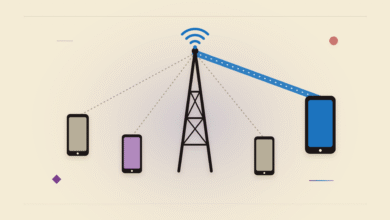
For Starlink specifically, the IGSS licence carries an additional layer of urgency. The company needs it to launch its Direct-to-Cell service in Kenya. This is part of a broader deal with Airtel Africa, announced in December 2025, covering 14 markets across the continent. Direct-to-Cell is the technology that lets standard 4G smartphones connect to Starlink’s low-earth-orbit satellites without a dish or special hardware. Think of it as turning satellites into mobile towers in the sky. The initial rollout will support internet-based messaging and calls through apps like WhatsApp, with full voice calls and SMS expected by 2028.
The CA has confirmed that Starlink currently holds only landing rights, and will need the IGSS licence to proceed with Direct-to-Cell.
Why now?
This overhaul did not come out of nowhere. The CA first proposed these changes in December 2024, and the timing was far from coincidental. Starlink had arrived in Kenya roughly 18 months earlier, and its impact on the broadband market was real. Satellite internet subscriptions surged by over 115% in a single year. Starlink quickly became the country’s ninth-largest ISP, commanding 0.8% of the fixed internet market and 98% of the satellite segment.
That rapid growth unsettled the incumbents. Safaricom, which dominates Kenya’s telecom landscape with over 36% of the fixed internet market and more than 63% of mobile broadband, formally petitioned the CA to revoke Starlink’s licence. The telco cited concerns about illegal connections and network interference. It also argued that satellite providers should be required to partner with local operators rather than compete independently.
Since then, the tone has changed dramatically. Safaricom signed a partnership with Starlink in November 2025, through parent company Vodacom, to resell Starlink equipment and integrate satellite technology into its network for underserved rural areas. Safaricom CEO Peter Ndegwa put it simply: satellite should complement, not compete.
But while the competitive hostility may have cooled, the regulatory machinery it set in motion has not.
What does this mean for consumers?
This is the question that matters most. Kenya has roughly 2.14 million fixed internet subscriptions. Satellite currently accounts for a small sliver, but it serves a critical role in areas where fibre and mobile towers cannot reach. The lodges in the Mara. The farms in Turkana. The schools in Garissa.
The higher compliance costs will almost certainly be passed on. How much depends on the operator. For Starlink, which generated billions in global revenue last year, the KES 15 million licence fee is manageable. The annual 0.4% turnover levy is more significant at scale, but unlikely to break the business. For smaller operators like Spacecoin, NTvsat, or Viasat, which collectively serve fewer than 1,000 subscribers in Kenya, these fees could be existential.
There is a real risk that the new framework, while bringing satellite regulation in line with terrestrial telecoms, inadvertently narrows the market to only the largest, best-funded players. That would be a step backwards for a country that has positioned digital inclusion as a national priority under its Digital Superhighway vision.
The bigger picture
Kenya is not acting in isolation. Across Africa, regulators are grappling with how to govern satellite internet providers that operate from orbit, generate revenue locally, but often sit outside the traditional licensing frameworks designed for ground-based telecoms. The CA’s approach, merging the old satellite and submarine cable licences into broader, more expensive categories, is one model. Whether it becomes the template for other markets will depend on the outcomes.
The Revised Telecommunications Market Structure takes effect 30 days from the date of the Gazette notice. The clock is ticking for every satellite operator in Kenya to figure out which licences they need, what they will cost, and what it means for their business plans.
For Starlink, the stakes extend beyond Kenya. If the IGSS licence requirement delays Direct-to-Cell, it delays the Airtel partnership across all 14 African markets where regulatory precedent often follows Kenya’s lead. For Safaricom, which now has skin in the satellite game through its Starlink reseller deal, the outcome shapes how quickly it can extend coverage to the roughly 40% of Kenyans still without reliable internet.
And for consumers, the maths is straightforward. More regulation means higher costs for operators. Higher costs for operators eventually mean higher costs for users, unless competition is fierce enough to absorb them. Right now, Kenya’s satellite market has only one player with real scale. Whether these new rules attract more competitors or scare them off will determine the answer.
This is a developing regulatory story. We will continue tracking how operators respond, whether Direct-to-Cell clears the licensing hurdle, and what the fee increases mean for satellite internet pricing in Kenya.





Join the discussion