

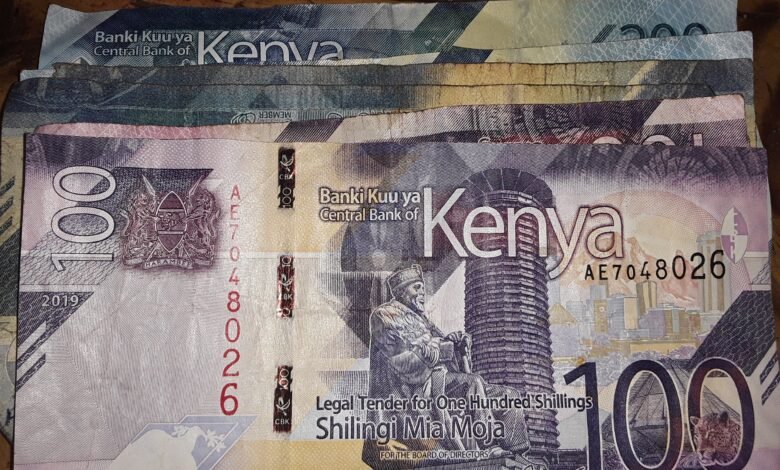
Kenya’s shilling is, according to strategists at some of Wall Street’s biggest banks, now one of the most fragile currencies on the continent. Bloomberg reported on Tuesday that several sell-side desks expect the Central Bank of Kenya to scale back its aggressive dollar sales and let the shilling slide in the coming months.
For the last 18 months, the shilling has been Africa’s most boring currency. Since August 2024 it has traded inside a narrow band between 128 and 130 to the dollar, with one-year volatility of about 1.5%. Bloomberg itself ranked it the most stable currency in Africa, and the fifth most stable in the world, as recently as March 2026. That quiet was the product of two things: high interest rates that kept foreign capital parked in Kenyan Treasury bills, and a central bank that was prepared to sell dollars out of its reserves whenever pressure built up.
Both pillars are now shaking.
The Iran war, which began with US and Israeli strikes on Tehran on 28 February, pushed the price of Brent crude from about US$63 a barrel in December to close to US$100 by late March. Because Kenya imports every drop of refined petroleum it consumes, the import bill jumped almost overnight. CBK Governor Kamau Thugge has confirmed that Kenya spent roughly US$941 million of its hard-currency reserves in the four weeks to 2 April, just keeping the shilling pinned near 129.

Reserves, which peaked at US$14.6 billion on 12 March, were down to US$13.3 billion by 9 April. That is still a healthy 5.7 months of import cover. But the direction of travel matters as much as the level, and the Wall Street thesis is essentially that the CBK cannot keep burning close to a billion dollars a month forever.
What the banks are actually predicting
The call is not that the shilling is about to collapse. It is more structural than that. The strategists argue that at some point the CBK will decide the cheaper option is to let the exchange rate absorb some of the strain. A move toward KES 134 to the dollar by the end of 2026 was already the working forecast at Oxford Economics, Standard Chartered, and Citigroup Global Markets in earlier notes. The new development is that this view is becoming consensus rather than contrarian.
There is also an IMF angle. The Fund has been quietly unhappy for months about how tightly the shilling has been managed. Kenya’s Treasury admitted in November 2025 that the currency was undervalued, and that it would probably strengthen toward KES 118 if left to trade freely. The flipside of that argument is that the CBK has been intervening in both directions, and new IMF funding is typically conditional on more exchange rate flexibility.
Why this matters for tech
The shilling story is not an abstraction. A weaker KES has very specific, very immediate consequences for the stack Kenyan businesses and consumers sit on top of.
Every cloud bill is denominated in dollars. AWS, Microsoft Azure, and Google Cloud invoice in USD, which means startups burn more shillings to pay the same compute bill the moment the exchange rate moves. The same goes for the SaaS subscriptions running half the economy: Microsoft 365, Google Workspace, HubSpot, Salesforce, Slack, GitHub, Figma, Adobe Creative Cloud, Zoom, and Netflix all bill in hard currency.
Device imports are the other half of the problem. Phones, laptops, routers, point-of-sale hardware, and almost every chip-level component shipped into Kenya is priced in dollars before duty. A 3 to 5% move in the exchange rate is the difference between a KES 15,000 phone and one that sits above KES 16,000. Retailers have very little margin to absorb that.
Safaricom is a more complicated case. M-Pesa transactions are in shillings, which is a shield. But the telco buys network gear, handset stock, and cloud services in dollars, and its dollar-denominated debt becomes more expensive to service whenever the shilling depreciates. Safaricom Ethiopia, which is still capital intensive, is even more exposed.
Startup fundraising is the third pinch point. Rounds are almost always struck in dollars, and the KES runway a founder plans on the day of close is not the runway they actually get when the wire lands two weeks later. It cuts both ways for exporters, though: BPO firms, software houses selling into US clients, and freelancers paid in USD through PayPal, Wise or M-Pesa Global all see their shilling revenue go up when the KES weakens.
The bigger picture
Kenya is not alone. The World Bank and IMF have both cut 2026 growth forecasts, to 4.4% and 4.5% respectively, citing the same war. Fuel prices are already at a record high after a chaotic two-day VAT climbdown. Inflation is forecast to peak at 6.2% in July if the conflict drags on. And the CBK paused its rate-cutting cycle on 8 April after ten straight cuts, a clear signal that the easing party is, for now, over.
The message from Wall Street is not that Kenya is about to blow up. It is that the quiet era of the 129 shilling was always going to end, and the next shock is a good enough reason to finally let it.






Join the discussion