

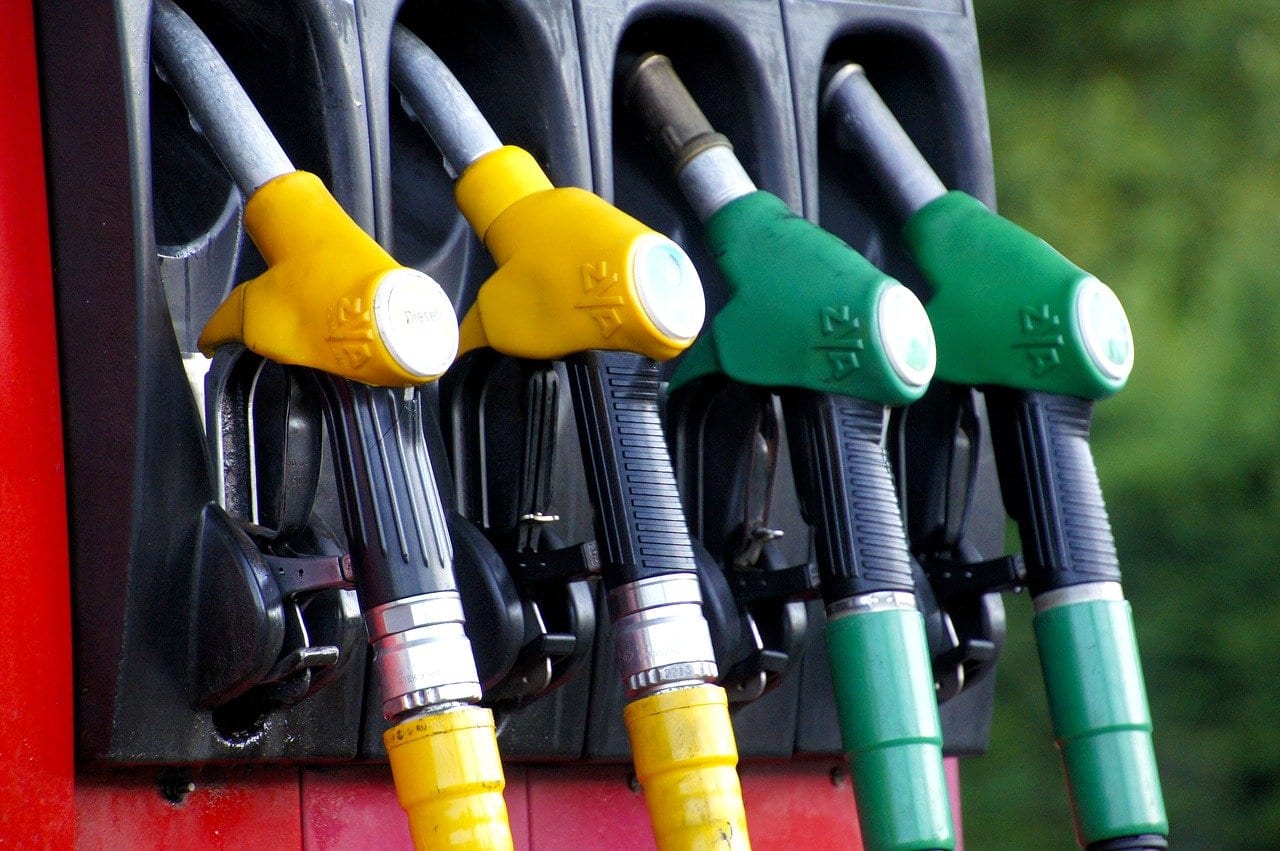
At 9:30pm on Wednesday 15th April 2026, the Energy and Petroleum Regulatory Authority issued an addendum to the fuel prices it had published barely 24 hours earlier. The Value Added Tax on Super Petrol, Diesel, and Kerosene, which had been cut from 16% to 13% on Tuesday, was now being slashed further to 8%.
The new Nairobi prices: Super Petrol drops by KES 9.37 to KES 197.60. Diesel drops by KES 10.21 to KES 196.63. Kerosene remains unchanged at KES 152.78.
This is the second EPRA pricing announcement in two days. The first, issued on 14th April under Legal Notice No. 69, set prices based on a 13% VAT rate. The second, issued on 15th April under Legal Notice No. 70, recalculates everything at 8%. Both are signed by National Treasury Cabinet Secretary John Mbadi Ng’ongo. Both cover the same pricing period: 16th April to 14th May 2026.
Two Legal Notices. Two EPRA releases. Two sets of pump prices. One pricing cycle. And the Acting EPRA Director General, Dr. Joseph Oketch, signing an addendum to a release his predecessor’s office published just yesterday. This is not normal.

What happened between Tuesday night and Wednesday night
On Tuesday 14th April, EPRA announced fuel prices with a VAT rate of 13%. Petrol hit KES 206.97 in Nairobi. Diesel hit KES 206.84. Both were the highest pump prices in Kenya’s history. The reaction was immediate and furious.
By Wednesday morning, Gen Z activists were mobilising online, echoing the youth-led protests that forced the withdrawal of the Finance Bill in 2024. The opposition coalition led by Rigathi Gachagua, Kalonzo Musyoka, Fred Matiang’i, and others issued a statement demanding a special sitting of Parliament, the cancellation of the Government-to-Government fuel import framework, and the complete removal of VAT on fuel. Matatu operators announced an immediate 25% fare increase. Commuters in Nairobi reported fares as high as KES 190 on routes that had been KES 100 the day before.
Then, on Wednesday afternoon, President Ruto stood on a vehicle in Suneka, Kisii County, and announced that the government would reduce VAT on fuel from 16% to 8%. Not from 13% to 8%. From 16% to 8%. As though the 13% rate his own Treasury CS had gazetted the night before had never existed.
By Wednesday night, EPRA had issued the addendum and the prices were revised.
The price valve playbook
This sequence is worth examining carefully, because it is not the first time this government has used it.
The pattern is straightforward. First, allow a sharp price increase to land. Let the public absorb the shock. Then, announce a partial rollback framed as relief. The net result is a price increase that would have triggered outrage on its own, but which now feels like a concession because it is smaller than the number that preceded it.
Consider what just happened. Petrol in Nairobi was KES 178.28 before yesterday’s review. It is now KES 197.60. That is a KES 19.32 increase per litre. Had the government announced that figure on Tuesday, it would still have been the steepest single-cycle petrol increase in recent memory. But because it arrived after a KES 28.69 increase that lasted less than a day, the KES 19.32 feels like a discount.
It is not a discount. It is a price increase. Every motorist, every matatu passenger, every household buying cooking gas or groceries transported by diesel trucks is paying more tomorrow than they were last week. The fact that they are paying less than they were for a single Wednesday does not change that arithmetic.
This is the same government that, in the Finance Act 2023, doubled VAT on fuel from 8% to 16%. That increase was one of the triggers for the Gen Z protests that rocked the country in 2024. Now the same administration is positioning a return to 8% as a favour to citizens. It is not a favour. It is a restoration of the rate that existed before this government changed it.
The chaos nobody is talking about
Beyond the politics, the logistical chaos of two price changes in 24 hours has created real problems that nobody in government appears to have considered.
Fuel merchants adjusted their systems this morning to reflect the 13% VAT prices. Stations across the country reprogrammed pumps, updated price boards, and began selling at the new rates. By tonight, they were told to change everything again. The cost of that confusion, in staff time, system changes, and customer disputes, falls entirely on the dealers.
The transport sector is in a similar bind. The Matatu Owners Association raised fares today based on the KES 206+ diesel price. Those fares are now based on a price that no longer exists. Will fares come back down? History suggests not immediately, if at all. The increase cascades instantly. The reversal does not.
Then there is the tax accounting question. For the hours between this morning and tonight, fuel was sold at 13% VAT. From tomorrow, it will be sold at 8%. How does KRA reconcile receipts issued at different tax rates on the same day for the same product? Fuel stations running electronic tax registers will have transactions logged at 13% that are now subject to an 8% regime. The administrative burden of cleaning this up is non-trivial, and no guidance has been issued.
The G-to-G question
President Ruto, speaking in Kisii, defended the Government-to-Government fuel import arrangement, claiming it has made Kenya’s fuel market more competitive regionally. The numbers do not support that claim. Kenya now has the most expensive petrol in East Africa at KES 197.60 per litre, ahead of Tanzania (KES 190), Uganda (KES 184), and Ethiopia (KES 118).
The G-to-G framework was introduced to bring transparency and stability to fuel imports. Instead, it has produced a procurement scandal that led to the arrest and resignation of three senior officials, a substandard fuel cargo on the MT Paloma, and prices that are higher than those in neighbouring countries that do not use the same model. The opposition wants it scrapped. The Senate is investigating it. Citizens are asking what exactly the arrangement is supposed to be cushioning them from.
What the new prices actually are
For clarity, here is where things stand as of Thursday 16th April:
In Nairobi, Super Petrol is KES 197.60, Diesel is KES 196.63, and Kerosene is KES 152.78. In Mombasa, the cheapest in the country, Super Petrol is KES 194.32, Diesel is KES 193.35, and Kerosene is KES 149.49.
The 8% VAT rate is temporary. Legal Notice No. 70 runs from 15th April to 14th July 2026, the same three-month window as the now-superseded 13% rate. What happens after July remains an open question. Capital FM has reported that the VAT Act may not legally permit a reduction below 12% by executive order alone, which means this rate may face legal challenge before the three months are up.
The kerosene subsidy has also been adjusted. EPRA’s addendum notes that the stabilisation subsidy on kerosene drops from KES 108.10 to KES 96.56 per litre. The lower VAT reduces the overall price build-up, meaning the government needs to absorb less to hold kerosene at KES 152.78.
Where this leaves Kenyans
Kenyans are paying KES 19.32 more per litre for petrol and KES 30.09 more for diesel than they were two days ago. Those are significant increases by any measure. The matatu fare hikes are already in effect and unlikely to reverse. Food prices will follow as diesel costs flow through the supply chain.
The 8% VAT is better than 13%. But it is also where VAT on fuel was before this government raised it to 16% in 2023. Presenting its restoration as generosity requires a particular kind of amnesia.
And the deeper structural problems remain untouched. Kenya still imports 100% of its refined petroleum. It still holds no strategic reserve. The G-to-G arrangement is mired in scandal. The PDL fund is burning through billions per cycle. And the next EPRA review is just 30 days away.







Join the discussion