

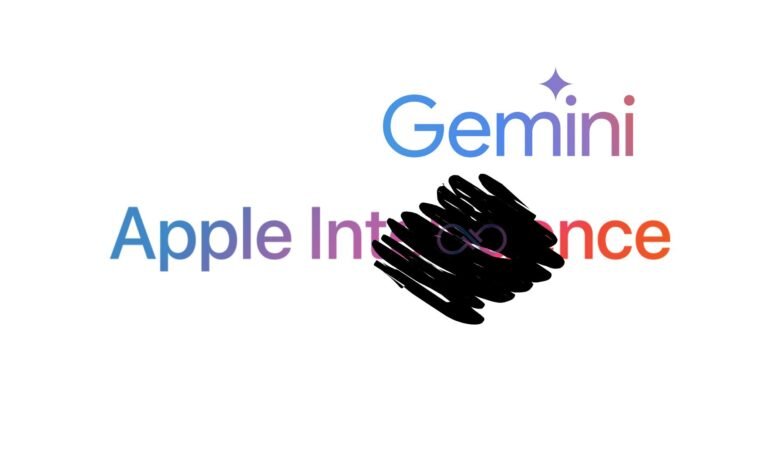
Google has used the biggest stage at its Cloud Next 2026 keynote in Las Vegas to publicly reaffirm what many had started to doubt: the Gemini-powered version of Siri is still on track for a 2026 release.
Speaking to a packed conference hall on Tuesday, Google Cloud CEO Thomas Kurian stood in front of a giant Apple logo and described the collaboration as “monumental.” According to 9to5Mac, Kurian said Google is working with Apple as its “preferred cloud provider” to develop the next generation of Apple Foundation Models based on Gemini technology, and that those models will “help power future Apple Intelligence features, including a more personalised Siri coming later this year.”
There’s no fresh product news here. But the timing matters. It tells us the partnership is shipping, not slipping further.
What this actually is
Back in January, Apple and Google published a rare joint statement confirming a multi-year partnership to use Google’s Gemini models and cloud infrastructure for the next generation of Apple Foundation Models. We covered that announcement in detail in our earlier piece on Apple tapping Google Gemini to power next-generation Siri.

The deal was unusual for two reasons. First, Apple almost never publicly admits it needs help. Second, Google is a direct competitor in phones, assistants, and services. For Apple to hand its most prominent AI feature to a rival is effectively an admission that its in-house models were not cutting it.
Bloomberg has reported that Apple is paying roughly $1 billion a year (about KES 130 billion at current rates) for a bespoke version of Gemini. Neither company has confirmed that figure.
Why Apple needed the help
Apple first previewed a “personalised Siri” at WWDC 2024. The demo showed Siri checking when your mother’s flight landed by reading your Mail, cross-referencing your Messages, and knowing your on-screen context. It looked magical. It never shipped.
Apple officially delayed the feature in March 2025. Internal reports later described a Siri codebase so entangled that engineers had to rebuild it from scratch on a large language model foundation. That rebuild is what the Gemini partnership now backs.
Apple Intelligence, which did ship, has been underwhelming in practice. Notification summaries sometimes invented news. Writing tools were useful but unremarkable. The part users actually wanted, a genuinely smart assistant, kept slipping.
How the plumbing is expected to work
Based on statements from Tim Cook on Apple’s Q1 2026 earnings call and reporting from MacRumors, Siri will run on a tiered system:
- Simple tasks (timers, opening apps, basic dictation) stay on-device using Apple’s own models.
- Moderately complex tasks go to Apple’s Private Cloud Compute servers.
- The heavy reasoning, the “world knowledge” layer, hits a custom Gemini model reportedly hosted on infrastructure Apple controls.
Apple insists its privacy posture is intact. Gemini, in this setup, is the engine. Siri is still the face.
What to watch at WWDC
Apple’s Worldwide Developers Conference kicks off on 8 June 2026. That is almost certainly where the first Gemini-powered Siri features will be shown off, as part of iOS 27. Developers and public beta testers will then spend July and August kicking the tyres before a wider September rollout.
Expected features in this overhauled Siri include a standalone Siri app, persistent chat history that behaves more like ChatGPT or Gemini, deeper cross-app awareness, and the ability to chain multiple commands into a single request.
Apple currently uses OpenAI’s ChatGPT for certain complex queries inside Apple Intelligence. That integration is reportedly unchanged for now, though how long Apple keeps two external AI partners is an open question.
The Kenyan angle
Most of these features require an iPhone 15 Pro or newer to run Apple Intelligence at all. For many Kenyan users still on iPhone 13 and iPhone 14 models (which dominate the local secondhand market), the headline Siri upgrade will not arrive on their current devices.
There’s also the supported-languages question. Apple Intelligence rolled out in English first, and support for languages widely used in Kenya like Swahili remains absent. Whether the Gemini partnership accelerates that is unclear, but Google’s translation infrastructure is a genuine asset Apple did not previously have.
For Apple resellers in Nairobi, a meaningfully smarter Siri could also become an upgrade driver for users sitting on the fence between Android flagships and the iPhone 17 lineup, which we broke down here.
The bigger picture
Google getting this partnership on a keynote slide, in front of its entire cloud customer base, is a flex. It tells enterprise buyers that Apple, the most privacy-obsessed company in tech, vetted Gemini and picked it. That is a marketing win Google could not buy.
For Apple, it is a pragmatic admission: shipping a great assistant matters more than shipping one built entirely in-house.
WWDC will tell us whether the wait was worth it.



Join the discussion