

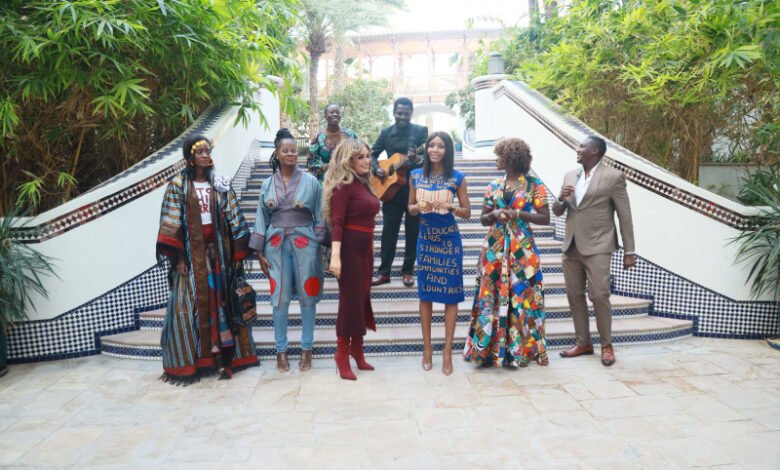
Applications are now open for the 2026 edition of the Merck Foundation Africa Research Summit (MARS) Awards, which recognise outstanding African women researchers and young scientists working in health-related fields.
The annual awards, run by Merck Foundation — the philanthropic arm of German pharmaceutical company Merck KGaA — have two categories: Best African Woman Researcher and Best Young African Researcher. Winners receive a funded three-month research training placement at a premier institute in India, along with an invitation to the Merck Foundation Africa Asia Luminary 2026, a high-level gathering of scientists, policymakers, and global health leaders.
The deadline for applications is 30 June 2026.
What the awards are actually about
MARS has been running since 2016. It focuses specifically on research related to women’s health, reproductive care, and fertility. The summit is organised with scientific backing from the African Union’s Scientific-Technical and Research Commission (AU-STRC), the Africa Reproductive Care Society (ARCS), and Manipal Academy of Higher Education in India.

The programme is not a cash prize. It is a professional development opportunity. Winners are enrolled in structured research training designed to strengthen their technical skills and broaden their exposure to global research networks. To date, more than 90 researchers from across the continent have been recognised through the awards.
Who can apply
To be eligible, applicants must be primarily affiliated with an African university or research institution. Collaborative projects involving partners outside Africa are welcome, but the lead researcher must be Africa-based. Submissions should be in the form of research abstracts demonstrating scientific rigour, originality, and relevance to Africa’s public health priorities — particularly around women’s health and reproductive care.
Applications can be submitted via email to mars@merck-foundation.com or through the online portal on the Merck Foundation website.
A Kenyan has won before
In 2023, Stella Irungu from Kenya won the Best African Women Researchers Award for her work on identifying biomarkers for the non-invasive diagnosis of endometriosis. She went on to attend the International Federation of Fertility Societies (IFFS) conference as part of her recognition. Other past winners have come from South Africa, Nigeria, Ethiopia, Tanzania, Rwanda, Ghana, and the Democratic Republic of the Congo.
The 2024 winners included researchers from South Africa and Ghana in the women’s category, and from the DRC, among others, in the young researchers category.
The bigger picture: women in STEM across Africa
The MARS Awards exist within a broader context of persistent gender inequality in African science. According to UNESCO, women make up only about 30% of science professionals on the continent. In some West and Central African countries, women represent fewer than 15% of engineering and technology researchers. Globally, just 35% of STEM graduates are women — a figure that drops to 25% or less in many African nations.
These numbers are not just about representation for its own sake. Africa’s youth population is projected to make up 42% of the world’s young people by 2030. If half that population faces structural barriers to entering scientific careers, the continent stands to lose an enormous amount of research capacity, innovation potential, and economic output.
Programmes like MARS sit alongside other efforts to close this gap. Various organisations have launched STEM-focused scholarship and fellowship programmes targeting African students and researchers, from fintech-specific training to broader research grants. UNESCO itself runs the Equatorial Guinea Fellowship Programme for Young Women Scientists in Africa, offering $25,000 grants to two young African women scientists each year.
The Merck Foundation’s wider scholarship programme
Beyond MARS, the Merck Foundation runs a broader scholarship programme that has provided more than 2,500 medical training opportunities to healthcare professionals across 52 countries, covering 44 specialised fields. Nearly half of those scholarships — roughly 1,200 — have gone to women. The foundation says several of its alumni have become the first specialists in their respective fields in countries including Namibia, Liberia, The Gambia, Burundi, and Sierra Leone.
The foundation also runs an initiative called Educating Linda, which provides annual scholarships to underprivileged schoolgirls across 19 African countries. That programme has supported more than 1,200 girls to date.
How to apply
Researchers interested in the MARS Awards 2026 should prepare a well-structured abstract outlining their research objectives, methodology, and findings. Submissions must focus on women’s health and reproductive care.
- Email: mars@merck-foundation.com
- Online portal: Merck Foundation MARS Application
- Deadline: 30 June 2026






Join the discussion