

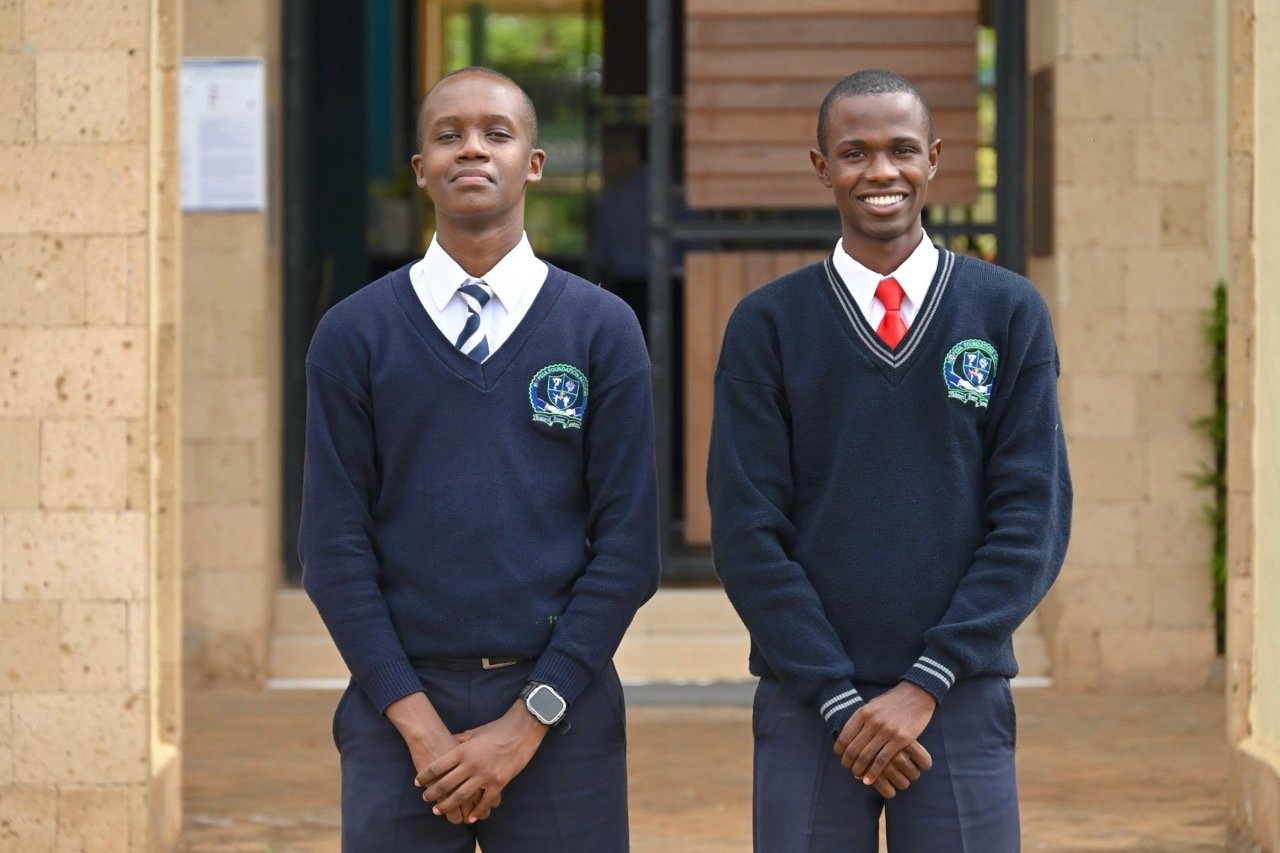
Kenyan teenagers Fredrick Njoroge Kariuki and Miron Onsarigo have been named the Africa Winners of The Earth Prize 2026 for HewaSafi, a low-cost vehicle exhaust filtration system designed to reduce harmful emissions from urban transport.
HewaSafi, which means “clean air” in Swahili, uses locally available materials including maize cobs, coconut shells, agricultural waste and algae to capture emissions from vehicles. The project is aimed at transport systems that millions of people rely on every day, especially matatus and boda bodas.
The two 17-year-olds will receive $12,500 to develop and implement the idea. They will also compete against six other regional winners for the Global Winner title, which will be decided through public voting from 18 May to 27 May 2026. The final winner will be announced on 29 May.
The idea is simple in concept but important in context. Kenya’s urban transport system still depends heavily on petrol and diesel vehicles. Matatus, buses, motorcycles and older private vehicles move people affordably, but they also contribute to air pollution in crowded urban areas. This is why a low-cost exhaust filter built for local transport operators could matter if it works reliably outside a controlled test environment.

HewaSafi is designed as a multi-stage exhaust system. According to the team, the filter combines maize cobs and coconut shells with other waste materials and a living algae component. The goal is to capture particulate matter while reducing toxic gases such as carbon monoxide and carbon dioxide. The team says the system can capture more than 90 percent of particulate matter.
That claim will need continued independent testing as the project moves beyond prototype stage. But the direction is interesting because it does not assume that African cities will immediately replace all combustion vehicles with electric alternatives. Instead, it asks a more practical question: what can be done to reduce harm from the vehicles already on the road?
That matters because clean mobility transitions take time. Electric buses and motorcycles are growing in Kenya, and we have already covered how companies like BasiGo are expanding electric matatu pilots. But the existing fleet will not disappear overnight. A technology that can lower emissions from current vehicles could become a bridge while the larger shift to electric transport continues.
For Fredrick, the project is personal. He says he grew up in Naivasha with bronchitis made worse by air pollution.
“I didn’t choose this problem, it chose me. Growing up in Naivasha, my bronchitis got bad enough that I stopped thinking of air pollution as an environmental issue and started thinking of it as something being done to us. HewaSafi is our answer to that,” he said.
Miron, who is from Kisumu, says vehicle fumes were part of everyday life.
“Back home in Kisumu, seeing people get sick from vehicle fumes was just… normal. But normal didn’t feel right to me. I wanted to do something about it,” he said.
Air pollution is not a distant environmental issue. It is a public health issue. A Lancet Planetary Health study estimated that air pollution was responsible for about 1.1 million deaths across Africa in 2019. The problem comes from several sources, including household fuels, industrial activity, dust, open burning and vehicle emissions.
Nairobi has already experimented with public-facing air quality awareness. In 2021, we covered how digital billboards in Nairobi streamed real-time air pollution data to help residents understand exposure to PM2.5, one of the most harmful forms of air pollution. That kind of monitoring is useful, but monitoring alone does not reduce emissions. Technologies like HewaSafi sit on the intervention side of the problem.
The students have already conducted pilot tests with a local matatu association. Their next target is to refine the system and work with transport operators and industry partners, starting with Eastleigh Matatu SACCO. The larger vision is a product family called the HewaSafi Emission Control System, with HewaSafi Lite, HewaSafi Pro and HewaSafi Mobile versions.
The team also plans to offer the products through instalment payments. That part is important. Many transport operators will not adopt clean-tech hardware if the upfront cost is too high or if maintenance is complicated. For HewaSafi to work commercially, it will need to be affordable, durable, easy to service and clearly beneficial to operators.
There is also the issue of regulation. Exhaust filters can only scale meaningfully if they fit into inspection standards, public transport incentives or emissions rules. Without that, adoption may depend on a small number of early operators willing to test the system.
Still, the win is significant. The Earth Prize is a global environmental competition for students aged 13 to 19. The 2026 edition will award $100,000 in total funding, with seven regional winners receiving $12,500 each. The competition says it has reached more than 21,000 students across 169 countries and territories since launch.
For Kenya, HewaSafi is another reminder that climate-tech innovation is not only about large solar farms, electric buses or carbon markets. Sometimes, it can begin with students looking at a familiar local problem and building a practical prototype from materials around them.
The next test is no longer whether HewaSafi is a good student innovation. It is whether it can become a reliable product that transport operators can install, maintain and afford. If it can, the project could offer a useful tool for reducing emissions from the vehicles that still keep African cities moving.




Join the discussion