


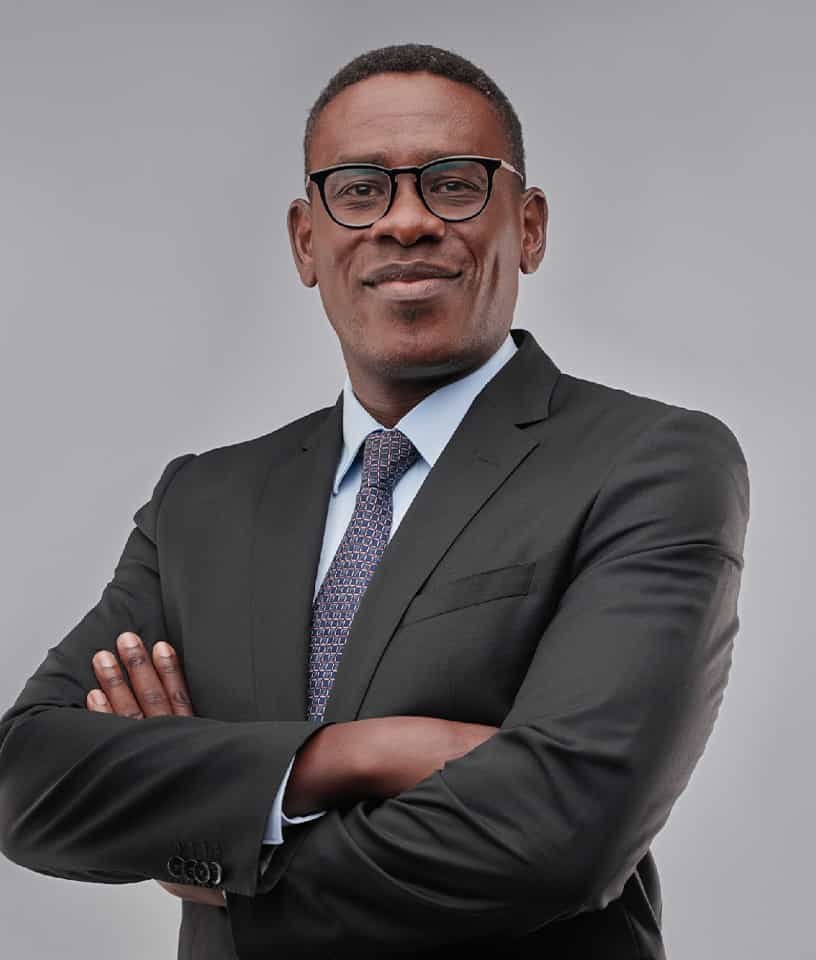
Adan Abdulla Mohamed, 62, has been appointed Commissioner General of the Kenya Revenue Authority for three years, effective today, 18 May 2026. The appointment was made by National Treasury Cabinet Secretary John Mbadi Ng’ongo under section 11(1) of the Kenya Revenue Authority Act, and published as Gazette Notice 7393 in a special issue of the Kenya Gazette.
The decision ends a six-week interim period at Times Tower. Lilian Nyawanda, the Commissioner for Customs and Border Control, had been running the authority since the KRA Board declined to renew Humphrey Wattanga’s contract on 8 April. Wattanga, who took office in August 2023, has since been nominated by President William Ruto as Kenya’s High Commissioner to South Africa, pending parliamentary approval.
Who is Adan Mohamed
This is not Adan Mohamed’s first attempt at the corner office at Times Tower. He applied for the same role in 2012 while still Managing Director of Barclays Bank Kenya, a position he had held for over ten years, and lost to John Njiraini. He was instead appointed Cabinet Secretary for Industrialisation in 2013 by President Uhuru Kenyatta, later moving to the East African Community and Regional Development docket before resigning in February 2022 to run for Mandera Governor. He lost that race to United Democratic Movement candidate Mohamed Adan Khalif.
He did not stay out of government for long. President Ruto first appointed him to the Council of Economic Advisors under David Ndii in late 2022, then promoted him to Chief of Strategy Execution in November 2023 under Executive Order No. 2 of 2023. That role placed him inside the Executive Office of the President with responsibility for delivering the Kenya Kwanza agenda across ministries, and he has been a near-permanent fixture on Ruto’s foreign trips, including COP28 in Dubai, the UN General Assembly in New York, and the US-Kenya Business Roadshow.

He is Harvard-trained, born in El Wak, Mandera, in December 1963. The Standard reported this past weekend that he had emerged as the front-runner in a field of seven shortlisted candidates, despite what it called an “age limit hitch”: he is above the standard public service mandatory retirement age of 60. The KRA Board appears to have resolved that question by relying on Public Service Commission provisions that allow retention of officers past 60 on the basis of specialised skills, an instrument previously used to keep Njiraini in office through the end of his term.
What the in-tray actually looks like
The new Commissioner General inherits an authority under real pressure. By 31 March 2026, the end of the third quarter of the 2025/26 financial year, KRA had collected KES 2.038 trillion against a target of KES 2.122 trillion. That is 96.1 per cent performance and 11.4 per cent growth year on year, but it leaves a visible gap. The National Treasury separately told the Budget and Appropriations Committee that the country was facing a projected revenue shortfall of KES 162.6 billion as of February 2026, attributing it to underperformance in ordinary revenue and “administrative inefficiencies in tax collection.”
The other half of the in-tray is technological. When KRA re-advertised the Commissioner General position after Wattanga’s exit, it explicitly framed the role around digital transformation, describing the successful candidate as a “transformation catalyst.” That is unusual framing for the job description, and it tells you what the Board thinks the next three years are about.
The actual work in progress is substantial. The Electronic Tax Invoice Management System (eTIMS) is the most visible part of it, with KRA figures pointing to roughly 680,000 businesses onboarded so far. The authority is rebuilding iTax to integrate with M-Pesa and other payment processors via API, so that a sale and the corresponding tax obligation register in the same moment. Pre-populated returns, AI-driven risk profiling, a Taxpayer 360 view, and the Shuru WhatsApp chatbot are all already live or in active rollout. Brian Nyakeri, recruited from Agile Cloud and previously of IBM, Dell, and Safaricom, took over as Commissioner for Business Strategy, Technology and Enterprise Modernisation on 12 January 2026.
This is also where the political weight sits. We’ve already walked through how eTIMS is being wired directly into M-Pesa, giving the authority real-time visibility into transactions that Parliament had twice declined to authorise through legislation, in 2016 and again in 2024. The Draft Finance Bill 2026 goes further, proposing under a new Section 18A of the Tax Procedures Act to let the Commissioner determine tax liability based on third-party data even where a taxpayer has already self-assessed. Mohamed will be the person who has to defend, refine, or pull back on those choices.
Why this matters
There is also the foreign question. KRA collected KES 2.3 billion from 454 foreign digital service providers by the end of August 2025 through the Digital Service Tax and the Significant Economic Presence tax, which charges three per cent of gross turnover earned in Kenya by firms without a local subsidiary. Expanding that base, including through Double Tax Agreements that explicitly cover automated digital services, is one of the few realistic ways to grow the tax base without further squeezing domestic taxpayers.
Mohamed’s banking and trade negotiation background reads well against that brief, as does his proximity to State House. His tenure at Industrialisation included Kenya’s leg of the EU-EAC Economic Partnership Agreement negotiations, and his more recent strategy role placed him at the centre of Ruto’s economic diplomacy. That same proximity has also drawn scrutiny. In April 2025, former Attorney General Justin Muturi publicly alleged that Adan Mohamed had given him information at COP28 in Dubai that “ended up with the Adani deal about the airport,” referring to the abandoned proposal for India’s Adani Group to lease Jomo Kenyatta International Airport. No formal investigation by the Ethics and Anti-Corruption Commission or charges have been filed in connection with those claims.
What to actually watch over the next three years: whether KRA hits the 99.8 per cent uptime target it has set for the rebuilt iTax, whether the M-Pesa integration is rolled out with privacy safeguards or without them, whether the SEP tax base grows beyond the current 454 registered foreign providers, and whether revenue performance closes the gap with Treasury targets without yet another round of new taxes on the same compliant base. The Commissioner General’s job has historically been judged on the last number. The next one will be judged on all four.






Join the discussion