

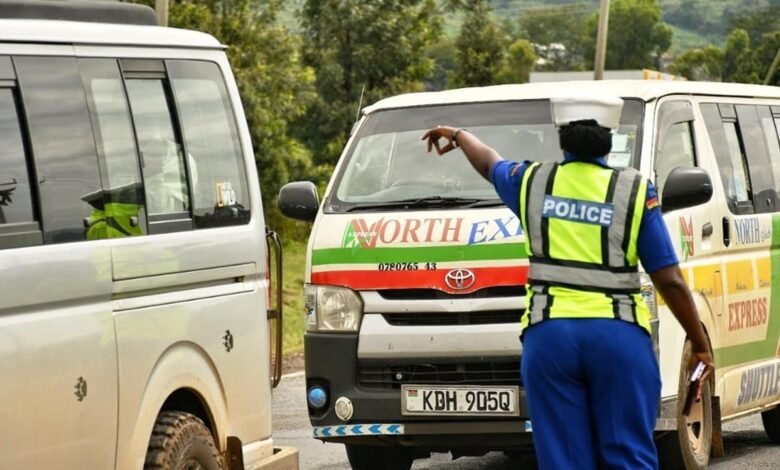
From 1 June 2026, Kenyan motorists who commit minor traffic offences will no longer be hauled to court automatically. Under a new enforcement framework announced by the National Transport and Safety Authority (NTSA) on 28 May, offenders will instead receive a Police Notification of Traffic Offence, then choose to either admit liability and pay the fine, or dispute it in court.
The framework runs under Sections 117 and 117A of the Traffic Act (Cap. 403), and NTSA says it was developed with the National Police Service, the Office of the Director of Public Prosecutions, and the Judiciary. Its stated aim is to ease congestion in traffic courts while improving compliance and road safety. If you pay, the matter closes without a court appearance. The court still keeps the power to reduce or refund a penalty and to assign demerit points to your licence.
Wait, didn’t this just happen?
It did, and that’s the real story here. In March, NTSA switched on an automated Instant Fines system: roughly 1,000 cameras detecting offences and firing off SMS fines, payable within seven days through KCB branches, with unpaid fines locking you out of NTSA services. When we covered that launch, we flagged the unanswered questions around fairness, appeals, and that clunky payment pipe.
The courts had the same questions. On 12 March, Justice Bahati Mwamuye froze the system, and NTSA withdrew it entirely on 27 March. The lobby group Sheria Mtaani argued the automated model bypassed the police, the prosecutor, and the judiciary, and treated registered owners as automatic culprits.

What’s actually new
Read against those objections, the new framework looks less like a relaunch and more like a careful legal rebuild. Offences can still be caught by cameras or by officers on the road, and the notice can be issued to either the driver or the registered owner of the vehicle. But it now comes from a police officer rather than an algorithm. There’s an explicit right to dispute the offence in court. Crucially, motorists also get the right to access the evidence, the photos or video, behind the alleged offence. NTSA adds that personal data will be handled under the Constitution and the Data Protection Act.
The notice itself can reach you several ways: handed to you in person, fixed to your vehicle, or sent by SMS, email, or an approved digital platform. It will spell out the offence, the date, time and location, the penalty, how to pay, and your deadline to respond. Ignore it, fail to pay, or skip a required court date, and NTSA warns you risk harsher penalties from the courts.
The “minor offence” label is doing heavy lifting. These are a defined legal set under the Traffic (Minor Offences) Rules, 2016: more than 30 offences, none carrying a prison term, with fines between KES 500 and KES 10,000. Think speeding within a set band, driving on a footpath, or riding without protective gear. Serious offences like drunk driving still go through the full court process. The law has long allowed drivers to plead guilty and pay these minor fines without appearing in court, so NTSA is now routing enforcement through a door the statute already built.
The catch
The Sheria Mtaani petition was never decided on its merits. NTSA asked the High Court in April to dismiss it as moot, since the old system no longer existed. The petitioners refused to walk away, and one of their sharpest complaints survives into the new system: a notice can still be served on the registered owner, even if someone else was driving. So the core constitutional question, how far the State can go in handling traffic offences outside a courtroom, is still unresolved.
For now, the practical takeaway is simple. Keep your phone number and email current in the NTSA system, since that’s one of the ways a notice can reach you. Know that you can dispute an offence instead of just paying, and that you’re entitled to see the evidence before you decide. NTSA has also published a detailed FAQ on minor offences at ntsa.go.ke if you want the specifics.






Join the discussion