
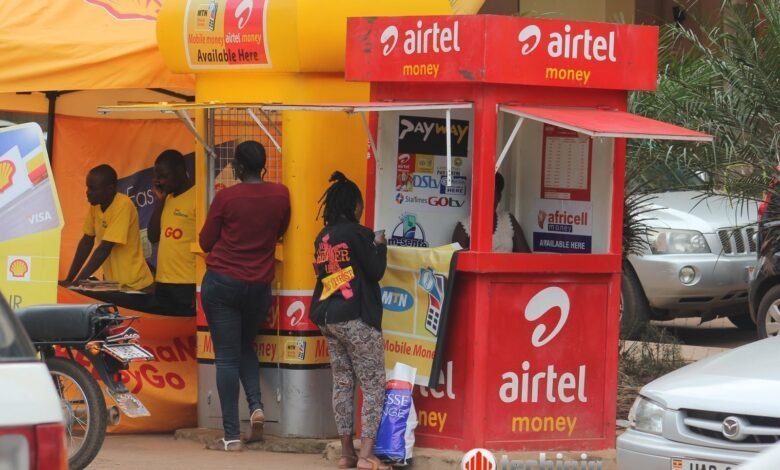
The National Treasury has proposed a 16% Value Added Tax on the fees charged by Kenya’s 42 licensed payment service providers. The list is long and familiar: M-Pesa, Airtel Money, Pesapal, Kenswitch, Cellulant, Craft Silicon, and even Kenya Airports Parking Services. The proposal sits inside the Finance Bill 2026, tabled in Parliament on 5 May 2026, with most measures due to take effect from 1 July.
Treasury’s framing is that the tax lands on the platforms, not the people using them. Albert Mwenda, the director-general of budget, told the Business Daily that “the person who supplies ICT to enable payments, including paybills or tills, is the one subject to VAT,” and that those making payments are out of scope because they supply no service.
That distinction does not survive contact with how VAT actually works. VAT is a consumption tax. The fees payment providers earn come entirely from users sending, receiving or accepting money. Tax experts expect Safaricom, Airtel and Pesapal to pass the cost straight through. Michael Mburugu of PKF Kenya pointed to the sheer velocity of M-Pesa transactions as the reason the impact would be felt widely. David King’ori of Bowmans warned it could amount to double taxation and push some users away from formal financial services altogether.
The court ruling Treasury is writing around
This is the part that matters most, and it is easy to miss. On 27 August 2025, Justice Rhoda Rutto of the High Court at Machakos ruled in Pesapal Limited v Commissioner of Domestic Taxes that commissions earned by licensed PSPs are VAT-exempt financial services. She set aside a KES 76.8 million KRA assessment against Pesapal (penalties and interest had pushed the total demand past KES 110 million) and overturned a tribunal that had dismissed Pesapal as a mere “technology platform.” The full judgment is on Kenya Law.

Her reasoning was that the VAT Act defines exempt services by what the activity is, not by the technology used or whether a firm is registered as a bank. Receiving, processing, storing and transferring money is functionally what banks do. Crucially, she added that reading extra restrictions into the law would amount to “judicial legislation,” because only Parliament can change the statute.
Eight months later, Parliament is being asked to do exactly that. The Finance Bill 2026 removes the exemption the court upheld. If it passes as drafted, the interpretation Justice Rutto recognised effectively disappears, and PSPs become VAT-taxable by statute. The judge said only Parliament could change the law. Treasury took the hint, and chose to change the law rather than appeal the ruling.
What it means at the till
Safaricom charges KES 7 for transfers between KES 101 and 500, and the fee is capped at KES 108 for anything above KES 20,000, up to the KES 250,000 single-transaction ceiling. Transfers below KES 100 are free. M-Pesa fees already carry a 20% excise duty. A 16% VAT would stack on top of that excise. A KES 108 fee would attract roughly KES 17 in extra VAT. The mama mboga’s KES 7 fee on a KES 500 transfer becomes about KES 8. Small on its own, but M-Pesa moved 46.4 billion transactions in the year to March 2026. Multiplied at that scale, it is a serious revenue line for KRA and a real drag on users.
There is also an odd split built into the proposal. Fuliza and M-Shwari would stay VAT-exempt, because they run through bank partnerships covered by the existing financial services exemption. So a KES 200 M-Pesa transfer would be taxable, while a KES 200 Fuliza overdraft on that same transfer would not.
The pattern, stated plainly
This fits a method Treasury and KRA have been using all year. We already explained how the eTIMS–M-Pesa integration gives KRA the real-time tax visibility Parliament had blocked twice before, in 2016 and 2024. The VAT proposal works the same way. A court said PSP fees are exempt under current law. Rather than appeal or wait for the Court of Appeal, Treasury is changing the underlying law to delete the exemption. The Bill also widens the definition of “royalty” to cover Visa, Mastercard and other payment-network and software services, as TechCabal has reported, adding withholding tax on top.
The Bill now goes through public participation. Memoranda to the Departmental Committee on Finance and National Planning were due by 25 May 2026, with parliamentary consideration expected from 26 May. With M-Pesa now contributing 45.6% of Safaricom’s Kenya service revenue, the lobby against the proposal will be loud.
Three things will decide whether your fees change on 1 July: which clauses survive public participation, whether MPs table amendments to narrow the VAT scope, and whether the PSPs mount a constitutional challenge arguing the Bill nullifies a binding court ruling. Watch those three over the next six weeks. Any one of them changes what a paybill, a till payment, or a money transfer costs you from July.







Join the discussion