

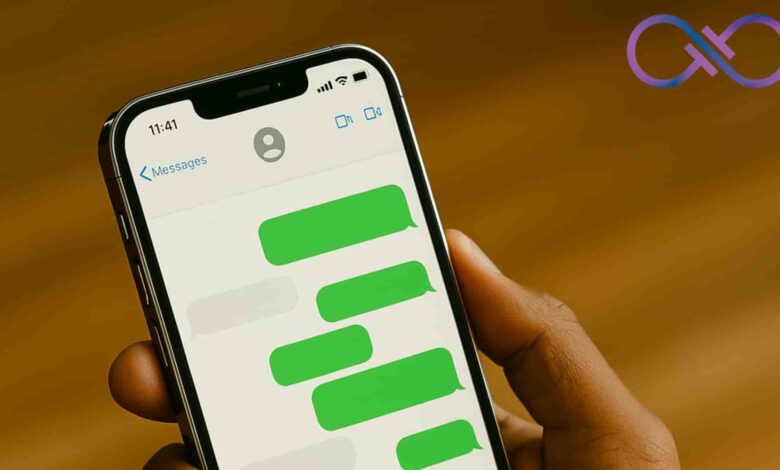
Apple released iOS 26.5 on 11 May 2026, and tucked inside a modest update is a real change in how phones talk to each other. Texts sent from an iPhone to an Android phone can now be end-to-end encrypted, the same protection that has always covered iMessages between two iPhones. The feature is on by default, and qualifying conversations show a small lock icon.
This matters because for years, the moment an iPhone user texted an Android user, the security guarantees fell away. The messages still travelled over RCS, the modern replacement for SMS that adds typing indicators, read receipts and high-resolution photo sharing. But that cross-platform traffic was not fully encrypted, so anyone able to intercept it in transit, including a carrier, could in principle read it. iOS 26.5 closes that gap.
For Kenyans, this changes nothing for you right now. Not because your iPhone is too old, but because the thing being encrypted, RCS itself, has not worked on Kenyan networks since August 2025.
What actually changed
The encryption is built on a new standard called RCS Universal Profile 3.0, published by the GSMA, the global body representing mobile operators. The GSMA announced in March 2025 that the profile would bring end-to-end encryption using a protocol called Messaging Layer Security, or MLS. That made RCS the first large-scale messaging service designed to support encryption that works across apps from different providers.

Two conditions must be met. Both people need current software, meaning iOS 26.5 on the iPhone and the latest Google Messages on Android. And both must be on a carrier that supports the latest version of RCS. Apple has published a supported-carrier list covering the US, Canada, parts of Europe and Asia-Pacific. All three major US carriers, AT&T, T-Mobile and Verizon, are on it. No Kenyan carrier is.
Why it is a non-event in Kenya
Encryption is a lock on a door. It does nothing if there is no door, and in Kenya the door is bricked up. We already reported in November that RCS is unlikely to return to Kenya, with Safaricom actively urging users to switch it off. The service stopped working for Safaricom, Airtel and Telkom subscribers around August 2025, and rather than fixing it, Safaricom sent SMS messages telling customers to disable RCS so texts would deliver as ordinary SMS. Business Daily confirmed in February 2026 that RCS still did not work across all three networks and had not resumed.
The likely cause is that Google scaled back Jibe, the backend it ran to provide RCS where carriers had not built their own. That left the job to operators who have little reason to take it on, because RCS travels over data and eats into SMS, still sold at KES 1.20 per message. On iPhone the gap is even older: Apple never listed Safaricom, Airtel or Telkom as supported, as we covered when we asked why iPhones still do not support RCS in Kenya. iOS 26.5 simply adds a third requirement, encryption, on top of two Kenya already fails.
What to do
Install iOS 26.5 anyway. It patches more than 50 security flaws, so it is worth getting regardless. Just do not expect encrypted texts to Android to work until RCS returns and Apple recognises a local carrier. For private messaging today, the answer is unchanged: WhatsApp or Signal, which do not depend on your carrier. The encrypted-RCS feature is genuinely good engineering. It just needs the basics working first, and in Kenya the basics are still switched off. The real thing to watch is not Apple, but whether regulators or competition ever force Safaricom and Airtel to bring RCS back.



Join the discussion