

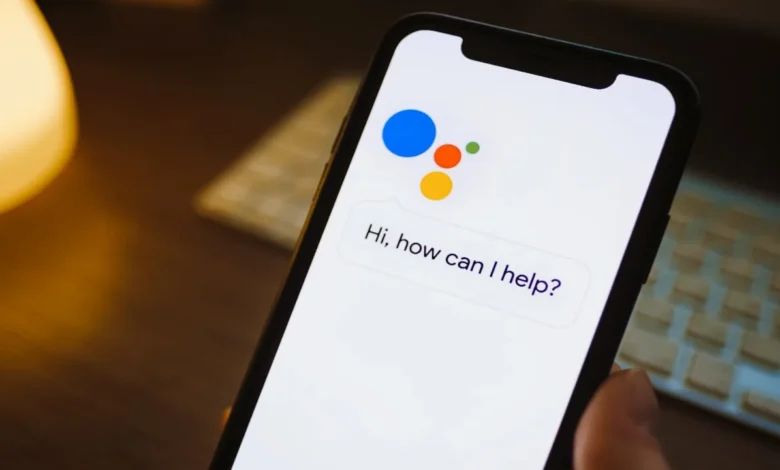
Starting September 4th, Google is officially pulling the plug on Google Assistant across Android phones, tablets, Wear OS watches, and Android Auto. This will take a few weeks, but once your device switches over, there’s no going back. (Smart speakers and displays already made the leap when Gemini for Home took over in October 2025. Cars with Google built-in are holding onto Assistant. At least for now.)
But here’s what’s funny to me: you’re still going to say “Hey Google” or “OK Google.” It doesn’t make sense that what we used to call to when saying those words is now gone, but the words stay calling Gemini.
One Word, Way Too Many Jobs
When Google Assistant launched in 2016, the pitch was crystal clear: it’s the helpful voice on your phone, your speaker, and your TV. Gemini, on the other hand, is a mess of mixed messaging. Just look at everything the name is supposed to cover today.
Gemini is the core AI model family (currently at 3.1 Pro). It’s also the chatbot app on your phone and at gemini.google.com. It’s the smart home helper (Gemini for Home). There’s the lightweight version for budget Androids, which we covered when it hit Kenya’s entry-level devices this past June. Then there’s Gemini Intelligence, Google’s catch-all term for agentic AI on Android that most current phones don’t even have the hardware to run. Oh, and Gemini Nano is the on-device model. It’s baked into Gmail and Docs. Want to generate a video with Veo? You open the Gemini app, something we walked through when Google AI Plus reached Kenya for KES 500 a month.

That is one single word doing the heavy lifting for many different products. That’s just branding failure.
What They Should Have Done
The fix was obvious: keep “Google Assistant” as the consumer-facing name for the helper on our phones, laptops, and TVs. Rebuild it with Gemini under the hood, and market the upgrade exactly like that: “Google Assistant, now powered by Gemini.” The chatbot app could have just been “Google Assistant Chat” or “Assistant Extended” or something! That way, the name “Gemini” would mean one specific thing (the underlying AI models), exactly how developers understand it.
Look at the history: Google Now became Google Assistant in 2016. Bard became Gemini in 2024. Duet AI also became Gemini in 2024. That’s three major rebrands in under ten years for what users essentially experience as one continuous tool.
Apple Did It Right
Apple actually handled this transition perfectly. The completely rebuilt Siri shipping in iOS 27 runs partly on a custom version of Google’s own Gemini models. (This stems from a massive deal we reported back in January worth around $1 billion a year, or roughly KES 130 billion). You still say “Hey Siri.” It’s still called SIRI. But you don’t see “Siri AI”, or powered by Gemini or whatever Google did. “Apple Intelligence” is just a marketing and settings label; the entity you actually talk to is still Siri, just like it was in 2011.
Think about that irony: Gemini now powers Siri, and Siri remains Siri. Gemini also powers Google’s own assistant, and Google threw their assistant’s name in the trash.
Amazon made the same smart call. Their generative AI rebuild of Alexa is simply called Alexa+. Same name, same wake word, incredibly obvious upgrade path. Among the big three tech giants, Google stands alone in actively killing a decade of brand equity.
Why This Actually Matters
Google’s AI models aren’t the core problem here. Or at least, they aren’t the whole story. Gemini 3.1 Pro still holds its own in reasoning tests like the GPQA Diamond against OpenAI’s models. As of August 2026, it’s the oldest flagship model at the frontier table: Anthropic’s Claude Opus 5 and OpenAI’s GPT-5.6 are currently trading the top spots on the composite leaderboards, and Google’s latest updates have focused on faster “Flash” models rather than a brand new Pro tier. But even so, Gemini is close enough to the cutting edge that raw quality alone doesn’t explain the adoption gap.
Look at the numbers: The Gemini app had roughly 650 to 750 million monthly active users by early 2026. That sounds huge until you realize it’s trailing ChatGPT, which crossed 900 million weekly active users back in February. When you have a highly competitive product but weaker consumer pull, you have to look at the friction between the product and the user.
Plus, the AI space has never been this crowded. Anthropic, OpenAI, and xAI are shipping at breakneck speeds. Chinese labs like DeepSeek, Moonshot, and Alibaba’s Qwen are keeping pace despite US chip export controls, with Qwen derivatives now making up the largest open-weight family on Hugging Face. In a market this intensely contested, forcing everyday people to relearn the name of your product is a completely unforced error.
Google’s defense would likely be that Gemini is a fundamentally different product, and a new name communicates that shift to users. But users don’t experience it like that. They’re still long-pressing the same power button, saying the exact same phrase, and asking it to set the same pasta timer. To the average person, their digital helper just got a bit smarter and randomly changed its name for no discernible reason.





Join the discussion