

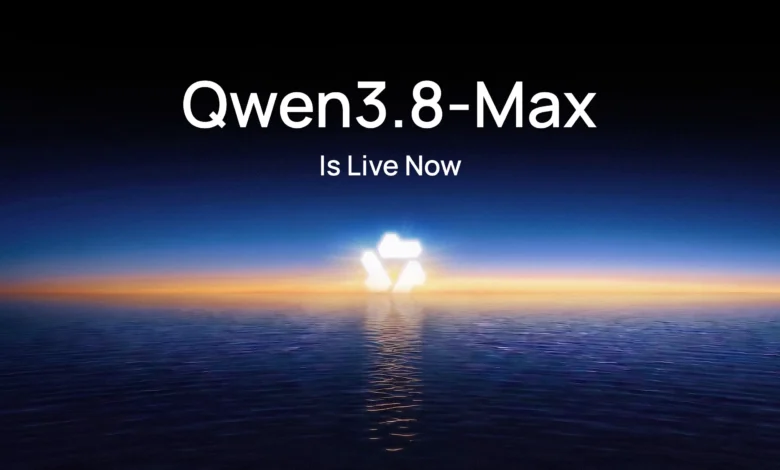
Two weeks after a Beijing startup called Moonshot AI unsettled the US AI industry with a model named Kimi K3, Alibaba has answered with its own. On 3 August, the company behind AliExpress and Alibaba Cloud released Qwen3.8-Max, its largest and most capable AI model so far. Alibaba says it comes close to, and on some tests beats, Anthropic’s flagship, Claude Fable 5.
This piece explains what the model is, what the numbers mean, and why it matters to anyone in Kenya building with AI or paying to use it.
What Qwen3.8-Max actually is
Qwen is Alibaba’s family of AI models, the way GPT is OpenAI’s and Claude is Anthropic’s. Qwen3.8-Max is the newest and biggest in that family.
It has 2.4 trillion parameters. Parameters are the internal values a model adjusts as it learns from data. More of them usually means more capacity to store patterns, though it does not automatically mean the model is smarter.

The important design choice is that it is a mixture-of-experts model. The full thing is 2.4 trillion parameters, but only about 95 billion of them switch on for any single request. Think of a large hospital where a patient only ever sees the few specialists they need, not every doctor in the building. That keeps the running cost far lower than a model that fires all its parameters on every query.
It handles text and images, and it can take up to 1 million tokens of context in one request. A token is a chunk of text, roughly three-quarters of a word, so 1 million tokens is about 750,000 words. You could hand it several long books at once and ask questions across all of them.
It is available now through Alibaba’s cloud, and it speaks both OpenAI’s and Anthropic’s API formats. In plain terms, a developer already building on ChatGPT or Claude can point their code at Qwen with only small changes.
The benchmark claim
Alibaba published its own table of benchmark scores. On agentic tasks, where the model uses tools and works through long jobs, and on reading documents and images, Qwen3.8-Max edges ahead of Claude Fable 5 and comfortably beats its own predecessor. On harder, more realistic coding tests such as SWE-bench Pro and FrontierSWE, it trails Fable 5 by a wide margin.
So “comparable or better” is true on some tasks and plainly false on others. And these are Alibaba’s numbers. The one independent measure so far, from the testing firm Artificial Analysis, placed it at 56 on their intelligence index. Broad third-party verification has not landed. The sensible reading is to treat a vendor’s benchmarks as a vendor’s benchmarks until outside testers confirm them.
The price is the part that stings rivals
Qwen3.8-Max costs $2 per million input tokens and $6 per million output tokens. For comparison, DataCamp’s analysis puts that under a third of what leading US flagships like Claude Opus charge and under a quarter of GPT-5.6. Cheaper capable models change who can afford to build, not just who has the best score.
Bloomberg described the wider pattern as a “death zone” for American model makers: Chinese labs keep shipping strong models cheaply or for free, squeezing mid-tier US firms that are not cheap enough to win on price and not good enough to charge a premium.
Why this follows Kimi K3, and why Alibaba is in an odd position
This is the second Chinese frontier model in three weeks. On 16 July, Moonshot AI released Kimi K3, a 2.8-trillion-parameter open model it billed as the largest open-source model in the world. It got so popular that Moonshot paused new sign-ups within 48 hours when demand outran its computers.
Here is the twist: Alibaba is an investor in Moonshot. So the company now sells a model that competes directly with one it helped fund. Both releases have pushed the same question back into view, the one DeepSeek raised in 2025: how far behind the US actually is, and whether chip export controls are slowing China down at all.
What it means for Kenyan developers and startups
Cost is the clearest effect. Cheaper frontier-grade AI lowers the bill for Kenyan startups and developers building chatbots, coding assistants or data tools on top of these models. We already mapped the wider set of AI tools worth knowing this year, and Qwen now sits firmly inside that set.
Switching is easy, too. Because the API mirrors OpenAI’s and Anthropic’s, local teams are not locked into one vendor and can test Qwen against Claude or GPT on the same code.
Then there is the open-weights promise. Alibaba says it will publish the downloadable weights for Qwen3.8-Max and a smaller Qwen3.8-27B on Hugging Face and ModelScope during the week of 10 August, the first time a Max-class Qwen model would be self-hostable. If it ships under a usable licence, organisations could run the model on their own servers, which matters for data that cannot legally leave the country or the building. As of writing, no repository has appeared and the licence is unknown.
Alibaba is not a distant lab, either. Alibaba Cloud already sells in the region, and most Kenyans have met the company through AliExpress. That firm behind your online shopping spree is now a serious AI vendor.





Join the discussion