


Airtel Africa and Starlink started selling a satellite-to-mobile service in the Democratic Republic of the Congo on 14 August 2026. Airtel DRC customers with a compatible phone can send SMS and use light data apps, including WhatsApp messaging, from places no mobile mast reaches, as long as they have a clear view of the sky. Airtel Africa says it is the first commercial launch of the service anywhere in Africa.
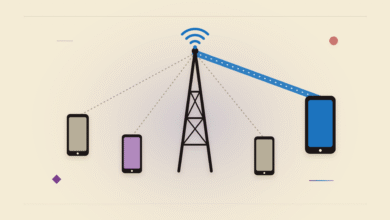
The technology is Starlink Direct to Cell, which the two companies sell under the name Starlink Mobile. A satellite carries what is effectively a mobile base station and broadcasts on the same 4G frequencies your phone already uses, so the phone treats it as a distant tower and camps on it. There is no dish, no separate satellite handset, no app to install and no firmware update. Airtel says Starlink has 650 launched satellites doing this job.
This is not the Starlink you buy a dish for, and it does not replace a normal data bundle. The satellite link carries SMS and small amounts of data. Airtel names WhatsApp messaging as an example. Video, downloads and web browsing are not part of the launch.
What you need to use it
To get on it in DRC, a customer needs:

- A compatible LTE Android smartphone. Airtel has not published the device list.
- An active Airtel DRC data bundle, or data roaming switched on.
Apple devices are not supported at launch. Airtel says support will come “in the future” and gives no date.
Eligible customers register through the MyAirtel App and get 30 days of free access. Visitors who join Airtel DRC can do the same once they activate a line and install the app. After the 30 days, the service runs off eligible Airtel data bundles. Airtel has not said which bundles qualify or what the satellite element costs, and their release does not give a price.
Why DRC went first
DRC is the second largest country in Africa by land area and a large part of it has no mobile signal at all. The Universal Service Development Fund, the state body that funds coverage in underserved areas, published a status assessment on 7 August 2026 putting national 2G coverage at 77%, 3G at 68% and 4G at 57%. The gap between provinces is enormous: Kinshasa sits at about 98% while Tshuapa is at 14%, and Kwango and Sud-Ubangi at 28% each. The fund counts roughly 4.3 million people in nearly 3,000 localities with no coverage.
Airtel DRC Managing Director Thierry Diasonama pointed at the same problem in the company’s announcement. “Our country’s size and geography mean that many people live, work and travel beyond the reach of conventional mobile infrastructure,” he said. Airtel Africa CEO Sunil Taldar called the launch “a significant milestone” and said the DRC experience will guide expansion into other markets, “subject to country-specific regulatory approvals”.
The regulatory approvals are where Kenya is stuck.
Kenya tested first and still cannot launch
Airtel Africa and Starlink ran the data and messaging tests here in Kenya in March 2026, in areas with no terrestrial signal, and got WhatsApp calls and messages, maps, Facebook Messenger and MyAirtel transactions working over the satellite link. Uganda started its own technical testing in May, and Madagascar ran a trial in Sadabe on 11 July.
Kenya did not convert that head start into a launch. As we reported on 5 August, Airtel Kenya Managing Director Djibril Tobe said the pilot worked and the company is ready to sell the product the moment the Communications Authority approves it. The CA is still assessing whether satellite transmissions on those frequencies will interfere with other operators’ networks. Separately, under the CA’s revised 2026 market structure, Starlink needs an International Gateway Systems and Services licence to run the service, at KES 15 million for 15 years or KES 45 million for 25 years, plus an annual fee of 0.4% of gross turnover with a KES 4 million floor.


Join the discussion