

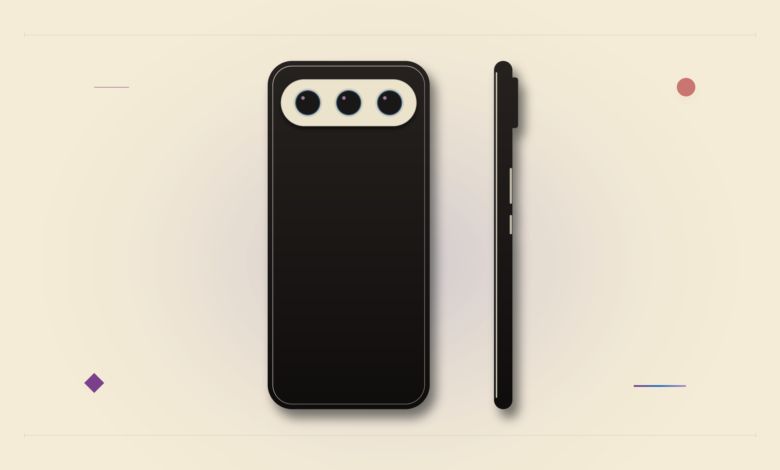
SammyGuru, an American site that covers Samsung, published seven line drawings on 13 August that it says it found in the WIPO Global Design Database. The drawings show a phone with flat sides and rounded corners. Three camera lenses sit side by side inside one horizontal strip near the top of the back. In the side and top views, that strip barely rises above the rear panel.
Within two days the same images were on Sammy Fans, Gizmochina, Notebookcheck and a run of aggregator sites, under one headline: the Galaxy S27 is getting a Pixel-style camera bar.
While that might turn out to be right, we can’t say that for sure right now.
What a design filing actually is
WIPO is the World Intellectual Property Organisation, a United Nations agency based in Geneva. It runs the Hague System, which lets a company register the appearance of a product across 99 countries with one application instead of filing separately in each country. Samsung Electronics is one of the system’s heaviest users, and WIPO’s 2026 Hague Yearly Review lists it among the top applicants alongside LG, Xiaomi and Huawei.

A design registration covers how a product looks. It does not cover how it works, it does not name a product, and it does not commit the company to building anything. Phone makers register dozens of shapes a year. Most never ship.
A second detail in these drawings has gone unmentioned in the coverage. Under WIPO’s rules, an applicant who wants to show part of a drawing without claiming protection over it draws that part in dotted or broken lines. The Hague guide for users says so directly. In the images now circulating, the phone body is drawn in solid line while the camera strip and its three lenses appear in broken line. If that is correct, then the camera module is the part Samsung is not claiming, which is close to the opposite of what stories now running online say.
We cannot settle that, and neither can anyone else working from these screenshots. SammyGuru did not publish a registration number, a filing date, or the name on the application, and we could not locate the filing in WIPO’s public database without one.
A leak from July points the other way
On 14 July, Korean tipster Lanzuk wrote on Naver that the fan-made renders showing a simple horizontal triple-camera layout do not reflect the Galaxy S27 Ultra’s actual design. SamMobile reported the claim and added the detail that matters most. Samsung’s design and engineering teams were still working through prototypes in search of a layout that would cut manufacturing cost. If none of the new prototypes proved viable, Lanzuk said, Samsung’s engineers could fall back on the Galaxy S26 Ultra’s existing camera arrangement.
Cost pressure is real this cycle. We already covered Samsung reportedly weighing cheaper BOE display panels for the standard Galaxy S27 as memory and component prices climb.
Why people want this change: magnets
The reason this rumour keeps coming back is not aesthetics. It is wireless charging.
Qi2 is the wireless charging standard that puts a ring of magnets inside the phone so a charger or a wallet snaps into place on its own. Apple has shipped magnets since 2020. Google shipped them on the Pixel 10, and the Pixel 11 series we covered last week moves the whole line to Qi2.2 at 25W.
Samsung has not put magnets in the phone. The Galaxy S26 series is what the industry calls “Qi2 Ready”, which means you buy a magnetic case and the magnets live in the case. Samsung gave two reasons. In a statement to 9to5Google, it cited its commitment to thinner, lighter designs. A Samsung executive told SamMobile that internal research showed 83% of Galaxy users already use a case, so Samsung put the magnets in official cases instead.
In April, a Naver post citing a company in Samsung’s supply chain claimed the current camera layout physically sits where the magnet ring would need to go, so adding native Qi2.2 would force the cameras to move. Android Central and Android Police both reported it, and both noted the same report said rising production costs could kill the idea. That single supply chain claim is where the whole “horizontal camera for Qi2” theory started.
Do not expect a flat camera
The flattest part of these drawings is the least trustworthy part. Design drawings are schematic. They do not carry real dimensions, and a lens needs physical depth to focus light. A camera that genuinely sits flush with the back glass would mean smaller optics, which is a downgrade, not an upgrade.
Recent history points the same way. GSMArena’s Galaxy S26 Ultra review found the camera island sticks out more than the S25 Ultra’s, not less, and rocks on a table when you tap the screen. Samsung made the body thinner and pushed the camera further out to compensate.
What this means if you are buying in Kenya
Nothing changes for the next several months. The Galaxy S27 is expected in January or February 2027, based on Samsung’s release pattern rather than any company statement. Samsung has confirmed nothing about the lineup, though four model numbers covering the S27, S27+, S27 Pro and S27 Ultra now sit in GSMA regulatory records.
Kenyan buyers looking at the current generation should note that the Galaxy S26 Ultra has already come down hard. It launched above KES 150,000 and dropped to roughly KES 124,000 to KES 130,000 at some Nairobi retailers within three months, while major outlets held near KES 150,000.
The useful signal to watch is not another design database screenshot. It is CAD-based renders, which usually leak from case manufacturers around December, and regulatory filings, which typically start arriving from September onward.








Join the discussion