

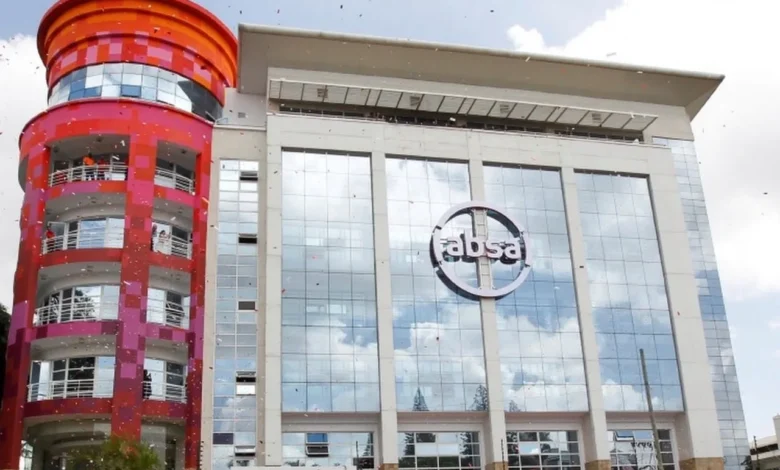
Absa Bank Kenya made a profit after tax of KES 10.5 billion in the six months to 30 June 2026, down 10% from KES 11.7 billion over the same period last year. The board however went the other way on the payout: it approved an interim dividend of KES 0.50 per ordinary share, up from KES 0.20 at this point in 2025, a 150% increase.
The results, published on 18 August, are the first under Yusuf Omari, who became interim managing director and CEO on 1 July after Abdi Mohamed resigned at the end of June. Omari was the bank’s chief financial officer, and this is his second stint in the acting job. He also held it in 2022, after Jeremy Awori left to run Ecobank Group.
Why profit fell
The drop came from the top line. Total revenue fell 7% to KES 29.3 billion. Net interest income, the gap between what Absa charges borrowers and what it pays depositors, fell 5% to KES 21.1 billion. The Central Bank of Kenya has been cutting its base rate since August 2024, and cheaper loans mean thinner lending margins across the industry.
Non-interest income fell 10% to KES 8.2 billion, and the bank’s H1 2026 investor briefing, dated 17 August, names weaker foreign exchange income as the cause. Strip out foreign exchange and trading, and the rest of the non-funded book actually grew 9%.

Costs moved against the bank too. Operating costs rose 5.7% to KES 12.1 billion, which pushed the cost-to-income ratio up to 41.2%. Absa found relief on the funding side: its cost of funds fell from 3.7% to 2.8%, against an industry average of 3.8%, helped by current and savings accounts growing from 68% to 75% of the deposit book. Loan quality improved as well. The gross non-performing loan ratio fell from 13.0% to 10.1%, less than half the industry’s 14.6%, and impairment charges eased 4% to KES 3.1 billion.
“While the dynamic operating environment exerted pressure on performance, the Bank recorded strong momentum in the second quarter,” Omari said in the results announcement, the company’s words for a first half that ended below last year’s.
The balance sheet kept growing
Customer loans grew 8% to KES 329.9 billion and customer deposits rose 5% to KES 380.7 billion. Total assets reached KES 558.1 billion. Return on equity was 21.7%, down from 26.5% a year earlier but, per the investor briefing, still well above the bank’s cost of equity. Capital adequacy stood at 19.4% against a statutory minimum of 14.5%, and liquidity at 42.7% against a 20% floor.
The subsidiaries earned their keep. Income from asset management, custody and bancassurance rose 20% year on year. Assets under management in the asset management arm grew 40% to KES 49 billion and custody assets grew 19% to KES 67 billion. Bancassurance penetration of the customer base rose to 22%, from 15% in December 2025.
An 8.9% home loan and a KES 100 billion pledge
The announcement lists three new products. A developer-led home loan prices at 8.9% per annum with financing of up to 105% of the property value for qualifying buyers. The Zinduka Graduate Enterprise Programme sets aside KES 1 billion for young entrepreneurs. The largest is a KES 100 billion asset financing commitment over the next three years, offering up to 100% financing for equipment and vehicles in manufacturing, healthcare, education, infrastructure, trade and logistics.
Absa spent the earlier part of the year on business partnerships. In July we covered Absa and Unilever’s KES 4 billion distributor financing plan. Before that, in June, there was Absa and Google’s Hustle Academy, which trains 3,000 Kenyan SMEs a year.
For shareholders, the practical takeaway is the KES 0.50 interim dividend, payable on or about Thursday 15 October 2026 to shareholders on record as of Friday 18 September 2026. The briefing also repeats that Absa Group has a voluntary tender offer open to buy additional ordinary shares in Absa Bank Kenya, and that the bank stays listed on the Nairobi Securities Exchange with its brand, board and management retained. The other open question is the corner office, because Absa has not said when it will name a permanent CEO. The full-year numbers, due early in 2027, will show whether the second-quarter recovery Omari describes carried through.




Join the discussion