
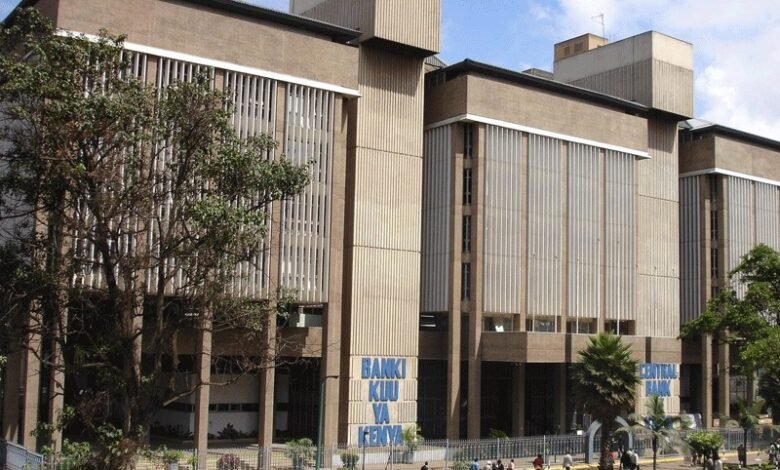
The Central Bank of Kenya (CBK) has replaced its rules for loan apps. The new rules are Legal Notice 191, published in the Kenya Gazette on 29th September 2026. They revoke the 2022 digital credit rules. The fee schedule sets a licensed lender’s annual fee at KES 500,000, up from KES 20,000. CBK’s directory of licensed lenders now has 281 entries, after CBK licensed 29 more on 28th September.
The old name, “digital credit provider”, is gone. The rules now cover “non-deposit-taking credit providers”, which means a lender that lends its own money, does not take deposits and is not regulated under another law. Banks, microfinance banks, Saccos (savings and credit co-operatives) and credit guarantee firms sit outside them. CBK’s own impact statement says a 2024 law dropped the word “digital” because people were confused about who the rules cover. When that law was signed, we explained what it meant for buy now pay later firms.
A lender that starts with at least KES 20 million in capital needs a licence. A smaller one registers instead, and has to apply for a licence once its capital, borrowings or loan book passes KES 20 million. Registration is new in these rules, and so is its fee.
| 2022 rules | 2026 rules | |
|---|---|---|
| Application fee | KES 5,000 | KES 100,000 |
| Licence fee, on grant and then every year | KES 20,000 | KES 500,000 |
| Registration fee, on grant and then every year | No registered tier | KES 250,000 |
| Paying the annual fee after 31st December | No amount set | KES 1,000,000 |
The 2022 rules set the same 31st December deadline. The penalty is what changed. They set no late amount, only a general ceiling of KES 500,000 on any penalty CBK imposes, and the draft CBK published in August 2025 left the late penalty to CBK’s discretion. That draft already carried the new fees. The final fee schedule adds the KES 1 million, labelled a late penalty fee.

The regulation’s own wording differs. A lender that pays within three months of 31st December owes double the annual fee (regulations 7(5) and 10(5)). For a licensed lender that is KES 1 million, but for a registered one it is KES 500,000. The wording reads as the total payable, though the rules never say whether it replaces the annual fee or is added to it. After those three months, CBK may revoke the licence.
Lenders licensed under the 2022 rules are deemed licensed under the new ones (regulation 96), which appears to put them on the new fee for the payment due on 31st December 2026, though the rules do not address it. The notice also has no start-date clause, and Kenya Law lists it as commenced on 29th September 2026.
If all 281 lenders on the list pay the licensed rate, CBK collects KES 140.5 million a year, up from KES 5.6 million. That is our own sum. The impact statement for the rules says there will be “no additional regulatory cost”, and describes them as affecting only banks that break banking law.
What it means if you borrow
The 2022 rules already required 30 days’ notice for changes to a loan’s terms, and CBK’s approval before a lender changed its pricing. They also already required your acceptance before a lender raised charges. The new rules name interest rates outright. A lender needs CBK’s written approval before it changes a rate, has to give a justification for the change, and has to tell customers at least 30 days before it takes effect (regulations 26 and 55). For changes to a loan agreement, the borrower must also accept them (regulations 54 and 55). Read together, those rules mean a lender cannot raise the rate on a loan you already hold without a month’s warning and your agreement. A loan agreement can set its own terms for variations (regulation 54(6)), so read yours.
Before you borrow, look the lender up in the directory. It gives each lender’s legal company name, and most entries add an address, phone, email and the date it was licensed. Apps usually go by a brand, and the directory shows the brand for only five lenders, Tala among them, so check the company name against the one on your loan agreement, which the lender must give you when you sign. On CBK’s count, licensed lenders had granted 9,596,509 loans worth KES 165.1 billion by August, about KES 17,200 a loan. The directory dates 86 of its licences to 2026, including the 29 on 28th September. When we last listed approved lenders in March 2024, there were 51.
The list is not yet every lender CBK will oversee. Anyone already lending who is not licensed has six months from publication to apply for a licence or registration, about 29th March 2027 on our count, and can keep trading while CBK decides. The directory is still titled “Directory of Digital Credit Providers” and has no section for registered lenders. So a lender missing from it may be one of those applicants, which makes its absence proof of nothing either way. CBK takes reports of unregulated lenders at dcps@centralbank.go.ke.
The flat fee will weigh most on the smallest lenders. A fixed KES 500,000 does not shrink with the loan book, and for a licensed lender paying late costs twice that. Two dates will show how the rules work in practice. On 31st December 2026, the first payment due under the new schedule will show whether the KES 1 million replaces the annual fee or is added to it. By 31st March 2027, CBK must publish the names of every licensed and registered lender (regulation 65), and the six-month window closes.







Join the discussion