

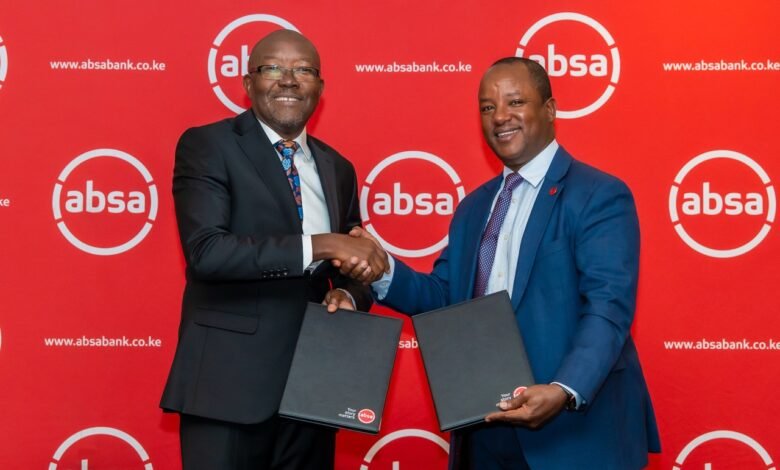
Absa Bank Kenya and Unilever Kenya have signed a KES 4 billion financing programme aimed at one specific problem: the cash squeeze that sits between a manufacturer and the shops that sell its products. The money is meant for Unilever’s distributors and the retailers they supply, and it will be lent through Absa’s Wezesha Stock platform. At current exchange rates, KES 4 billion is roughly $30.9 million.
To see what the money is actually for, it helps to picture how Unilever’s products reach a shelf. Unilever makes household names like Omo, Sunlight, Vaseline and Royco. It does not sell most of these directly to the small shops where Kenyans buy them. Instead it sells in bulk to distributors, who break the stock down and pass it on to thousands of retailers, kiosks and stockists. Unilever says its distributors serve more than 140,000 retailers across the country.
The strain shows up at the distributor level. A distributor usually has to pay Unilever for stock before it has collected money from the retailers it supplies. That gap, between paying for goods and getting paid for them, is what bankers call a working capital constraint. When a distributor runs short of cash, it orders less stock, and shelves start to run empty. The financing is designed to close that gap so goods keep moving.
How the facility works
The programme runs through Wezesha Stock, a digital lending platform Absa launched in 2023 for businesses in fast-moving consumer goods and similar sectors. A qualifying business can borrow up to KES 10 million (about $77,000) without putting up collateral. Of that, up to KES 5 million can land in the borrower’s account within 48 hours through a fully digital process.

The facility also covers three other tools. There is Local Purchase Order (LPO) financing, where the bank advances money against a confirmed order so a business can fulfil it before being paid. There is invoice discounting, where a business gets cash now against invoices it is still waiting to collect. And there is asset finance, for things like delivery vehicles.
Because the loans are unsecured, a borrower does not have to pledge collateral. That removes what is, for most small businesses in Kenya, the single biggest barrier to a bank loan. Lenders treat small firms as risky and usually ask for land, buildings or other assets as security, which many traders do not have. The National Treasury estimates that micro, small and medium enterprises employ around 15 million people and contribute about a third of Kenya’s GDP, yet a large share of them cannot get formal credit on workable terms. Lending against a distributor’s trading record with Unilever, rather than against property, is meant to get around that wall.
Unilever’s second bank in a year
This is not the first time Unilever has done this. In July 2025 it signed a very similar distributor financing deal with Equity Bank, worth about KES 2.4 billion a year. The same Unilever executive, Luck Ochieng, fronted both announcements.
In effect, Unilever is lining up more than one bank to fund the businesses that carry its products to market. The logic is commercial. If distributors are better funded, they hold more stock, Unilever sells more, and fewer sales are lost to empty shelves. The bank, in turn, gets a ready pool of borrowers whose sales history it can see through the Unilever relationship, which is what makes lending without collateral less risky for the bank.
Where this sits for Absa
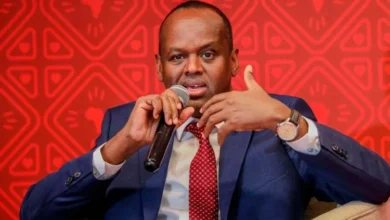
The deal lands during a busy stretch for Absa’s leadership. The bank’s interim Managing Director and CEO, Yusuf Omari, signed on its behalf. Omari is Absa’s chief finance officer and stepped up on 1 July 2026 after Abdi Mohamed left to run rival I&M Bank, a move we covered when it was announced.
Absa has been building out its small-business lending for years. We reported in 2022 on its partnership with fintech Melanin Kapital to lend to women-owned SMEs, and the bank has separately pushed merchant tools like Mobi Tap that turn a phone into a card machine. The Unilever programme fits that direction, and it comes as Absa leans harder into retail and business banking under a refreshed strategy we also looked at when it hired former M-PESA Africa boss Sitoyo Lopokoiyit.
What to watch
A few things are worth keeping an eye on. The KES 4 billion is a commitment, not a lump sum handed over on day one. The rollout is phased, starting with more than 10 distributors by the end of 2026 and a target of over 38 in total, and the whole programme is subject to annual review.
Absa and Unilever have not disclosed the interest rate or fees on the loans, so how affordable the credit really is remains an open question. And while the announcement talks about distributors and their 140,000 retailers, the first phase is aimed squarely at the larger distributors. Whether the smaller retailers further down the chain feel the benefit depends on how far the financing travels.
The immediate change is straightforward. A business that moves Unilever stock now has a faster route to short-term credit that does not require pledging property. What that credit costs, and how many businesses it reaches, is what the next year will show.




Join the discussion