

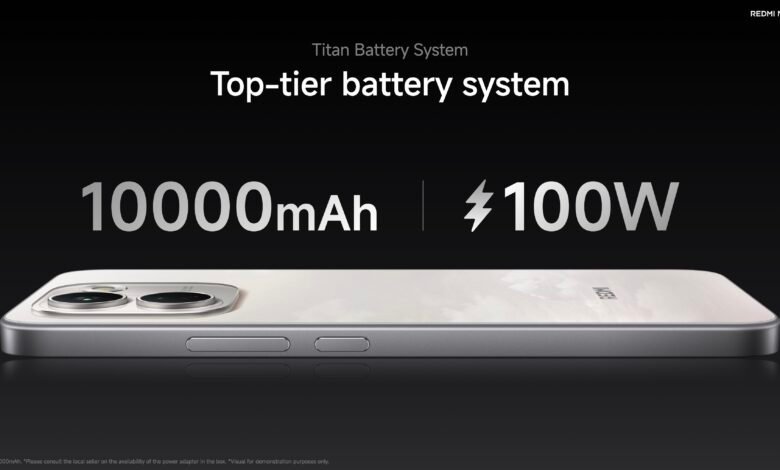
Xiaomi has launched the Redmi Note 17 series globally. There are four phones. The headline model is the Redmi Note 17 Pro Max 5G, with a 10,000mAh battery and 100W wired charging. Xiaomi did not announce prices or country release dates in the launch release.
Redmi is Xiaomi’s sub-brand for cheaper phones, and the Note line is its biggest seller. Xiaomi says the series has shipped more than 500 million units across more than 100 markets in 12 years. Pro Max is a new name for the line, and that phone does not exist in China.
The phones and their batteries
Every phone in the series is built around a large silicon-carbon cell:
- Redmi Note 17 Pro Max 5G: 10,000mAh, 100W charging, 27W reverse wired
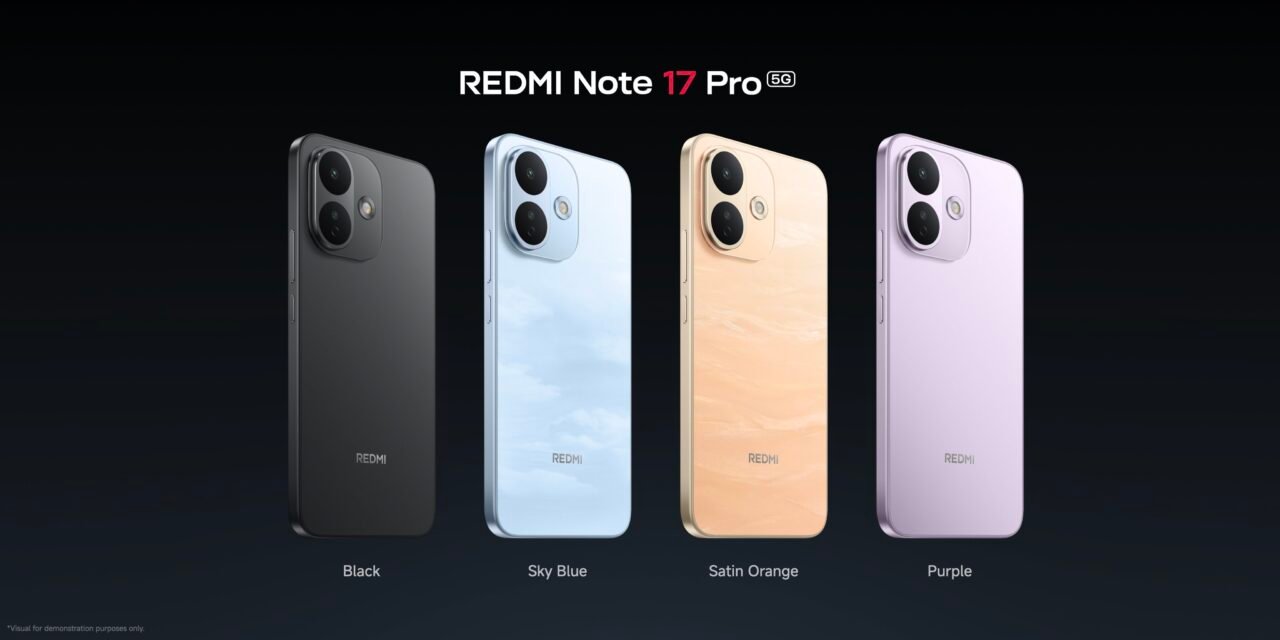
- Redmi Note 17 Pro 5G: 8,340mAh, 67W charging
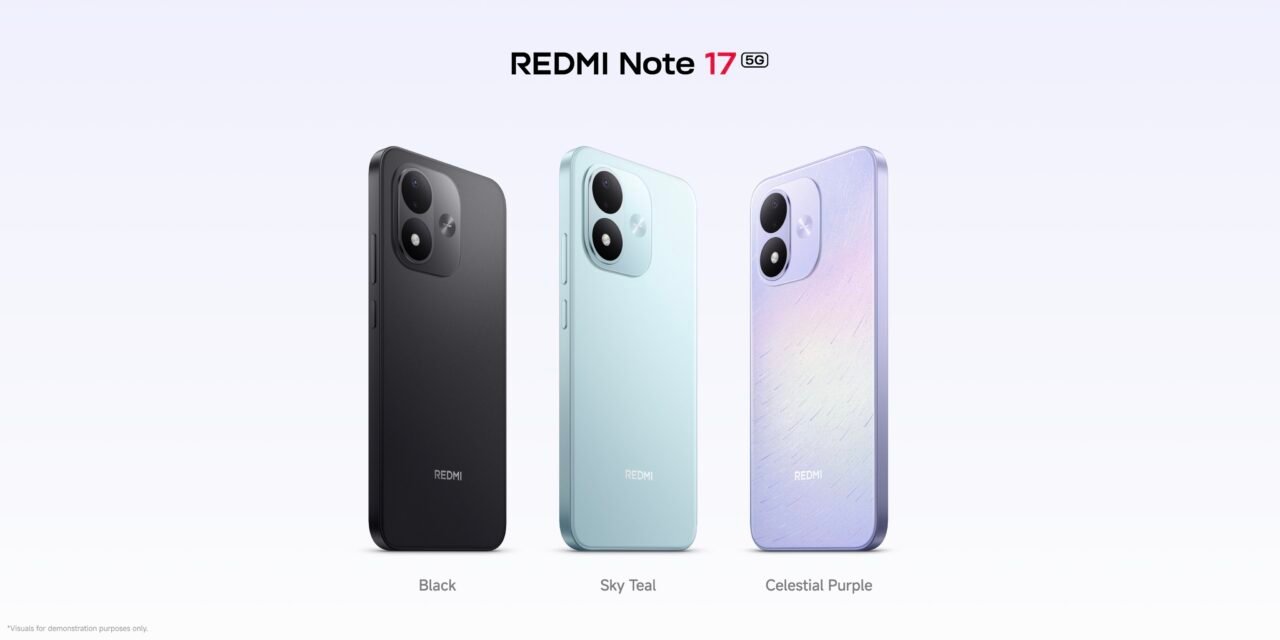
- Redmi Note 17 5G: 7,700mAh, 45W charging, 22.5W reverse wired
- Redmi Note 17 (4G): 7,700mAh, 45W charging, 22.5W reverse wired
For comparison, the Samsung Galaxy S26 Ultra and the iPhone 17 Pro Max both sit at about 5,000mAh. The largest battery we have tested ourselves is the 8,300mAh cell in the Honor X9d, and it ran well past a full day of heavy use.


Ordinary batteries use graphite to hold lithium. Silicon holds far more lithium in the same space, so replacing some graphite with silicon raises capacity without making the phone thicker. Xiaomi puts the silicon content in the Pro Max cell at 16%. The Redmi Note 15 Pro+ from December 2025 used 10%. We have written before about how this chemistry works.
Xiaomi says the Pro Max gives up to three days of use on a charge and up to 40 hours of video playback.
The chips
Here are the chipsets powering each device:
- Redmi NOTE 17 Pro Max 5G: Snapdragon 6 Gen 5, announced in May 2026. Built on 4nm, with four Cortex-A78 cores at 2.6GHz, four Cortex-A55 at 2.0GHz and Adreno 812 graphics.
- Redmi NOTE 17 Pro: Snapdragon 6s Gen 4.
- Redmi NOTE 17 5G: Snapdragon 4 Gen 4. A 4nm chip with two fast cores at up to 2.3GHz and six at up to 2.0GHz.
- Redmi NOTE 17 4G: Snapdragon 6s 4G Gen 2. A 6nm chip with four Cortex-A73 cores at 2.9GHz, four Cortex-A55 at 1.9GHz and Adreno 610 graphics.
Qualcomm announced the last two together in December 2025. The 6s 4G Gen 2 carries a bigger number than the 4 Gen 4, but it is the older design. Its Cortex-A73 cores and Adreno 610 graphics are the combination Qualcomm used in the Snapdragon 685 in 2023, at slightly lower clocks. It also has no 5G modem, which is what the 4G in the name means.
One thing to know before buying either of the cheaper two: both chips cap video recording at 1080p and 60 frames per second.
The Pro Max however has moved down a tier. The Redmi Note 15 Pro+, the top global Note before it, used the Snapdragon 7s Gen 4, which sits above the Snapdragon 6 Gen 5. Its main camera was 200MP, against 50MP on the Pro Max. The Pro Max main selling point is the battery.
The six-year claim
Xiaomi says the battery keeps at least 80% of its capacity after 1,600 full charge cycles, which it presents as up to six years of battery health. That claim covers all four phones.
Xiaomi made the same 1,600-cycle, 80%, six-year promise for the Redmi Note 15 Pro+ in December 2025, on a 6,500mAh battery. What changed this year is the size of the cell, not the durability attached to it. Xiaomi has widened the six-year language to cover security patches and system smoothness too. We already covered its move to six years of security updates across the range in 2025.
What this means for Kenya
Xiaomi has not given a Kenyan price or launch date for any Note 17 model. For a rough sense of the bracket, the Redmi Note 15 Pro+ currently sits between KES 60,000 and KES 70,000 here, as we noted when vivo teased the V70 FE. Expect upward pressure: we already covered how rising memory prices are pushing Redmi and Galaxy A phones up.








Join the discussion