

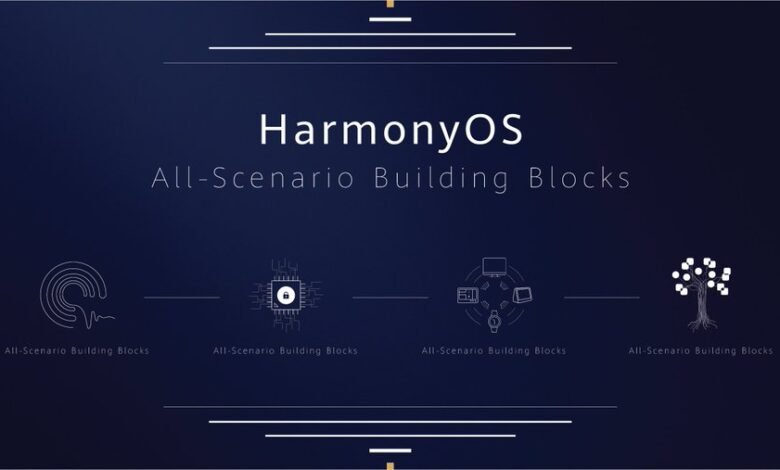
China’s Ministry of Industry and Information Technology has said that HarmonyOS, the operating system Huawei built to replace Android, has become the world’s third-largest mobile phone operating system. Liu Yulin, director of the ministry’s Information and Communications Development Department, made the statement at a State Council Information Office press conference in Beijing. The director also said devices running OpenHarmony, the open-source base of the system, have passed 1.35 billion units cumulatively, and that Harmony-based systems are already running at scale in cars, home appliances, metallurgy and petrochemical plants.
Two days later, at Huawei’s own 2026 HarmonyOS Ecosystem Conference in Shenzhen, rotating chairman Xu Zhijun added numbers on the phone side specifically. Native HarmonyOS apps have passed 100,000. More than 400,000 apps in total now run on HarmonyOS phones. Over 80 million devices now run the current HarmonyOS version 6. And Huawei says it expects the ecosystem’s user base to cross 100 million by the fourth quarter.
HarmonyOS explained
Huawei built HarmonyOS after the United States added the company to its trade blacklist in 2019, cutting off its access to Google’s licensed version of Android. We covered that ban when it happened, and wrote up HarmonyOS’s original pitch a few months later: one operating system designed to run across phones, tablets, watches and smart-home devices from a single codebase.
For years, HarmonyOS on phones was really Android underneath, built on the Android Open Source Project with Huawei’s own interface layered on top. That changed in October 2024 with HarmonyOS NEXT, later renamed HarmonyOS 5 and then HarmonyOS 6, which dropped Android compatibility entirely. It cannot run standard Android apps. Every app has to be rebuilt for it.

Is it truly 3rd worldwide?
According to Counterpoint Research’s shipment data for quarter two of 2026, HarmonyOS is at 5% of global sales. Android is at 75% with iOS at 20%. You could call that a genuine 3rd place. But, remember almost all of the 5% currently comes from inside China. In China HarmonyOS took 24% of sales in the same quarter beating iOS which got 18% and Android’s 58%.
Worth noting is this: The 1.35 billion OpenHarmony devices cover the entire open-source ecosystem since 2019, including cars, appliances and industrial systems that have nothing to do with phones. The 80 million number is specifically HarmonyOS 6 phones and tablets shipped. Neither number actually tells us how many people are actively using a HarmonyOS phone today.
Also worth remembering: Huawei’s global flagships still run EMUI, not HarmonyOS 6. When we covered the Pura 90s Pro Max going global in July, it was explained that it ships with EMUI 16, built on Android’s open-source code, while the Chinese version of the same phone runs HarmonyOS 6.1.
HarmonyOS NEXT app distribution outside China still limited to smartwatches at this point. Phones and tablets sold outside mainland China do not get it. They run Android AOSP with EMUI.
We wrote in 2023 about China’s broader push to reduce its reliance on American technology after the Huawei ban, from chips to app stores to its own operating system. Huawei’s HarmonyOS growth is testament to that.




Join the discussion