

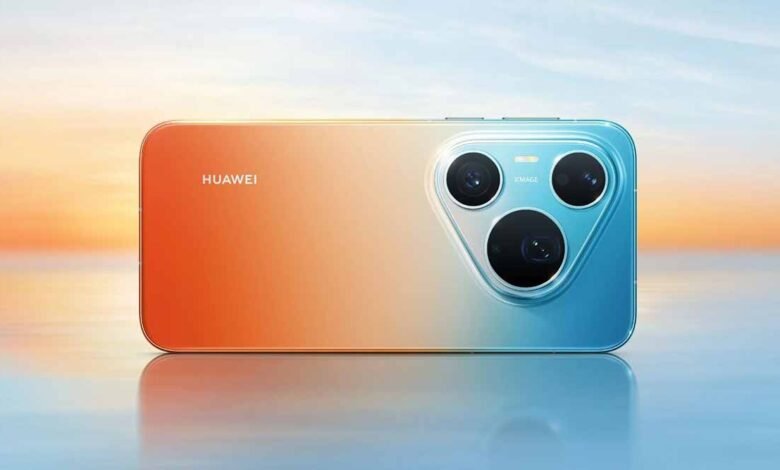
Huawei has taken its newest flagship phones global. On 14 July 2026, at an event in Kuala Lumpur, Malaysia, the company launched the Pura 90s Pro and Pura 90s Pro Max for markets outside China. The phones went on sale in Malaysia first, with Singapore, the Middle East and Europe to follow in the coming weeks.
If the names sound slightly off, that is deliberate. In China, these phones launched back in April as the Pura 90 Pro and Pura 90 Pro Max. For the international versions, Huawei added an “s” to the name. The company says the “s” marks a special edition built for markets outside mainland China. The hardware is largely the same. The software is not, and we will get to that.
For anyone new to the name, the Pura series is what Huawei used to call the P series, the camera-focused flagship line that once traded blows with Samsung’s Galaxy S and Apple’s iPhone. Huawei renamed it Pura in 2024.
Why this launch is a bigger deal than usual
Two things separate this launch from Huawei’s recent global releases.

First, 5G is back. Since the United States placed Huawei under trade sanctions in 2019, the company lost access to American chip technology, and its global phones have shipped with 4G-only connectivity for years, even as the Chinese versions ran 5G. We wrote about that ban when it happened, calling it a wake-up call for every Android maker, and it reshaped Huawei’s phone business worldwide. The Pura 90s phones run Huawei’s own Kirin 9030S chip, designed in-house and built without American technology, and it delivers full 5G on the global units. They also support eSIM, Wi-Fi 7 and Bluetooth 6.0. It is the first time in years that Huawei’s international buyers get essentially the same high-end experience as buyers in China.
Second, the camera. The Pura 90s Pro Max carries a 200-megapixel telephoto camera, the first of its kind in any smartphone. On most phones, the zoom camera is the smallest and weakest sensor in the setup. Huawei has flipped that. The Pro Max’s telephoto sensor measures 1/1.28 inches, which is physically larger than the main camera sensors on most flagship phones today. It offers 4x optical zoom, works for macro close-ups, and can record zoomed video at 20x, according to GSMArena’s hands-on from the launch event.
The rest of the Pro Max spec sheet is just as aggressive. There is a 6.9-inch LTPO OLED display with a 120Hz refresh rate and an anti-reflective coating Huawei says cuts reflections by up to 70%. The main camera is a 50MP sensor with a variable aperture that adjusts from f/1.4 to f/4.0, meaning the lens can physically open wider or narrower depending on light, something almost no other phone does. There is a 40MP ultra-wide camera, a 6,000mAh battery (5,500mAh in Europe due to EU battery regulations), 100W wired charging, 80W wireless charging, and IP68/IP69 water and dust resistance. IP69 means it can handle high-pressure water jets, a level above what iPhones and Galaxys are rated for.
How it stacks up against the iPhone 17 Pro Max and Galaxy S26 Ultra
| Huawei Pura 90s Pro Max | iPhone 17 Pro Max | Samsung Galaxy S26 Ultra | |
|---|---|---|---|
| Display | 6.9″ LTPO OLED, 120Hz, anti-reflective | 6.9″ OLED, 1–120Hz ProMotion | 6.9″ Dynamic LTPO AMOLED 2X, 1–120Hz, Privacy Display |
| Chipset | Kirin 9030S (in-house) | A19 Pro (in-house) | Snapdragon 8 Elite Gen 5 for Galaxy |
| Main camera | 50MP, variable f/1.4–f/4.0, OIS | 48MP, f/1.8, OIS | 200MP, f/1.4, OIS |
| Telephoto | 200MP periscope, 4x optical | 48MP periscope, 4x optical (8x optical-quality) | 10MP 3x + 50MP periscope 5x |
| Ultra-wide | 40MP, f/2.2 | 48MP, f/2.2 | 50MP, f/1.9 |
| Battery | 6,000mAh (5,500mAh EU) | 4,823mAh / 5,088mAh* | 5,000mAh |
| Charging | 100W wired, 80W wireless | ~40W wired, 25W MagSafe | 60W wired, 25W wireless |
| Software | EMUI 16 (no Google services) | iOS 26 | Android 16, One UI 8.5 |
| Water/dust | IP68/IP69 | IP68 | IP68 |
| Starting price (256GB) | €1,149 (about KES 172,000) | US$1,199 (about KES 155,000) | US$1,299 (about KES 168,000) |
On raw hardware, the Huawei wins most rows. Biggest battery, fastest charging by a wide margin, the largest zoom sensor ever fitted to a phone, and a higher water resistance rating. The prices above are launch prices before local taxes and import costs, so Kenyan street prices would land higher.
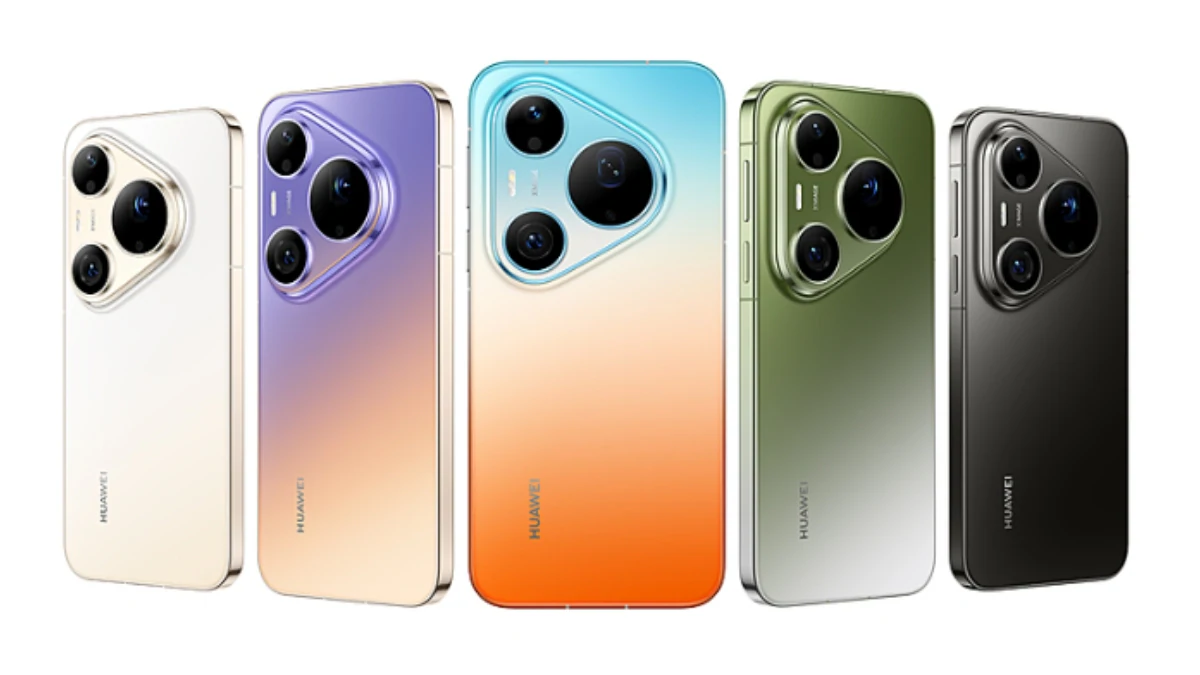
The catch: still no Google
The global Pura 90s phones run EMUI 16, Huawei’s software built on Android 16’s open-source code. It looks and behaves like Android, and it can install standard Android apps. What it cannot do, out of the box, is run Google Mobile Services. There is no Play Store, no Gmail app, no YouTube app, no Google Maps.
This matters more than it first sounds. Plenty of everyday apps quietly depend on Google’s services to function, even ones that have nothing to do with Google. Ride-hailing apps like Uber lean on Google Maps under the hood. Many banking apps and payment services check for Google’s security framework before they will run. Workarounds exist, from Huawei’s own AppGallery store to sideloading apps manually, and enthusiasts have hacks for restoring parts of Google’s services. But for a market that likes things working out of the box, that is a big ask at this price.
One clarification worth making, because other reports have muddled it: the Chinese versions of these phones run HarmonyOS 6.1, Huawei’s fully independent operating system. The global versions do not. They run EMUI 16, which is Android underneath. GSMArena confirmed this on retail units at the launch event.
The phones will also not be sold in the United States, where the trade restrictions that started all of this remain in force.
What about Kenya?
Huawei has not announced any African availability, and we would not hold our breath for an official Kenyan launch. Huawei’s smartphone business in Kenya went quiet after the company tried selling non-Google phones here, and its last big consumer push was the Nova 9 in 2022 at KES 65,999. Since then, the phone side has been largely silent, even on Huawei Mobile Kenya’s social media accounts, with occasional accessory pushes but no flagship launches.
The company itself never left. Huawei remains deeply embedded in Kenya’s telecoms infrastructure and runs large training programmes, including a three-year deal to set up 150 ICT academies in TVET institutions and talent programmes with Safaricom. But the phones are another matter. If the Pura 90s Pro Max shows up in Kenya, it will most likely be through third-party retailers and grey imports, priced well above the €1,149 launch figure.
The practical takeaway: Huawei has built a phone that matches or beats the best from Apple and Samsung on hardware, and it has solved the 5G problem that hobbled its global phones for years. What it has not solved is the software gap. If you are considering one, check that the apps you actually depend on, especially banking, payments and ride-hailing, will run on a phone without Google services before you spend upwards of KES 170,000. Watch whether the gradual rollout reaches African markets at all. That will tell you how serious Huawei is about coming back here.




Join the discussion