
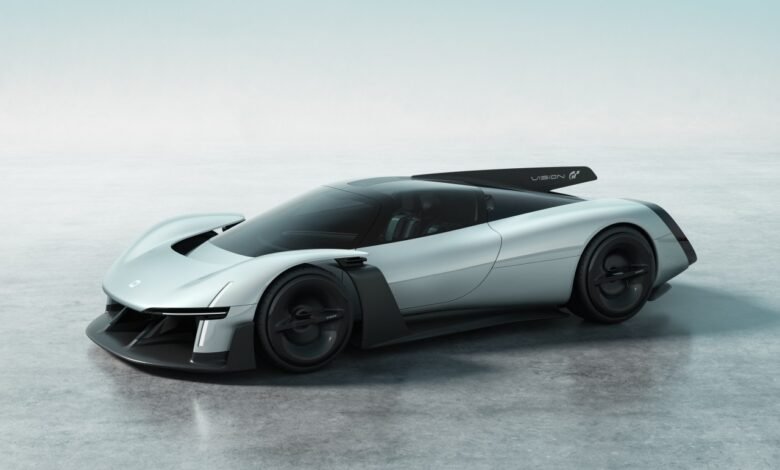
Xiaomi Auto has confirmed on X that it is bringing the Xiaomi Vision Gran Turismo, the Xiaomi SU7 Ultra and the Xiaomi SU7 Max to IFA 2026. “From the road to a vision of what’s next,” the company wrote, before signing off with “See you in Berlin.” IFA runs from 4 to 8 September, and IFA’s own exhibitor listing puts Xiaomi on stand H6.2-101 in Hall 6.2.
If you have watched Chinese EVs go from cheap and cheerful to genuinely quick inside a decade, this is a lovely line-up. Here is what is turning up.
The one you cannot buy
The Vision Gran Turismo is a concept built for Polyphony Digital’s Vision GT programme, which started in 2013 and has since produced the Mercedes-Benz AMG Vision Gran Turismo and the Bugatti Vision Gran Turismo. Xiaomi is the first Chinese brand invited into it, and the first technology company. It showed a full-scale model at MWC 2026 in Barcelona from 2 to 5 March.
The numbers are video game numbers, and that is rather the point. Electrek reported 1,900 horsepower on a 900-volt silicon carbide architecture and a drag coefficient of 0.29, with a downforce-to-drag ratio of 4.1 to 1, which is Le Mans Hypercar territory. Xiaomi calls the design language “Sculpted by the Wind” and means it literally. The cross-shaped headlights are air ducts, the halo taillight vents, and the underfloor feeds the rear diffuser. It will be drivable in Gran Turismo 7. It will not be built.

The one that broke a record
The SU7 Ultra is the real hardware, and it remains the most serious thing Xiaomi has done. Three in-house motors: a 288 kW V6s on the front axle and a pair of 425 kW V8s units at the rear, for 1,138 kW combined, which Xiaomi quotes as 1,548 PS. The V8s spins to 27,200 rpm. That is a wild figure for a road car motor, and it tells you Xiaomi built its own drive units rather than shopping for them.
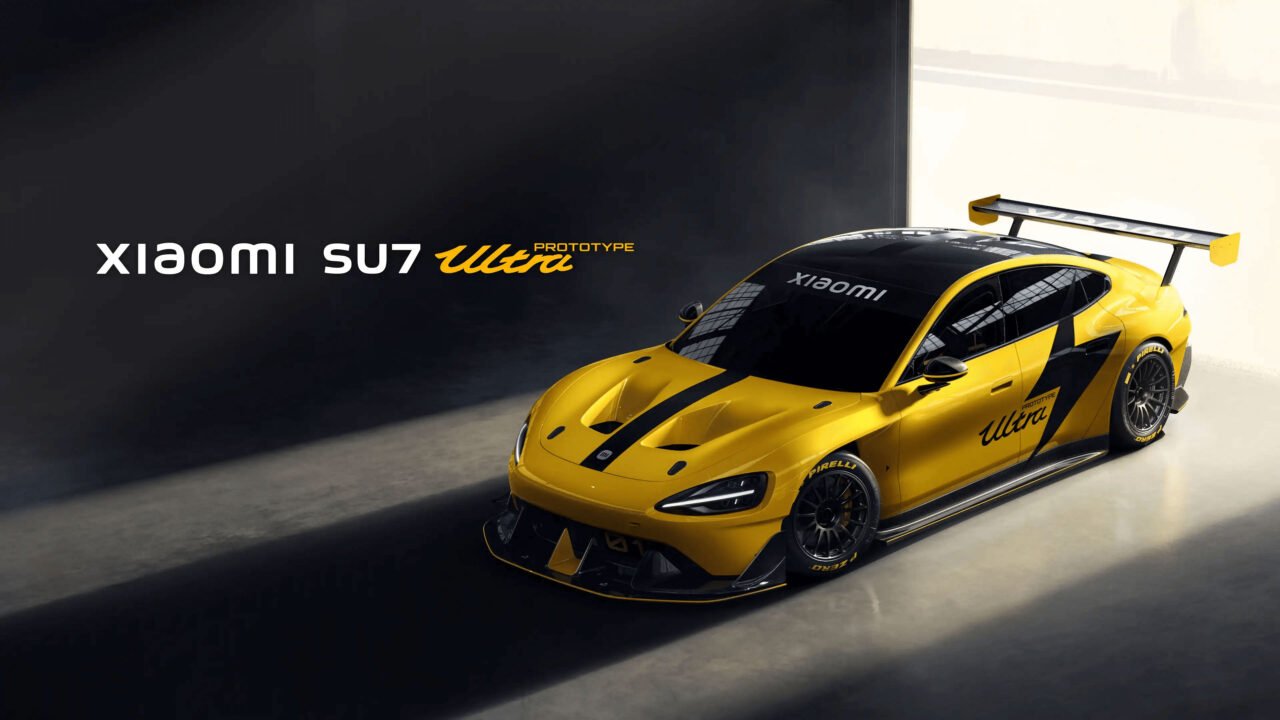
Zero to 100 km/h takes 1.98 seconds. The battery is a 93.7 kWh CATL Qilin 2.0 pack good for 620 km on China’s CLTC cycle, the front discs are 430 mm carbon ceramic, and the whole thing weighs 2,360 kg. In April 2025 the Nürburgring confirmed that an SU7 Ultra driven by Vincent Radermecker lapped the Nordschleife in 7:04.957, a record in the circuit’s Electric Executive Car class. In China it costs 529,900 yuan, about KES 10.2 million.
The one that pays for the other two
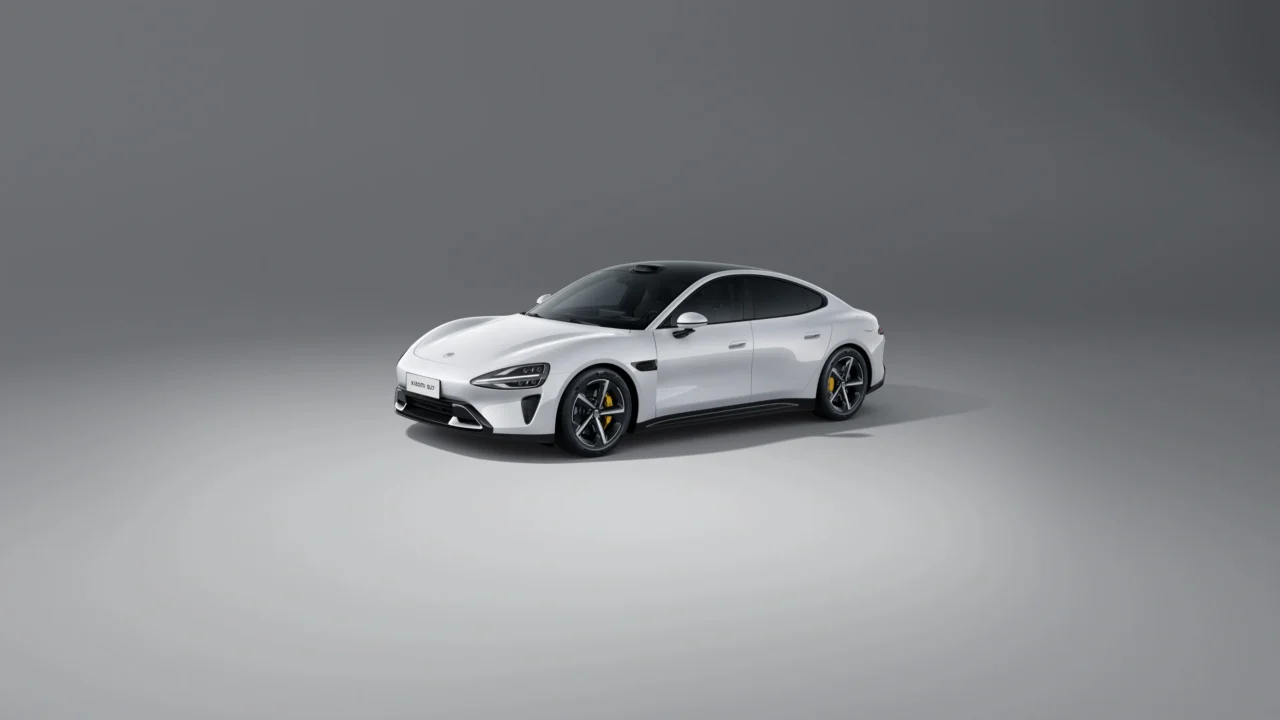
The SU7 Max is the car Xiaomi sells in volume. A second-generation SU7 arrived on 19 March 2026 and the Max sits at the top of that range at 303,900 yuan, roughly KES 5.8 million. It has 508 kW, a 101.7 kWh ternary lithium pack and a claimed 835 km on CLTC.
Note that CLTC is a softer cycle than Europe’s WLTP, so the real figure is lower.
Why Berlin, and what it means here
This is Xiaomi’s first IFA, and it arrives in a year when Samsung has left the Messe Berlin floor after 35 years for its own venue across town. Xiaomi has said it will spend €7.4 billion on AI research between 2026 and 2028, and it plans to start selling cars in Europe in 2027. It runs a research centre in Munich and registered the first road-legal SU7 Ultra in Europe in July 2025.
None of all these stuff reaches Kenya. Xiaomi currently builds the SU7 in left-hand drive only, and the 2027 European launch is a left-hand drive launch too.
Passenger EVs in Kenya are still a sliver of registrations here, as we wrote when we looked at how slowly private EV adoption has moved, and the Finance Bill 2026 shifted EVs from zero-rated to VAT-exempt on 1 July, which pushes prices up rather than down.








Join the discussion