


The Galaxy SmartTag 3 cleared radio certification in South Korea at the end of August under model number EI-T5900. That clearance is normally one of the last steps before a product goes on sale. Leaked press renders and a retail listing put the tag at $30 on its own, or $100 for a pack of four, and it should launch alongside the Galaxy S26 FE in the next few weeks.
What a SmartTag is
If you have never used one, an item tracker is a small plastic disc with a watch battery inside it. You clip it to something you lose often: house keys, a wallet, a laptop bag, a suitcase, a dog’s collar. It pairs with your phone the way earphones do, over Bluetooth. Your phone then shows you where the tag is and can make it beep. Apple sells the AirTag. Samsung sells the SmartTag.
Samsung last updated the line on 10 October 2023, when the SmartTag 2 went on sale at $29.99. Three years on, the price has not changed.
So, what’s new?
The SmartTag 3 drops the SmartTag 2’s pill shape for a rounded square roughly 30mm on each side and under 10mm thick, with a silver face, a button in the middle and a pinhole at the back for swapping the battery. The SmartTag 2 had a loop moulded into the body for a keyring. The SmartTag 3 does not, so you will need one of the cases Samsung is preparing in bumper, leather and silicone, or a Spigen mount for a pet collar, which is how the AirTag has always worked.


An icon in One UI’s code shows a green light ring around the edge, most likely to confirm pairing and to help you spot the tag in the dark. The certification paperwork lists the same two radios the SmartTag 2 had, Bluetooth Low Energy and ultra-wideband. So, in terms of hardware, this is a new shape and nothing much.
How a tracker finds anything
A SmartTag has no GPS and no SIM card. It cannot work out where it is on its own. It cannot send a message anywhere. All it does is talk to your phone over Bluetooth, which Samsung rates at 120 metres at best outdoors, and much less indoors or through a wall. Inside that range your phone can find the tag and ring it.
So what happens when your bag is lifted and driven across town? The tag carries on broadcasting an anonymous coded signal. If a stranger’s phone passes close enough and is set to listen, it reads that signal, notes its own GPS position and sends it to Samsung’s servers, where only you can unscramble it. The stranger is never told and cannot see your tag.
That is the whole trick, and it means a tracker is only as good as the crowd of phones around it.
Whose phones are listening
Samsung’s network is Samsung Find, which used to be called SmartThings Find. Only Galaxy phones and tablets act as find nodes for it, and only those whose owners have left offline finding switched on. A TECNO, an iPhone or an Oppo walks straight past your SmartTag and nothing registers. Currently, about 300 million devices worldwide are part of the Samsung Find network.
Google runs the same kind of network for Android, called Find Hub, known until last year as Find My Device. Every phone on Android 9 or newer is part of it, Samsung’s own Galaxy phones included. Google puts it at more than a billion devices in total. Apple’s version is Find My, which runs on iPhones and iPads.

The ultra-wideband catch
Both the second and third-gen tags carry ultra-wideband, a short-range radio that measures distance far more precisely than Bluetooth does. With it, the app on the owner of the tag shows an arrow and a distance in metres instead of just an abstract dot on a map, so you can walk straight to your keys. But Ultra-wide band tech is quite expensive.
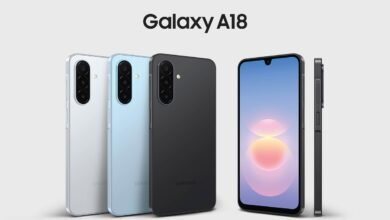
Samsung has never put it in a mid-range phone. The published lists of UWB Galaxy models cover the S series Plus and Ultra versions and the Z Fold, with no A series among them. The A series is what most Kenyans buy, and on those phones the SmartTag 3’s best feature does not work.
The SmartTag 2 sells through Kenyan retailers at between KES 4,000 and KES 7,500 depending on the shop, against a $29.99 launch price worth about KES 3,900, so if you’re buying locally expect to pay way more. Expect the same for the SmartTag 3, and expect the four-pack to be the only sensible buy.



Join the discussion