
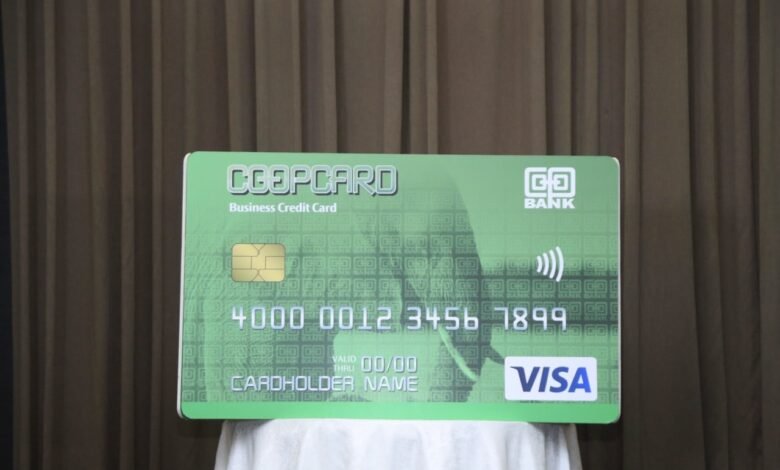
Co-op Bank has launched ELA, a set of loans and services aimed at women customers. The name is short for Everyday Life Amplified. The bank announced it on 14 September 2026 and says it is available at branches now.
A woman running a business can borrow up to KES 10 million unsecured, repayable over 24 months, or up to KES 20 million over the same period against security. Businesses wholly owned or majority-led by women get a 0.5 per cent discount on the interest rate. Women in formal employment can apply for a personal loan with their KYC documents, the identity and address papers a bank collects before it opens an account, plus three months of payslips. Customers who go on maternity leave can pause repayments for three months. The package also carries business and financial training, and networking through the bank’s women banking arm.
Most of that already existed
Co-op Bank has been lending to women for years through Msamaria Women’s Loan. Msamaria’s published terms are unsecured lending from KES 5,000 up to KES 10 million over 24 months, and the product page lists “empowerment training and networking forums” as part of the deal. That is the same ceiling and the same repayment period as ELA’s unsecured tier, with the same training attached.
The genuinely new pieces are narrower than the launch makes them sound: the 0.5 per cent rate discount, the three-month maternity moratorium, the secured KES 20 million tier, and the payslip-based personal loan for salaried women. The release does not say whether ELA replaces Msamaria, absorbs it, or sits beside it.

What half a per cent is worth
The release does not say which rate the discount comes off. CBK’s published lending rates put Co-op Bank at 15.10 per cent in July 2026, above an industry average of 14.39 per cent and above both KCB at 14.79 per cent and Equity at 14.83 per cent. Half a point off 15.10 gets a borrower to 14.60. On a KES 10 million balance that is KES 50,000 a year, and less than that as the loan is paid down.
The gap the bank is pointing at
The numbers in the release check out. The Kenya Bankers Association published an analysis on 21 April 2026 by Christine Waita, a data and compliance specialist who supports its research and policy department, showing that women are 48 per cent of Kenya’s MSME borrowers but hold 26 per cent of roughly KES 613 billion in outstanding MSME credit. For every KES 1,000 lent to a male-owned business, a woman-owned one gets KES 354. The average loan is KES 391,600 for women and KES 741,600 for men. KBA’s live dashboard has moved since: as of June 2026 it shows KES 590.3 billion outstanding, with women-owned businesses on 27 per cent.
The 2024 FinAccess Household Survey, run by CBK, KNBS and FSD Kenya, shows where the problem sits. Formal financial inclusion is almost even. The gender gap there is 1.6 per cent, down from 12.7 per cent in 2006, and mobile money did most of that work. Bank products are where the split shows: 46.5 per cent of women hold them, against 58.9 per cent of men. Women are inside the financial system. Bank credit is the part that has not followed.
The release also cites an IFC estimate of a USD 1.3 billion credit gap for women in Kenya. We could not find that figure in a published IFC document, so treat it as the bank’s citation rather than ours.
The bank’s own framing
Samuel Birech, Director Retail and Business Banking at Co-op Bank, said in the release that the gap is “one we have to lend our way out of”, and that the bank intends “to be judged by how quickly that capital reaches the women who need it”.
Rachael Murage, Head of Women Banking, said the bank “didn’t want another product that asks a woman to fit her life around a loan application”, and that branch teams have been trained for the conversation ELA is meant to start.
A crowded shelf
Every large Kenyan bank sells one of these. Equity’s Fanikisha has run since 2007, has disbursed KES 565.6 billion, and lends unsecured working capital up to KES 10 million. KCB set aside KES 250 billion over five years in 2022. Family Bank put KES 50 billion behind Queen Banking. Stanbic has DADA. Access Bank and NBK merged theirs into the W Initiative in December 2025. Kingdom Bank, which Co-op Bank owns, runs Faidi Dada and signed a partnership with AWEP Kenya in August 2026.
Co-op Bank did not attach a number to ELA. KCB and Family Bank both did. The release says the bank is “putting real capital behind” the commitment without saying how much capital.
There is also nothing digital here. ELA is a branch product, and the release tells customers to walk into a branch with their documents. Co-op Bank’s existing Msamaria digital loan already runs on USSD at *667# and in the MCo-opCash app, capped at KES 1 million over one to six months. The same bank spent this year turning traders’ phones into card machines.
What to watch
CBK launched Kenya’s chapter of the WE Finance Code in December 2025, and more than 40 institutions signed up to collect and report lending data broken down by gender. The ELA release does not mention it. Co-op Bank’s half-year results, published in August, put MSMEs at 16.5 per cent of the loan book and 23.1 per cent of customer deposits, with no split by gender anywhere in them.
Birech set the test himself: how quickly the capital reaches women. That is a number Co-op Bank can publish, and the full-year 2026 results are the next place it could appear. Until then, a woman walking into a branch gets half a point off, three months of grace if she has a baby, and the same KES 10 million ceiling Msamaria already carried. We have written before about how far Kenyan women are from bankable credit. A half-point discount does not close that.







Join the discussion