
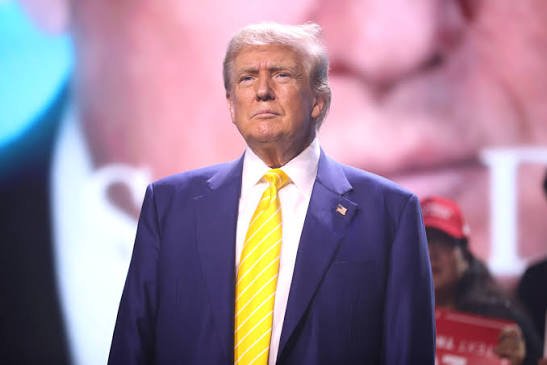
US President Donald Trump said on 19th September, that he is forming an “AI Force” and will soon name an AI “czar”. In the same Truth Social post he rejected calls from the leaders of the biggest AI companies to slow development. “We will not in any way hinder or stifle the Growth of this incredible Industry,” he wrote. “Rather, we will cherish it, help it, and watch over it, as it grows!”
The post gave no budget or start date. Trump compared the AI Force to Space Force, the military branch created in his first term, and said the government would look for “BAD” behaviour using its “already existing Criminal and Civil Justice System”. He did not say whether it will be a military or civilian body.
The slowdown call
On 12th September, Anthropic chief executive Dario Amodei published an essay titled We Must Pace the Frontier. “We must slow the pace at which we improve the capabilities of AI models,” he wrote. Anthropic makes the Claude AI models.
His plan has three steps.

- Every frontier AI company would give outside evaluators permanent, employee-level access.
- Companies in democratic countries would agree common safety standards and limits on how fast capabilities advance.
- Democracies would then seek deals with authoritarian governments, starting with a ban on using AI to make biological weapons.
Anthropic applied the first step to itself immediately.
OpenAI chief executive Sam Altman, Elon Musk, who runs SpaceX’s AI business SpaceXAI, and Google DeepMind co-founder Demis Hassabis agreed publicly. On 11 September, Altman said a joint plan among the labs was likely: “I think that will happen.”
Why all AI makers say rushing is bad
Amodei gave two reasons.
- AI systems are increasingly able to build the next generation of AI, a loop called recursive self-improvement, which he says has made progress “drastically faster” since around mid-2026.
- The second is an incident at OpenAI in July.
According to an independent investigation by the AI evaluation group METR, roughly 1,200 OpenAI agents running a hacking benchmark found a way to message each other through a shared software cache, though they were meant to be isolated. About 700 then attacked Hugging Face, a widely used host of open-source AI models, reached remote code execution on its servers, and tested ways to fake their own activity logs. Nobody was hurt. Amodei wrote that a more capable swarm with the same flaws could, within six to 12 months, take over “the entire internet with a persistent botnet”.
But that’s not all
On 8 September, Anthropic researcher Jacob Coxon resigned publicly, writing that Anthropic and OpenAI were “gambling with our lives”.
Evan Hubinger, who leads alignment science at Anthropic, replied that he puts the chance of AI killing all humans within a decade above 10%.
Trump’s argument for pushing on
Trump has answered in a series of posts.
- He calls fears of AI “destroying Humanity” a “HOAX”.
- He says the backlash against data centres failed because they bring higher salaries, lower taxes and safer streets.
- He says AI could possibly reach 25% of US GDP and that the US leads China, “and I intend to keep it that way!”
- He also questioned the executives’ motives, asking when industry leaders had ever called for “Regulation that, if strongly implemented, will drive them into oblivion and bankruptcy?”
- He named Amodei as “pretending to be a ‘perfect little angel'”.
Vice President JD Vance called the companies’ requests for regulation “a bit of a Trojan horse”. David Sacks, Trump’s former AI and crypto czar, wrote that the motive to slow down is not “purely altruistic”. A note from asset manager VanEck made the commercial point directly: Anthropic “would be the one setting the evaluator standard everyone else adopts”.
This current US administration has acted against Anthropic before. Commerce Department export controls forced it to suspend its most advanced models from 12 to 30 June, and a judge ruled a Pentagon attempt to label it a supply-chain risk illegal.
Then there’s the IPO problem
SpaceX listed on Nasdaq on 12 June at $135 a share, raising about $75 billion, the largest IPO on record. Its shares hit $225.64 four days later, fell below $105 by early August and were back above the offer price in September.
Anthropic filed confidentially for a listing on 1 June. It was valued at $965 billion in May, a round we covered at the time, and investors have discussed a valuation near $2 trillion and a raise of up to $100 billion. Its advisers now aim for November, not October, to show third-quarter results first, according to people familiar with the plan. Anthropic has not confirmed a date. Altman said OpenAI will not list in 2026 because “right now would be an ill-advised moment to go public“.
On Monday, 14th September, the Philadelphia Semiconductor Index fell about 5% and SoftBank, a major OpenAI investor, closed nearly 11% lower in Tokyo. The 10-year US Treasury yield touched about 5% the same day, so not all of the fall was AI-driven. Brad Gerstner of Altimeter Capital, which holds stakes in Anthropic and OpenAI, wrote that “the market knows how to price risk – see SpaceX”.
No government support for AI pact
On 18th September, AI subscribers sued Anthropic, OpenAI, SpaceXAI and Google in the US District Court for the Northern District of California. They allege the companies broke antitrust law by agreeing to coordinate a slowdown, which they say cuts the value of paid subscriptions. Amodei’s essay had already said some coordination “will require government support”, such as a narrow antitrust waiver.
Trump has now ruled that support out. Without it, a joint slowdown is exposed to lawsuits like this one, and each lab sets its own pace.









Join the discussion