
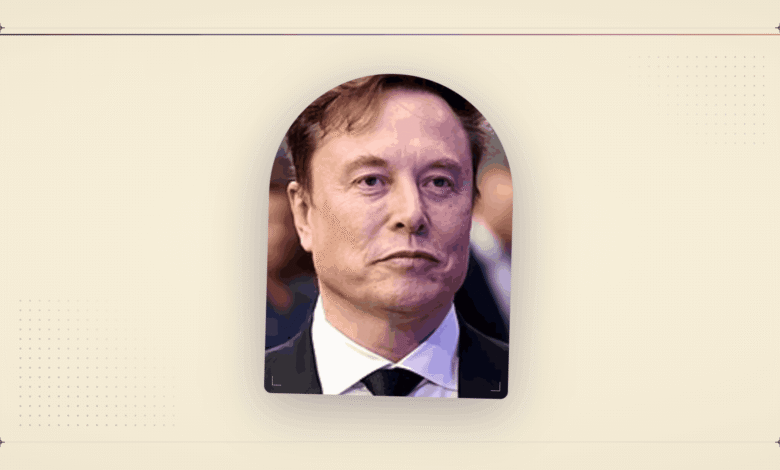
On Tuesday, 16 June 2026, SpaceX said it had agreed to buy Anysphere, the startup behind the AI coding tool Cursor, for $60 billion. The whole thing is in stock. No cash. The announcement came just four days after SpaceX went public on the Nasdaq under the ticker SPCX, in a listing that valued the company at more than $2 trillion and, on paper, made Elon Musk the world’s first trillionaire.
A rocket company buying a coding app for $60 billion sounds like a mistake at first read. It is not. It is the clearest sign yet of something we walked through on our socials: SpaceX is no longer really a space company. It is an artificial intelligence company that also happens to launch rockets and beam down internet. The Cursor deal is the loudest proof of that so far.
Let us go through what was actually announced, why Musk wanted Cursor badly enough to pay this much, and the parts that should make any reader pause.
What was announced
According to a filing with the US Securities and Exchange Commission, a SpaceX subsidiary called X67 Inc. will merge with Anysphere. When the deal closes, Cursor becomes a wholly owned part of SpaceX. Every Anysphere share, common and preferred, converts into SpaceX Class A stock. The exact number of new shares depends on SpaceX’s average share price over the seven trading days before the deal closes, applied against Cursor’s agreed $60 billion value. The companies expect to close in the third quarter of 2026, subject to regulatory approval. You can read CNBC’s account of the filing here.

Two numbers in the fine print tell you how the lawyers see the risk. If the deal collapses under certain conditions, SpaceX pays a $10 billion break fee. If it falls apart specifically because of antitrust objections, SpaceX pays $4 billion. You do not write a $4 billion antitrust fee into a contract unless you expect regulators to look closely.
This was not a surprise pounce. Back in April, SpaceX secured an option to either buy Cursor for $60 billion later in the year, or pay $10 billion just to work with it as a partner. On Tuesday, it chose to buy. The timing matters, and we will come back to it.
What exactly is Cursor
Cursor is an AI-powered code editor. Anysphere, the company that makes it, was founded in 2022 and is run by chief executive Michael Truell. The product became the poster child for what people now call “vibe coding,” where a developer describes what they want in plain language and the AI writes, edits and debugs the actual code. It grew faster than almost any business software product on record.
The money tells the same story. Cursor’s most recent funding round, a Series D in November 2025, valued Anysphere at $29.3 billion, up from $2.5 billion at the start of that year. Earlier in 2026 it was reportedly raising fresh money at a valuation near $50 billion, backed by names like Andreessen Horowitz, Thrive Capital, Nvidia and Google’s parent, Alphabet. So the $60 billion SpaceX is paying is a real step up, not a bargain.
On revenue, the public figures vary by source and by month, which is worth flagging honestly. Reports put Cursor’s annual recurring revenue somewhere between roughly $2.6 billion and $4 billion in the first half of 2026, with the higher figure cited by Forbes for early June. The exact number is unsettled. The direction is not. Cursor was growing extremely fast.
It is also notable who did not get Cursor. Microsoft looked at buying it and decided against bidding. Cursor turned down two separate approaches from OpenAI because its leadership wanted to stay independent. In the end, the company that prized its independence sold to Elon Musk, who controls his companies more tightly than almost anyone in tech. More on that later.
Why this confirms the “AI company” story
To understand why SpaceX is the buyer, you have to follow the corporate chain we mapped in our SpaceX trillionaire explainer on Instagram.
The short version: Musk bought Twitter in 2022 for $44 billion. He renamed it X. In 2025, his AI startup xAI absorbed X in an all-stock deal. In February 2026, SpaceX absorbed xAI, also in stock. By May 2026, xAI had stopped existing as a separate company and became an internal SpaceX division called SpaceXAI, which now houses Grok, the X platform, and the rest of Musk’s AI work. So when SpaceX filed to go public, its own prospectus described it as “a vertically integrated space technology, connectivity, and artificial intelligence company.”
Buying Cursor extends that chain by one more link. SpaceX now wants to own not just the AI models (Grok) and the compute (its Colossus supercomputer and data centres), but the tool that developers use to actually write software with AI.
The all-stock playbook, and what the IPO was really for
Notice that no cash changed hands here, just like in the mergers before it. There’s a pattern here.
This reframes the IPO itself. SpaceX raised about $75 billion when it listed, the largest IPO ever. But the Cursor deal, announced four days later and paid entirely in shares, suggests the listing was about more than raising money. Going public turned SpaceX stock into a liquid, publicly priced currency. That currency is now being spent to buy growth. A company can hand over shares far more easily than it can hand over $60 billion in cash, especially when those shares trade above a $2 trillion valuation. In effect, the public market gave Musk a chequebook written in his own stock.
There is a cost to that chequebook, and it falls on shareholders. Paying $60 billion in new shares dilutes everyone who already owns SPCX. Public investors are helping fund this acquisition whether they like the target or not.
The weird part: Cursor runs on Musk’s rivals
Here is the contradiction at the centre of the deal.
Cursor’s strength is that it does not lock you into one AI model. Inside Cursor, a developer can pick OpenAI’s GPT, Anthropic’s Claude, Google’s Gemini, xAI’s Grok, or Cursor’s own in-house models. In practice, a very large share of real Cursor work runs on Claude and GPT, because those have been the strongest coding models. Cursor is, in plain terms, a router that sends your request to whichever model is best for the job.
So Musk is buying a storefront whose most popular products are made by his two biggest AI rivals. The strategy, clearly, is to use that ownership to nudge developers towards Grok and Cursor’s own models over time. The risk is just as clear. If you force people off the models they came for, they leave. Cursor’s users picked it precisely because it gave them the best tool for each task, not a single house brand.
This is where Cursor’s own model, called Composer, and SpaceX’s enormous compute come in. SpaceX runs Colossus, a supercomputer reported to use on the order of a million Nvidia chips. Pairing Cursor’s interface with that hardware and with Grok is the bet: build a coding experience good enough that developers no longer reach for Claude or GPT inside it.
“Macrohard,” explained
If the name sounds like a joke, that is because it started as one. In August 2025, Musk announced a project called Macrohard, an effort to build what he called a purely AI software company, one that could simulate a firm like Microsoft almost entirely with AI. The idea is that since software companies do not make physical hardware, you should be able to recreate one using AI agents that write, test and ship code.
Macrohard now appears in SpaceX’s own IPO prospectus as a real strategy, tied to building autonomous systems for manufacturing, testing and docking future Starships. Cursor is the missing tool for that plan. Rather than build a coding platform from scratch, SpaceX is buying the best one on the market and pointing it at its own engineering. That is the practical reason a rocket company wants a code editor.
The competitive read: Anthropic just won the coding war
To see why Musk moved now, look at who is winning.
In late May 2026, Anthropic, the maker of Claude, raised money at a $965 billion valuation. That pushed it past OpenAI, which was last valued at $852 billion in its March round. Anthropic reported a revenue run-rate of about $47 billion, up sharply over the year. (Al Jazeera has the details here.)
The single biggest engine behind Anthropic’s rise is coding. Its Claude Code product and its strength in software tasks have made it the default for enterprise developers. That is the exact market where Grok has lagged. So buying Cursor is not a random diversification. It is Musk buying his way into the one segment that just made Anthropic the most valuable AI startup in the world, and where his own model is weakest. The deal is a coding play first and a space play a distant second.
Everyone is going public this year
The Cursor purchase also lands in the middle of an unusual moment. 2026 is the year the AI industry goes to Wall Street.
SpaceX has now listed. OpenAI has filed confidentially and is expected to go public in the fourth quarter. Anthropic is targeting a listing around October, reportedly near a $900 billion valuation. CoreWeave, which rents out AI compute, listed back in March 2025 and its stock has roughly tripled since. Analysts at Renaissance Capital have called SpaceX, OpenAI and Anthropic the three biggest names that could go public this year.
There is a sobering thread running through all of it. By one detailed tally, almost the entire IPO-stage AI class is losing money, with combined annual losses that likely run past $25 billion. Public investors are being asked to absorb the largest collective loss-making listing wave in market history. SpaceX moved first, and it is using that head start to go shopping before its rivals list.
The bubble question, and the money that loops
This is where the deal connects to a worry we have written about before. We explained the circular financing loop running through Nvidia, OpenAI and Oracle earlier this year, where chipmakers and cloud providers invest in AI startups that then spend that money buying the investors’ own chips and capacity. By 2026, analysts had identified more than $800 billion of these arrangements. The fear is that the same dollars keep circling a small group of companies, making demand look bigger and more organic than it is.
The Cursor deal sits neatly inside that loop. SpaceX reportedly leases around $26 billion a year of cloud computing from Anthropic and Google combined, both with short termination clauses. Those are Cursor’s own model suppliers. They are also Musk’s direct rivals. So SpaceX rents compute from Anthropic and Google, then buys a tool that sends developer work straight back to Anthropic’s and Google’s models, while planning to redirect that work to its own Grok. Nvidia, which backs Cursor, sells the chips that power all of it. Money and compute move in a ring, and a lot of it never really leaves the same handful of companies.
None of this proves a bubble. Vendor financing has built real industries before, from railways to telecoms, and the demand for AI coding tools is clearly real. But a $60 billion all-stock deal between two loss-heavy parts of one man’s empire, paid in freshly public shares, is exactly the kind of transaction that makes careful investors nervous.
Control, lawsuits and the liabilities that come attached
Two more things travel with this deal.
The first is governance. Musk holds about 42% of SpaceX’s equity but roughly 85.1% of its voting power, through super-voting shares. He can only be removed by a vote he himself controls. Public shareholders also waived the right to class-action lawsuits. So when SpaceX spends $60 billion of stock on Cursor, ordinary investors have almost no formal way to object. They own a slice of the company and very little of the steering wheel.
The second is legal exposure. Folding xAI into SpaceX brought real fights into a now-public company. Grok’s image tools were used to make non-consensual sexual deepfakes, including, according to reporting, of minors, drawing regulatory probes across the EU, UK, Malaysia and Indonesia. SpaceX even lists Grok’s “Spicy” image mode as a risk factor in its own filing. Separately, the NAACP and Earthjustice are suing over unpermitted gas turbines powering an xAI data centre in Memphis. And just this week, a former xAI engineer, Devin Kim, sued both xAI and SpaceX, alleging he was fired three days after briefing Musk on Grok’s racial and political biases. These are now public-company problems, sitting on the books that everyday investors just bought into.
Why Kenya should care
It is easy to file all this under distant Silicon Valley drama. It is not distant.
Start with Starlink. SpaceX’s satellite internet service is the one part of the empire that actually makes money. It earned around $11.4 billion in 2025 and is the profit engine that quietly funds the loss-making rockets and the loss-making AI. Starlink is already in Kenyan homes, with plans we covered starting at about KES 4,000 a month. When Kenyans pay that subscription, they are now buying into the same company that owns Grok, X and, soon, Cursor. The profits from a dish on a roof in Nairobi are helping cover an AI arm that lost roughly $6.35 billion in 2025.
Then there is the developer angle. Kenya has a large and growing community of software developers and startups, and AI coding tools like Cursor are part of that daily toolkit. If Cursor is steered towards Grok and away from Claude and GPT, local developers who rely on the strongest models could see changes to model access, pricing or quality. That is not a small thing for a startup ecosystem running on thin margins.
And there is a quality question. Grok still does not handle Kenyan languages well. We showed how badly Grok’s translation mangles Sheng and Swahili on X, guessing at local languages it does not support. A coding tool is different from a translator, but it is a fair warning. A Grok-first stack has not yet shown it understands this part of the world.
What to actually watch
Strip away the size and the spectacle, and the deal is simple to follow. Starlink pays the bills. SpaceX is using its new public shares as a currency to buy its way into AI coding, the market that just crowned Anthropic, and where its own Grok is behind. The price is enormous, the structure keeps the money inside a tight circle of friends and rivals, and the control sits almost entirely with one person.
Three things will tell you how this plays out. The first is regulatory approval, and whether that $4 billion antitrust fee was a real worry or just paperwork. The second is what happens to Cursor’s model choices, because the day developers can no longer reach for the best model inside it is the day you learn how loyal they really are. The third is closer to home: whether a profit-driven Starlink, now funding even more AI ambition, keeps prices and access reasonable for Kenyan users, or starts squeezing the very markets that help pay for the rockets.
For now, just know this: SpaceX did not buy a coding tool by accident. It is buying access to lead the AI business, paid for with stock it only just created, in a year when everyone is rushing to cash in. Whether that bet pays off is the trillion-dollar question. The rest of us, including those of us in Nairobi paying for Starlink, are already part of the answer.





Join the discussion