

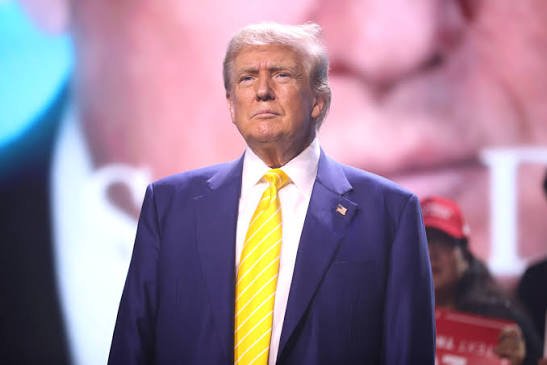
US President Donald Trump told the United Nations General Assembly in New York on 22nd September that the US government is dropping the term “artificial intelligence”. He said all US documents, “and hopefully the world’s”, will now say “super intelligence”, shortened to SI. His reason was that “the use of the word artificial makes intelligence sound fake.”
The new name came out of a poll. On 19 September Trump asked his followers on X and Truth Social to choose between Superior Intelligence, Extreme Intelligence and Supreme Intelligence. Super wasn’t one of the options. Funny, the name he took to the UN is one nobody voted for.
Superintelligence already has a meaning
In AI research, superintelligence is the name for a system that doesn’t exist yet: AI that can “significantly outperform all humans on essentially all cognitive tasks”. That definition comes from the Statement on Superintelligence, which the Future of Life Institute, an AI safety nonprofit, published in October 2025. The statement calls for a ban on building superintelligence until scientists agree it can be done safely and the public backs it. More than 75,000 people have signed, including the AI researchers Geoffrey Hinton and Yoshua Bengio, even Steve Bannon, who was Trump’s chief strategist in his first term.
The big AI companies use the word the same way, for the product they clamor to build next. In January 2025, OpenAI chief executive Sam Altman wrote that the company was turning its aim “beyond” AGI (artificial general intelligence, meaning AI that matches people across most tasks) to “superintelligence in the true sense”. Meta renamed its AI division Meta Superintelligence Labs in June 2025. Ilya Sutskever, OpenAI’s former chief scientist, founded Safe Superintelligence Inc. in June 2024 to build that one system.

So calling ChatGPT, Gemini or Copilot “SI” makes today’s chatbots have a name of something nobody has built yet. That makes them sound finished.
President Speech vs Law
US federal law has its own definition. The National Artificial Intelligence Initiative Act of 2020 defines artificial intelligence as “a machine-based system that can, for a given set of human-defined objectives, make predictions, recommendations or decisions influencing real or virtual environments.”
As of this evening, the White House has not published an executive order or a memo telling agencies to switch. The presidential actions page has nothing on it, and ai.gov, the administration’s own AI policy site, still says “artificial intelligence” throughout.
What’s more
The rename sat next to the policy in the same speech. Trump said the US “totally rejects any attempt to construct a globalist scheme to control” the technology, and that “whoever wins SI, whoever wins superintelligence, wins.” He said the US leads China “by a lot”, that the Department of Justice would watch the industry, and that “We’re going to encourage it, not rein it in.”
On 19th September, as we reported, Trump announced an “AI Force” and called fears of AI destroying humanity a “HOAX”. At last year’s General Assembly, White House science adviser Michael Kratsios rejected “all efforts by international bodies to assert centralized control” of AI.
Dropping “artificial” makes the technology sound less fake? Well, renaming it “superintelligence” also makes it sound as if the finish line has already been crossed.








Join the discussion